Monographie sur Camille Pissarro à l'occasion de deux expositions simultané au musée Marmottan Monet (23 fev - 2 juill) au musée du Luxembourg (16 mars - 9 juill) Dans la petite collection à 9,95€ Camille Pissarro (1830-1903) est un peintre incontournable du mouvement impressionniste. Grand coloriste, l'artiste est un maître incontesté de la lumière. Doté d'une sensibilité saisissante à la nature, il trouve son inspiration avant tout dans les thèmes champêtres. Champs et villages, animés parfois de silhouettes de paysans, nous donnent une vision idéalisée de la vie rurale du xixe siècle dont Pissarro n'a pourtant pas manqué de représenter l'industrialisation rapide en peignant les ports du Havre, de Dieppe ou encore de Rouen.
Languages : Fr. En.
----
Camille Pissarro (1830-1903) is an essential painter of the impressionist movement. A great colorist, the artist is an uncontested master of light. Endowed with a striking sensitivity to nature, he finds his inspiration above all in rural themes. Fields and villages, sometimes animated by silhouettes of peasants, give us an idealized vision of rural life in the nineteenth century, which Pissarro did not fail to represent the rapid industrialization by painting the ports of Le Havre, Dieppe or Rouen.
Another entry from the "Place des Victoires" collection about painters. This one deals with the doyen of the Impressionists Camille Pissarro.
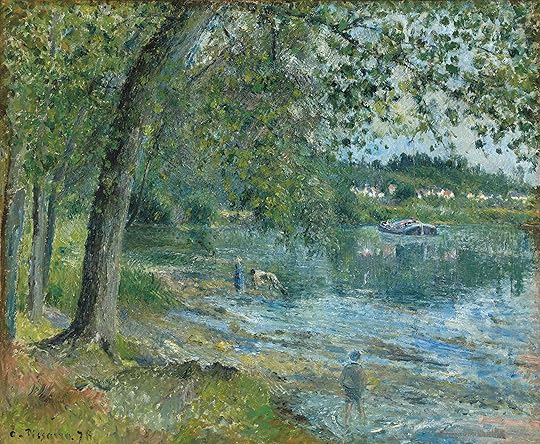
Bords de l'Oise à Auvers-sur-Oise (1878)
'As the oldest painter of the impressionists and initiator of their group exhibitions, Camille Pissarro (1830-1903) is called the "father of the impressionists".'
'During his life, Camille Pissaro combined many different artistic influences and styled along with many cultural backgrounds. He was born in 1830 on the then-Danish island of St. Thomas, which is today part of the American Virgin Islands. Raised in bourgeois conditions, his parents–of French and Portuguese, Jewish and Christian origin–sent him to France in 1841 for six years where he sought an internship in Passy.'
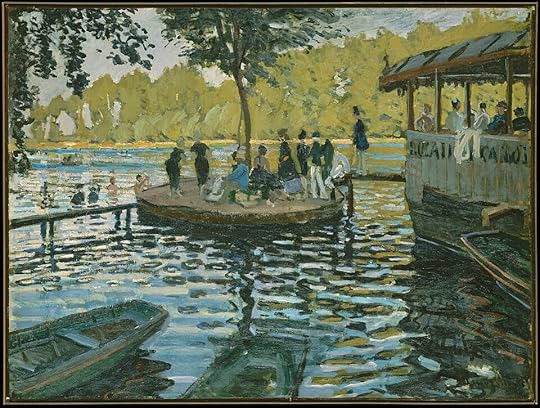
'In 1869, Pissarro painted with Monet and Renoir at La Grenouillère [on the Island of La Chaussée on the Seine], near his residence. The painters were fascinated by the reflections of the light in the water, which they attempted to capture with brief, wide strokes of the brush.'
The excerpt above reminded me of the painting that already caught my attention in the book devoted to Claude Monet of the same series:
La Grenouillère - Claude Monet (1869)
Concerning Camille Pissarro, one of the traits that most commandes respect was the versatility of the artist, always trying to refine his theories on art and trying new styles. Other than painting, Camille Pissarro also created etchings, lithographs, monotypes.
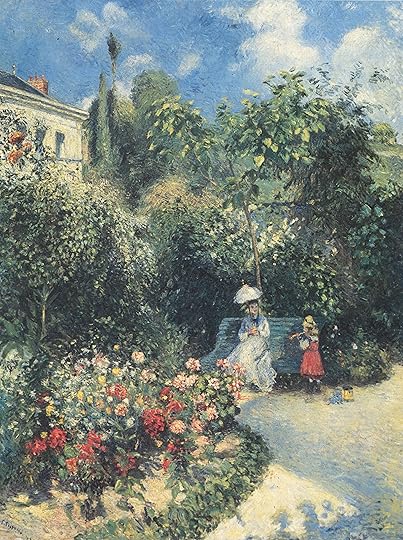
Dans le Jardin des Mathurins, Pontoise (1877)
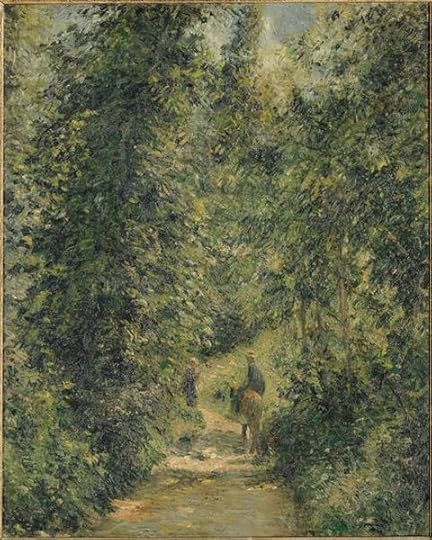
Chemin sous bois, en été (1877)
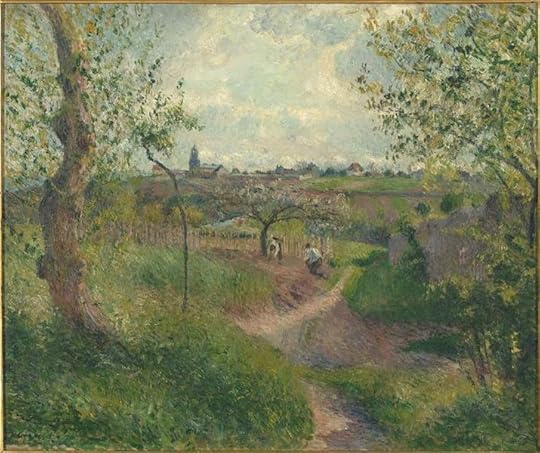
Chemin montant à travers champs. Cote des Grouettes, Pontoise (1879)
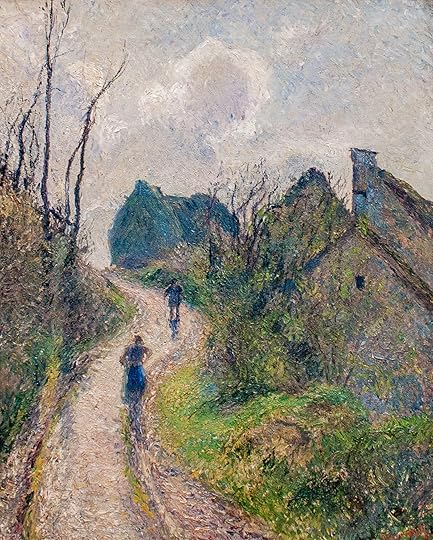
Chemin montant à Osny (1883)
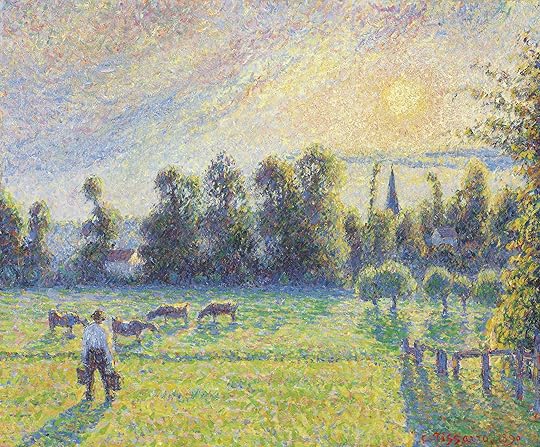
Pâturages, coucher de soleil, Éragny (1890)
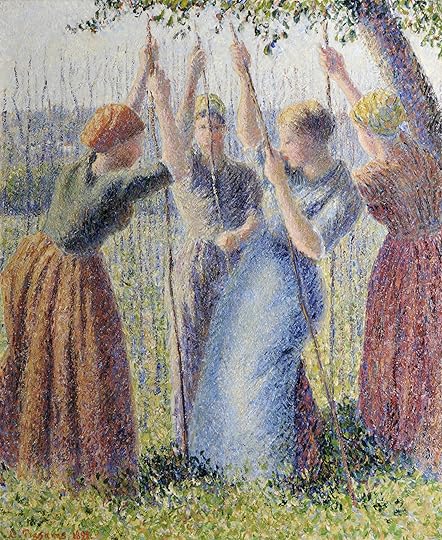
Paysannes plantant des rames (1891)
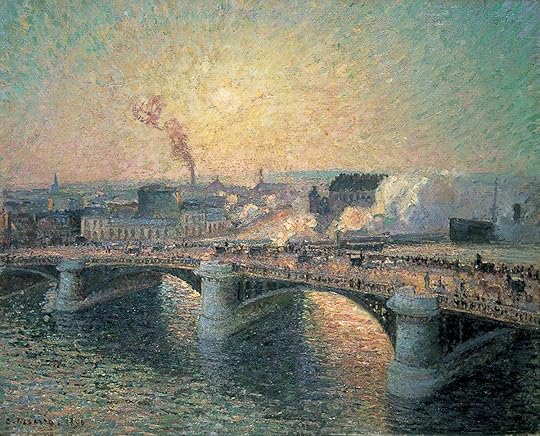
Le pont Boieldieu à Rouen, soleil couchant (1896)
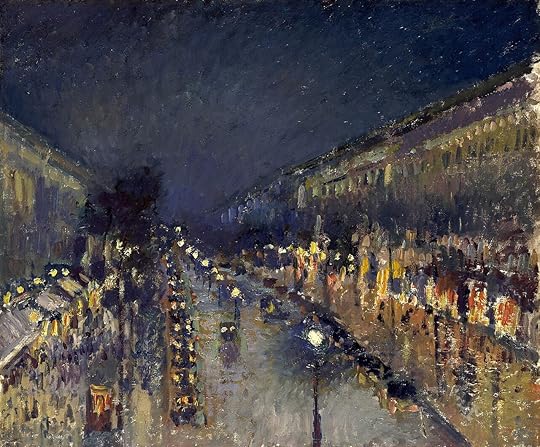
Boulevard Montmartre, effet de nuit (1897)
This entry had an unaccustomed number of misprints in the English and French sections, the other languages used being German, Spanish, Italian and Dutch.