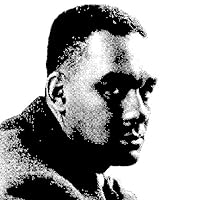
Manfredo Tafuri (1935–1994), the celebrated Italian architectural historian, published L’architettura moderna in Giappone in 1964. At the time, Tafuri was twenty-nine years old and had not visited Japan. His slim volume on the country’s postwar architecture was the first in a series of guidebooks on contemporary architecture under the direction of Leonardo Benevolo. Here, translated into English for the first time, the book presents a rare outsider’s view of the Metabolist movement and figures such as Kenzō Tange by one of the most astute critics of the second part of the twentieth century.
Tafuri’s ideas about Japanese architecture were primarily formed through texts, including magazine articles and contemporary photographs. How did Tafuri come to select the achievements of Japanese architects as the focus of his reflections on modern architecture? What happens when a historian of architecture relies purely on photographs for making judgments about a building?
Edited and introduced by Mohsen Mostafavi, this volume reflects on these questions and more, presenting the translated text alongside essays by Marco Biraghi, Catherine Ingraham, Ken Tadashi Oshima, Federico Scaroni, and Hajime Yatsuka, as well as a rich collection of images. Together, these materials situate the reader in relation to Tafuri’s scholarship, the histories of Japanese architecture and Italian criticism, and the idiosyncrasies of this luminous text.
Manfredo Tafuri an Italian architect, historian, theoretician, critic and academic, was arguably the world's most important architectural historian of the second half of the 20th century.[1] He is noted for his pointed critiques of the partisan "operative criticism" of previous architectural historians and critics like Bruno Zevi and Siegfried Giedion and for challenging and overturning the idea that the Renaissance was a "golden age" as it had been characterised in the work of earlier authorities like Heinrich Wolfflin and Rudolf Wittkower. For Tafuri, architectural history does not follow a teleological scheme in which one language succeeds another in linear sequence. Instead, it is a continuous struggle played out on critical, theoretical and ideological levels as well as through the multiple constraints placed on practice. Since this struggle continues in the present, architectural history is not a dead academic subject, but an open arena for debate. In his view, like other cultural domains, but even more so, due to the tension between its autonomous, artistic character and its technical and functional dimensions, architecture is a field defined and constituted by crisis. During the 1970s, Tafuri published important essays in Oppositions, the journal directed by Peter Eisenman. Although he always had a strong interest in this area of research, in the last decade of his career he undertook a comprehensive reassessment of the theory and practice of Renaissance architecture, exploring its various social, intellectual and cultural contexts, while providing a broad understanding of uses of representation that shaped the entire era. His final work, Interpreting the Renaissance: Princes, Cities, Architects, published in 1992, synthesizes the history of architectural ideas and projects through discussions of the great centres of architectural innovation in Italy (Florence, Rome, and Venice), key patrons from the middle of the fifteenth century to the early sixteenth century, and crucial figures such as Leon Battista Alberti, Filippo Brunelleschi, Francesco di Giorgio, Lorenzo de' Medici, Bramante, Raphael, Baldassare Castiglione and Giulio Romano. Tafuri held the position of chair of architectural history at the University Iuav of Venice.
Recognizing the failures of an author and putting their writing into the context of their time and place in history is an important part of my belief that all work is autobiographical to some extent. Manfredo Tafuri's overview of Japan's architectural history is flawed but incredibly productive. It helps to understand the book better and it makes me take more of a liking towards Tafuri to understand that the book was entirely written before the critic had stepped foot in Japan; the entire book was based on research just like that of a student. The book's shortcomings, misnomers, and ignorances are a result of unfulfilled research and a distance from the subject both culturally and ideologically. But, none of this stops the poignancy with which Tafuri makes his arguments. Specifically in the case of his thoughts on the works of Kenzo Tange, Tafuri's words gave me a new way of understanding one of my favorite figures in the Japanese architectural canon. Tafuri takes great care with the materials he has at his disposal to put many of the buildings of Postwar Japan into context with the city as a developing concept. Although he chose to forget this work out of disappointment with its failures, I believe reading this book is definitely a good exercise in critical analysis and gives an important contemporary international perspective on Japanese architecture of the postwar period.