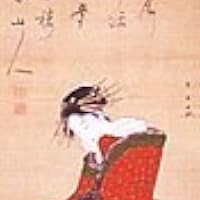
In this subtle and highly original reading of Murasaki Shikibu's eleventh-century classic The Tale of Genji (Genji monogatari), Doris G. Bargen explores the role of possessing spirits (mono no ke) from a female viewpoint. In several key episodes of the Genji, Heian noblewomen (or their mediums) tremble, speak in strange voices, and tear their hair and clothing while under the spell of mono no ke. For literary critics, Genji, the male protagonist, is central to determining the role of these spirits. From this male-centered perspective, female jealousy provides a convenient explanation for the emergence of mono no ke within the polygynous marital system of the Heian aristocracy. Yet this conventional view fails to take into account the work's female authorship and its largely female audience. Relying upon anthropological as well as literary evidence, Doris G. Bargen foregrounds the motives of the possessed character and located mono no ke within the politics of Heian society, interpreting spirit possession as a female strategy adopted to counter male strategies of empowerment. Possessions become "performances" by women attempting to redress the balance of power; they subtly subvert the structure of domination and significantly alter the construction of gender.
Yet another in a long line of interesting, but misguided, attempts to divine the substance of early Japanese court society from the fragments that now remain to us. Don't get me wrong, I find nothing wrong in the attempt to make sense of the past. (I'm a historian myself.) But Bargen goes about it in the worst possible way.
Her main premise seems to be that the phenomenon of spirit possession (as articulated in Murasaki Shikibu's Tale of Genji) represents nothing so mundane as a form of hysteria resulting from the cloistered lives of women at this time, but instead an intricate mechanism by which women strike back at the male oppressors whose decisions dominate their lives: a proto-feminist tool of assault.
Too call it a "farfetched" theory borders on the generous, in my view.
Spirit possession was a legitimate ailment in the Heian (794-1185) period, and while it struck both sexes it tended to effect women more than men. Once spirit possession was identified as the cause of one's disease, a priest and shamaness were called in to identify the spirit in question and determine the means of its pacification and exorcism.
For Bargen, this situation is - in Genji if not also in real life - no mere ailment but instead the opportunity for dissatisfied women to air their grievances via a mediator: firstly, the voice and ego of the spirit, and secondly, the shamaness who draws said spirit out and often speaks for them. I think the complicatedness of such a scenario speaks to its implausibility with more eloquence than I could muster.
Regardless, Bargen is seeking to understand societies of the past through a gendered filter, and I think that such an aim is noble and valuable. But it must be done carefully and with an extreme sensitivity to the conception of gender not as we understand it now, but as the people of long ago understood it then.
First off, I read the 'Tale of Genji' raw, no notes, no essays, nothing other then looking up a few alternate translations where I was interested. I found "A woman's weapon" to be an EXCELLENT review for me. I was also reading the 'Mistborn' Series in the middle of this last year, and so things were lost in the back and forth between two disparate reads.
My excellent lit professor in college was always a big one for just closing the book and asking, "what's the author doing here?" So I do that with everything I read, and it's probably what makes me so sour because, often, the answer is just, "making their word count higher..."
So in my review of Genji I had said that if Murisaki was doing anything, other then creating art, entertaining, and creating 'the novel' from the clasic 'monagatari' of her people, then she was informing a literate class of noble woman on the darker side of their future. I read the sareshina-nikki prior and in it the girl diarist, she's 8 or 10, and she is a) reading and writing, and b) specifically reading the sections of the Genji she can get her hands on before she arrive at court. Her mother is in full support of this as well. so, basically, a guide book.
In that, I think I generally agree with basic idea Bargen is putting forth. 1) this is a book written by a female court lady primarily for other female court lady's. and I agree with 2) that once you internalize that and read the spirit possession from the point of view of the woman, the possession clearly become an act (whether of defiance, fear, anger, sadness, freedom depends) against being essentially trapped by family, custom, love, law, etc.
My problem is not that Bargen is writing this from a feminist point of view. See, I often complain because a writer sometimes tries to be too(!) journalistic in their history or literary criticism... half the point of reading this kind of stuff is to get other people's opinions. However, the author let it give her a bit of tunnel vision. I see this with books on food, animal rights, climate change. Authors start ignoring certain details and big picture concepts to get their own point across.
She misses the 'nearly' pan-Asian view of health. That is, in general, a persons mental, social, religious, and societal healths are all one and the same. Health is a balance of things. I don't think we've quite done more then a doctor with 'good bedside manner' in the west (for worse or for better). For Bargen, possession is personal tool against male dominance. She bypasses the clear physical and religious ailments being suffered time and again. For her, it's all male domination or female jealousy in the polygnous society. She seems to find it difficult to accept that some part of the problem derives from legitimate ailments.
I think she also misrepresents taboo in reality and taboo as it appears in fiction. If the “Tale of Genji” was to be a real history, the Yugao chapter and her laying the groundwork for the Fujitsubo transgression would stick. But it's fiction, it's not real, and this is a work clearly made for the pleasure of Heian courtladys. If writing and poetry doesn't trangress a little taboo now and again, who'd ever read it????
Bargen also goes on about how stuck the woman are, but so too are all the characters. An author has created this landscape and these characters for a purpose - they are ALL slaves to the purpose. As well as slaves to their own culture and tradition. Murisaki can write about the Shining Prince because, within his world, he is the examplar. Even if we can see the world he is exemplifying is dark, decayed, and ready to fall under it's own weight any moment (which is what happens no more then 50 years after Murasaki dies and stops writing the Genji). My point is that Genji can stand as a hero/anti-hero figure in this world only because he wasn't the one who started the fire. And clearly he's not putting it out.
In the Murasaki/third princess section Bargen keeps pointing to how male choice, male dominance, male hegimony causes the possessions. So, sure. But lets not forget these girls were stolen from their houses at the ages of 8 or 9, by what passes in Heian court life has a weird form family consent. Call me crazy but I think wholesale abduction and stockholm syndrom might have more to do with the issues presented in Genji then anything else.
In the Ukifune section she referred to the uterine purse that holds Kaori's parentage. It's not even a purse, they didn't have them, really. It was wrapped 'maki' in silks as any such objects were kept and probably stored in a box. She's summoning up female anatomical images for what reason?
She completely misses the general sense of the Japanese longing for ephemeralism. She lost sight of it time and again, but really treads upon it ~pg 222-223 where she is just going on about “radical new way(s) to overcome human loss” and “patterns of metaphorical killing”. Jebus! it's an aesthetic. The content of Genji as some serious nature of the content, but the author is ignoring the playful, fun, profound, and artistic content and slicing through layers of the trans-formative to get at the one she wants..
Which, much like the Assassins Creed movie the wife and I just saw (and probably why I'm putting it here) the author simply misses out, wholesale, on the playful nature of the text. These are the people who about more excrement in their primary 'holy book' the kojiki then you'd hear about on Howard Stern. OR Murasaki's own diary ""One had a little fault in the colour combination at the wrist opening. When she went before the Royal presence to fetch something, the nobles and high officials noticed it. Afterwards, Lady Saisho regretted it deeply. It was not so bad; only one colour was a little too pale.""
Have you seen their game shows? Again, The Genji was a source of entertainment as much as anything else you want to pull out of it. Bargen is just rips the playfulness out and leaves a ghost strewn nightmare landscape of prisons on prisons. It's like you read a Cantacle for Leibovitz's and miss out on the fact it starts by a monk finding some dead dudes shopping list!
Too much cutting away of the fabric from the Genji, Bargen ends up stripping the skin as well, and we're left not with the exposed body of Heian court-life but with a bloodied carcass that looks more like 1980's america.
Three stars are entirely for Bargen bringing together classic and modern Genji analysis in what would be an excellent review with a great premise, if only she didn't go the route of Dr. Steinman and cut too deep....
I don’t know enough about Heian Japan to accurately assess this book beyond ‘that was an interesting read’, but I really wish there’d been more attention paid to the religious dimensions of spirit possession in here. But it does at least make me more determined than ever to actually finally read Genji.