Now, forty years since its original publication, Hans Kung's groundbreaking study--acclaimed as a model for ecumenical discussion--has become a classic work. Looking at the doctrine of justification as understood by the Protestant theologian Karl Barth in comparison to classic Roman Catholic theology, Kung found that the two had similar ideas about the main elements of justification. He argued there is fundamental agreement between Catholicism and Barth's doctrine and that the somewhat divergent viewpoints "would not warrant a division in the Church." This anniversary edition now features a new essay assessing Kung's work in light of contemporary ecumenical dialogues between Roman Catholics and Protestants.
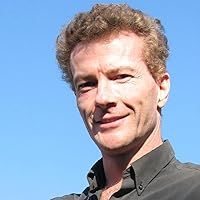
Hans Küng was a Swiss Catholic priest, controversial theologian, and prolific author. Since 1995 he had been President of the Foundation for a Global Ethic (Stiftung Weltethos). Küng is "a Catholic priest in good standing," but the Vatican has rescinded his authority to teach Catholic theology. Though he had to leave the Catholic faculty, he remained at the University of Tübingen as a professor of Ecumenical Theology and served as Emeritus Professor since 1996. In spite of not being allowed to teach Catholic theology, neither his bishop nor the Holy See had revoked his priestly faculties.
Outstanding! Excellent summary of Karl Barth's doctrine of justification, including a Catholic reflection which concludes that Barth's understanding is more in line with the teaching of the Catholic Church than Barth himself realized.
Justification is the primary historical point of contention between Catholics and Protestants. Küng demonstrates that we are not as far apart as we have been led to believe. A must-read for anyone with interest in ecumenical theology!
Always believing one should expose oneself to opinions that one doesn't necessarily hold to oneself, I have come to appreciate deeply the genius of Hans Küng. At the weekend I finished his "Justification: The doctrine of Karl Barth and a Catholic reflection".
I was a little excited to see this book at the library. I have been getting more and more into Barth, even though I'm Catholic and he is quite polemical against the RCC (in sincere, theological opposition, I think.) Here, Kung says exactly what I feel had been at the back of my mind, but could never articulate myself.
What made things tedious for me were the copious amount of quotes. One-third of the book, maybe...? Running through those citations made for a slow, jumpy read.