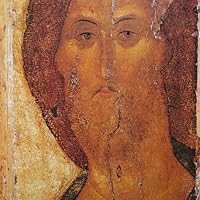
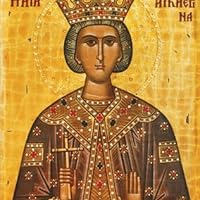
In the Orthodox Christian faith the elements of liturgy, scripture, hymnody, and iconography are the instruments or "voices" of a melody of faith. Here Vigen Guroian presents the fundamental beliefs of Orthodox Christianity through the metaphor of music. Often drawing on his personal religious experience, Guroian weaves together the themes of creation and new creation, beginning and end, sin and holiness, Incarnation and deification, sacrifice and salvation. Guroian explores the dogmatic foundation of this rich faith in six chapters, or "movements." Through discussing Syrian, Armenian, Byzantine, and Russian iconography and Gospel illuminations -- illustrated by icons and Armenian miniatures -- he further reveals how Orthodox Christianity expresses theology as much in art as through language. As a whole, Guroian's Melody of Faith beautifully captures the spirit of Orthodox Christianity and takes readers to the theological heart of the Orthodox faith.
Vigen Guroian resides with his wife June Vranian in Culpeper, Virginia, where he mostly tends to his large perennial and vegetable gardens. June is an Interior Designer. Vigen and June have two children. Their son Rafi is 28 years of age, a graduate of Hampden-Sydney College, and employed at Cox Newspapers in Washington D.C. Their daughter Victoria is 24 years old, a graduate of Washington and Lee University, and employed at the NRA.
Dr. Guroian received his B.A. from the University of Virginia (1970) and his Ph. D. in Theology from Drew University (1978). He is presently Professor of Theology and Ethics at Loyola College in Baltimore, Maryland. Dr. Guroian was an Assistant Professor of Religious Studies at the University of Virginia from 1978-81 and held a post there as well in the Center for Russian and East European Studies. He has been a visiting lecturer at St. Nersess Armenian Seminary in New Rochelle, New York, and was the Seminary's Director of Academic Affairs from 1990-92. Dr. Guroian has served for many years as a member of and consultant to the Armenian Religious Education Council of the Prelacy of the Armenian Church of North America.
Since 1986 Dr. Guroian has been a member of the faculty of the Ecumenical Institute of Theology at St. Mary's Seminary and University teaching courses there regularly. For the academic year 1995-1996 he was named the Distinguished Lecturer in Moral and Religious Education at the Institute.
Dr. Guroian has been on numerous editorial boards including The Journal of Religious Ethics, Pro Ecclesia: A Journal of Catholic and Evangelical Theology, and Christian Bio-Ethics. He has served terms on the Board of Directors of the Society of Christian Ethics and the executive committees of the American Theological Society and Christians Associated for Relations with Eastern Europe. He has been active in both the National Council of Churches and in the World Council of Churches.
He is Senior Fellow of the Center on Law and Religion of Emory University; Permanent Senior Fellow of the Russell Kirk Center for Cultural Renewal in Mecosta, Michigan; Senior Fellow of the Trinity Forum; and an ongoing Fellow of the Wilberforce Forum under the Prison Fellowship Ministries founded by the honorable Chuck Colson.
Recent significant consultations and projects on which Dr. Guroian has served include: "The Alonzo L. McDonald Family Project on Christian Jurisprudence," Emory University (2004-2009); "The Vocation of the Child," commissioned by the Center for the Interdisciplinary Study of Religion at Emory University (2005-2006); A Consultation: "American Orthodoxy or Orthodoxy in America," sponsored by the Institute on Religion and World Affairs, Boston University and Pew Charitable Trusts (2003-2004); Christian Jurisprudence Project on "Law and Human Nature: The Teaching of Modern Christianity," sponsored by Pew Charitable Trusts (2001-2004); and "Consultation on Ecclesiology and Ecumenism," sponsored by the Center for Catholic and Evangelical Theology (2000-2003).
Dr. Guroian has published more than 150 articles in books, journals, and encyclopedias on a range of subjects including Orthodox theology, liturgy and ethics, marriage and family, children's literature, ecology, genocide, and medical ethics. He has authored a monthly column entitled "Really Human Things" on the Prison Fellowship Ministries' BreakPoint site. Dr. Guroian's books, Inheriting Paradise: Meditations on Gardening (Wm. B. Eerdmans Pub. Co., 1999) and Tending the Heart of Virtue: How Classic Stories Awaken a Child's Moral Imagination (Oxford University Press, 1998), received national press and media attention. Feature stories on his books have appeared in The Washington Post, The Baltimore Sun, The Richmond Times Dispatch, and more than a dozen other newspapers around the country. Dr. Guroian has been a guest on NPR's "Talk of the Nation," "T
A Polish-born Catholic scholar and blogger that I follow on Facebook recently posted a request for suggestions of notable books on theology and he half-joked in his comments, “But none of that Orthodox stuff.” By that, he wasn’t sniffing at our faith, but at what he sees as the general lack of “high” theological scholarly work in evidence among us.
Perhaps this is due to a lack of a sizable end market where one can sell books of scholarly Orthodox theology, but there is something else, as Archbishop Stylianos of Australia reminds us: “The most important theme for the theologian is the human person. Human beings are the image of the invisible God; they are in essence 'the temple of the Holy Spirit'. Whatever else is in the 'context' of nature and history is either illuminated or darkened by the place which the human person takes therein.” Orthodox theology, then, is perhaps at its highest when it is deep, yet graceful (grace full!) and accessible to all.
The Melody of Faith is such a book. Guroian takes the very human experience of music as the book’s touchstone, but it’s not about liturgical song. Instead, he succeeds in making some profound theological thought as easily appreciated and impactful as are the polyphonies of a fine choir. Even if I can’t sing it myself, the shared experience is enriching and can be even transformational.
Guroian writes in the spirit of the Paris school of Orthodoxy that produced Fr. A. Schmemann, Evdokimov, and other lights of 20th century Orthodox renewal. His Armenian roots add to his composition. He “speaks truth in Love” to the modern religious mind, noting its widespread shallowness and its misapprehension of the apostolic bedrock of Christian faith. For example, Guroian weaves into one chapter the examination and “correction” of Gibson’s film “The Passion of the Christ”, how it missed the mark and failed to seize its moment to teach on the exalted love of God as proved in the Resurrection.
Guroian touches on all the high notes: Creation, the Theotokos, the hope found in resurrection, the healing found in Christ within the Church. His book keeps to the beautiful melody he lays out at the start:
God is not an art critic who makes aesthetic judgement nor is God a philosopher who issues metaphysical definitions to ethical decrees. God is more like a cantor who chants his Creation into existence and rejoices everlastingly over its beautiful harmony. His song continues, and its melody moves and inspires humankind to restore beauty and harmony to a Creation that is fallen and misshapen. (7)
Guroian's style for writing and charm are evident as ever in this neat little number. For me these were quite easily digestible meditations on certain Christian Mysteries; this little work is refreshingly breezy but undergirded by a very solid and substantial Theology, as can be gathered from the references, and is deeply rooted in art and liturgy, alongside some of the finer Eastern Theologians past and present. The anecdote on his friend in Armenia is heartfelt and touching and is placed very appropriately in line with a very realist understanding of the Resurrection that brings this key theme home, the highlight of the book for me.
A critique would be, that he could have developed the main themes more systematically, without losing readability I believe. Also, although he starts off with a musical metaphor this gets lost over time and so the title is rather misleading. This tangent didn't bother me but I could see that others might be aggrieved at it. All in all though this little book could serve as a good primer on Orthodoxy for a curious seeker.
Excellent introduction to Orthodox theology. Guroian not only introduces the fundamentals of all Christian faith with grace and ease, but he renders them in such a way that they lose the staleness that Western theology so often carries with it. I want to read much more Eastern theology now!
Archbishop Stylianos of Australia reminds us, “The most important theme for the theologian is the human person. Human beings are the image of the invisible God; they are in essence ‘the temple of the Holy Spirit.’ Whatever else is in the ‘context’ of nature and history is either illuminated or darkened by the place which the human person takes therein.” Orthodox theology, then, is perhaps at its highest when it is deep, yet graceful (grace full!) and accessible to all.
The Melody of Faith is such a book. Guroian takes the very human experience of music as the book’s touchstone, but it’s not about liturgical song. Instead, he succeeds in making some profound theological thought as easily appreciated and impactful as are the polyphonies of a fine choir. Even if I can’t sing it myself, the shared experience is enriching and can be even transformational.
Guroian writes in the spirit of the Paris school of Orthodoxy that produced Fr. A. Schmemann, Evdokimov, and other lights of 20th-century Orthodox renewal. His Armenian roots add to his composition. He “speaks truth in Love” to the modern religious mind, noting its widespread shallowness and its misapprehension of the apostolic bedrock of Christian faith. For example, Guroian weaves into one chapter the examination and “correction” of Gibson’s film “The Passion of the Christ”, how it missed the mark and failed to seize its moment to teach on the exalted love of God as proved in the Resurrection.
Guroian touches on all the high notes: Creation, the Theotokos, the hope found in resurrection, the healing found in Christ within the Church. His book keeps to the beautiful melody he lays out at the start:
"God is not an art critic who makes aesthetic judgement nor is God a philosopher who issues metaphysical definitions to ethical decrees. God is more like a cantor who chants his Creation into existence and rejoices everlastingly over its beautiful harmony. His song continues, and its melody moves and inspires humankind to restore beauty and harmony to a a Creation that is fallen and misshapen." (p. 7).
As a protestant there are going to be objections to some of the doctrines and emphases in this book, notably the defective understanding of justification and the forensic dimension of salvation and the place given to Mary (see ch. 4). However, there are some insights that protestants can take and develop without dismantling or threatening their Reformed framework.
The opening chapter on Creation and the strong affirmation of the physical creation, and the holistic connection between God's purpose in creation and a comprehensive redemption that takes in all creation in resurrection glory, is one that we protestant can learn from.
The stress on the resurrection of Christ is another. This note of victory and joy is often lacking where there is a isolated spotlight on the Cross which is somewhat (unintentionally) abstracted from the victory of Christ's conquest of death through his resurrection.
This is the second book of Vigen Guroian I have read. The first was called Life's Living Toward Dying, which I loved. This book is about Orthodox Christianity. It's not a "Welcome to the Orthodox Church" kind of book but more sublime essays on element of the faith and how the Orthodox approached these things. If you're a non-Christian intereted in Orthodoxy I don't think this is the place to start. You would already have to know something about Catholicism or certain branches of Protestantism. But for Catholics and Protestants there is a lot to ponder here. His views on Mary and the Resurrection will really make you think about your own beliefs. His discussion on why the Orthodox do not believe in the Immaculate Conception I found stunning.
I enjoyed this book. However the Kindle version doesn’t have an integrated table of contents, none of the footnotes are linked & there are some illustrations referred to as plate # that simply aren’t in the kindle version. Hard to compare images or refer to them if they don’t exist. Only reason I’m not asking for money back is that it was on sale for a couple bucks and I got that much out of the content.
My dad was on a read-everything-Orthodox kick a couple years back and when I was cleaning up their garage over winter break the cover/title caught my eye and I slipped it into the pile of things I was confiscating (along with Harry Potter legos and some high school books). The promise of poem-like prose and the set of color photographs at the center intrigued me.
I can’t say I’m an expert or even an amateur on Orthodox theology, so I found this book interesting and new. Everything was mostly familiar, but described from a slightly different angle and seen through a different lens than the Protestant lenses I have worn in my life. Some things I never thought of as too essential are brought to the forefront. Things that I had always heard repeated are de-emphasized. I’m not sure that I have a much better understanding of Orthodox theology, but I at least have a feeling of …something. A difference? But also how it is similar to everything I have learned before. As the subtitle says, it’s theology in an Orthodox key. We are still all part of the same music.
I thoroughly enjoyed the book. Guroian is an excellent writer and presents in very understandable form, the theology of Orthodoxy offering some contrast with typical Western Christian thinking about salvation. The juridical understanding of salvation is but one metaphor found in scripture, others have been used well by theologians from St. Paul through the Patristic writers.
This was a forgettable book, a fruitcake of quotes with a flavorless batter. It does, however, merit consideration for its exploration of eastern church's "theraputic" engagement with the worshipper rather than the western church's "judgemental" engagement.
Beautifully written and thoughtful insights into the nuances of Orthodox Christianity, particularly Armenian Orthodoxy. I've always found this flavor of Christianity attractive and now have a better understanding of why.