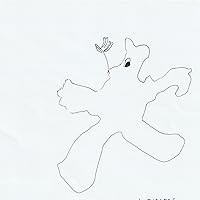
From the back "The only book about the school written by someone who went there. 'Black Mountain we made a potent little mandala in an archaic valley in the Blue Ridge Mountains to be felt long into the future,' Dawson wrote in 1970. The 1990 version of the book contains twice as much material as the original text, as well as documents from Dawson's years at Black Mountain (1949-1953): photographs, drawings, letters, poems, class notes."
Re-reading. I think I tried to give it a go in College (hopeless), then most certainly did read it at Iowa in the Eighties, I'm not certain why it's taken so long to re-read it -- there's nothing like it in the literature, and it's not just far preferable to the oral history Martin Duberman put together right around the same time (though Dawson's was written earlier -- 1967) -- but because by now I understand it far better (having read Melville certainly helps) it strikes me as a minor classic. Born in NYC and raised in Marianne Moore's neck of Kirkwood, MO, Dawson (1930-2002) may have tried college somewhere else in 1948 or perhaps he got a deferment from the draft that allowed him to go to Black Mountain, North Carolina in 1949, just as Charles Olson assumed the rectorship from Joseph and Anni Albers, who'd let the College's bank account run perilously thin.
From Dawson's account we get the boys camp feel for the place. The Black Mountain Book is all about re-enacting the Melvillian churn of gender crossing goings-on of a place set out in the placid little valley in the Blue Ridge, where Bauhaus modernism and Deweyan educational schemes have crossed and girls under the tutelage of Mary Caroline Richards have been encouraged to come and act like boys playing in the mud and throwing pots. One almost sees how something as fake as a "Black Mountain School of Poetry" developed as a code for the cross-dressing shenanigans. That Dawson was a cis-het young man from the St. Louis suburbs doesn't mean his desires were how things were going for him.
BMC had become at that point an arts college (you had to take general ed courses but there were no grades), so sumptuary codes dictated that everyone dressed an artisan and the men worked on the farm that was one of the least desirable jobs in the Deweyan eurthymics of workplay. Dawson's great contribution to the BMC literature is his representation of the work program, and if you're not hip to this, you may wonder how, or why, we go from Olsonian aphorisms on geographical history (Dawson at one point culls his notebook) to detailed descriptions of how to hammer a nail into an oak post (a near impossible task). Something more complex is going on here bound to be read, as I read it in my twenties, as authorial indulgence. Dawson's offering a contour image BMC life that, sure, will include references to million dollar estates like Franz Kline, Rauschenberg, Cunningham, et. al., but takes a contrary approach to labor-value. Marxist not all the way to communist, but it's pastoral. The prose, meantime, tunes to Melville's sense of irony.
Was it written fast as Dawson discovered the need for it amidst his more commercially appealing Kline memoir? That's a topic for let. Nonetheless, it's a more fully hatched thing than his memoir of the Kirkwood suburbs, Tiger Lilies.
I’ve never been more drawn in by someone’s pursuit of hammering a nail into oak. Dawson’s language is completely unique yet grounded in relatability. A good jumping off point for learning about BMC and Dawson. I appreciated the cross-references to the people, art, and literature in his peripheral. Read this over Martin Duberman’s book any day.
Normally when I read books for research I pick them apart for facts, but not this one (although there’s definitely a lot of social history to cite). I read it in less than a week and enjoyed it. Dawson introduces the idea that BMC was atemporal, which struck me as I try to piece together my own writing on the influence of the place. Another writer at the school stated that "Black Mountain was literally a place. The associations were very close and constant. But if you suddenly are not in one place, and there is no community in fact, then all the separations and distances and divergences seem to enter." Dawson's view is different. His revision makes me step back and think beyond the events that occurred on campus. Maybe instead of thinking what came from Black Mountain, we should be thinking what happened before? This idea comes through with Dawson's inclusion of family letters from the '30s. We get a sense of the person he was before and after attending BMC. The Black Mountain Book really changed my thinking on the college.
Dawson was there and still struggles to articulate what made BMC the experience it was for him, but fans of his projective writing style will find a lot to enjoy in this collection of memories, rumors and big ideas.
A very complicated memoir of Black Mountain. In fact, all such memoirs are complicated. Dawson's feelings about the people in the book (especially Olson) run a bit on the raw side, obviously slanting the view, but it is a good look at the people at that place at that time.