Laird was born in New Zealand in 1943, the fourth of five children. Her father was a ship's surgeon; both he and Laird's mother were Scottish. In 1945, Laird and her family returned to Britain and she grew up in South London, where she was educated at Croydon High School. When she was eighteen, Laird started teaching at a school in Malaysia. She decided to continue her adventurous life, even though she was bitten by a poisonous snake and went down with typhoid.
After attending the university in Bristol, Laird began teaching English in Addis Ababa, Ethiopia. She and a friend would hire mules and go into remote areas in the holidays.
After a while at Edinburgh University, Laird worked in India for a summer. During travel, she met her future husband, David McDowall, who she said was very kind to her when she was airsick on a plane. The couple were married in 1975 and have two sons, Angus and William.
Laird has also visited Iraq and Lebanon. She claims to dislike snakes, porridge and being cold but enjoys very dark chocolate, Mozart, reading and playing the violin in the Iraq Symphony Orchestra.
She currently lives in Richmond, London with her husband.
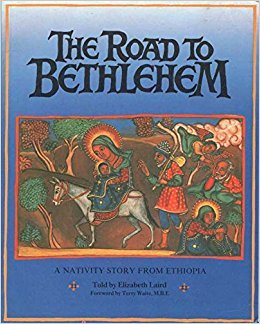
This is, as the title indicates, the Ethiopian version of the Nativity story, which includes most of the story you probably know from the Bible or Christmas picture books, but also additional details from local tradition. Particularly, I noticed there is a lot more about Mary and her life before the Annunciation. She gets sent for religious training, she performs acts of kindness, etc.
I really liked the art reproductions that were included, and appreciated the notes about how to understand them. Each piece comes with either specific information about how it was made or its history, or tips regarding general Ethiopian art symbolism and production. For example, bad people are often portrayed in profile. There were in some cases visual elements that indicate that the artists were familiar with Italian religious art.
Here is the cover if someone would care to add it:
This is an interesting book. It is a book written from stories collected from Ethiopia, and the pictures that fill the pages are some distinctive painted panels from that country. There are elements of truth from the New Testament passed down in the stories shared. And there are also extra stories, or parts of stories, within the text. It is interesting for me to try to distinguish the folklore from the New Testament stories. I like the descriptions by the picture panels that give the history of the scenes. This is very insightful into the Ethiopian culture.