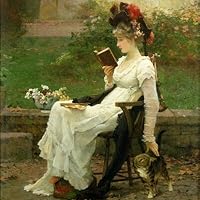
It’s funny—the poetic text, or more simply the words, of an opera are usually referred to by the Italian “libretto,” or in English, the “little book.” You might wonder why that could be funny to me.
Today, I took possession of this book for which I’ve been waiting several days. It is titled “101 Opera Librettos.” Originally published in 1996 by Black Dog Publishers, the book is truly massive. I’m currently recovering from back surgery, and one of my restrictions for a couple of weeks is to not lift anything heavier than a four-liter of milk, or about 3 kilograms. Though I have not weighed the volume, I probably broke my restrictions in picking it up and carrying it inside my home.
The book is long out of print, but for those deeply interested in opera, either in consuming it, or producing some component of it, this is a treasure of some of the best poetry meant to be sung that you can find. I can’t remember where I first heard of it, but I searched Abe Books (of course!) and found a used copy said to be in “very good” condition (and it was), for a very reasonable price (including free shipping!).
The volume (it refuses to be called a mere “book”) is, as the title plainly states, a library of one hundred and one librettos of the most famous/significant operas of the past few hundred years—Italian, German, French, English, Russian, and more. Each libretto is presented in its complete, original form (and language), as well as a direct English translation of each in parallel columna. Between the two, blue hard-cover boards, and filling a volume 28 by 23 cm by 10 cm thick, are 1474 pages, holding somewhere around 2,000,000 (that’s two-million!) words. I didn’t exactly count them all, but counted the words in a typical column and multiplied accordingly. (and so you know, I just now weighed it and it comes in at a tiny bit under 3 kg, barely within my lifting restrictions—my surgeon will be happy)
Now you know why I had to laugh—this collection of the “little books” of opera is certainly no little book itself!
So far, I have found it invaluable to research the actual texts of operas I know, and to see how the poetic texts form a backbone for the music, drama, and stage craft to unfold their magic. If you are hooked on opera in one way or another, you owe it to yourself to place this wonderful reference in your home or professional library.
While I agree with the effusive reviews already here, it must be noted that many of these librettos are (understandably) translations which could be found cheaply or out of copyright. Of course they have come from reputable sources, including record companies like EMI and production companies such as the Metropolitan. Nevertheless, individual lines or translations may be too overly poetic or fruity for some tastes, others may be too prosaic in the other direction.
There is no solution to this, and I offer it only as a caveat. Overall this book is highly worthwhile. There is nothing available that is remotely like it, offering the complete original text and English translation for so many worthwhile operas. In these days when the CD booklet has given way to the digital streaming service which provides no such text, there is a real dearth of information that I fear will limit accessibility to newer generations and audiences. This book is part of the solution.
An excellent guide to some of the most popular operas. Original language is in left column, English translation on the right. Translations are very good.