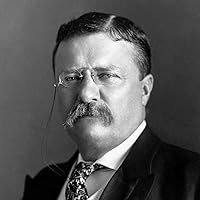
Few Christians had greater impact during the last half of the twentieth century than Dr. Francis A. Schaeffer. A man with penetrating insight into post-Christian, post-modern life, Schaeffer also cared deeply about people and their search for truth, meaning, and beauty. If there is one central theme throughout Schaeffer's work, it is that "true truth" is revealed in the Bible by "the God who is there," and that what we do with this truth has decisive consequences in every area of life. Death in the City was Schaeffer's third book and is foundational to his thinking. Written against the backdrop of the sixties countercultural upheaval, it reads today with the same ring of truth regarding personal, moral, spiritual, and intellectual concerns. Especially in light of 9/11, Schaeffer seems disturbingly prophetic. The death that Schaeffer writes about is more than just physical death―it is the moral and spiritual death that subtly suffocates truth and meaning and beauty out of the city and the wider culture. What is the answer that Schaeffer offers in response? It is commitment to God's Word as truth―a costly practice in the midst of the intellectual, moral, and philosophical battles of our day. It is compassion for a world that is lost and dying without the Gospel. It is yielding our lives to God and allowing Him to bring forth His fruit through us. Few have demonstrated this commitment to truth and "persistence of compassion" so consistently as Schaeffer did. And because of this, few who begin reading these pages will come to the end without having their life profoundly changed.
Francis August Schaeffer was an American Evangelical Christian theologian, philosopher, and Presbyterian pastor. He is most famous for his writings and his establishment of the L'Abri community in Switzerland. Opposed to theological modernism, Schaeffer promoted a more historic Protestant faith and a presuppositional approach to Christian apologetics which he believed would answer the questions of the age.
I wish I'd properly and prayerfully read this book years ago. Either that or the timing now is right. Gosh, the final chapter "The Two Chairs" had been a eureka moment, or properly, a Holy Spirit moment. How easily as a reformed evangelical pastor I am sitting in the philosophical materialist's (the determinist's) chair, not the supernaturalist's chair. And the answer is "the communion of the Holy Spirit" which I've repeatedly affirmed notionally Sunday after Sunday throughout my ministry. Schaeffer is so right. It is then not surprising if young people then look at the professing reformed evangelical church, and see a fustiness, a lack of living reality of the presence of, and conmunion with, the Lord Jesus. O Lord, I believe; please forgive my unfaith.
Schaeffer brilliantly navigates the terrain of the justice of and in divine judgement, while issuing a stark rebuke to 1960’s Christendom. A rebuke that hits the mark as well or better now than it can have done then.
A practically philosophical challenge to live as we believe, to love as we have been loved. And not be a bunch of limp malingerers playing at faith while falling neatly in step with everyone around us.
This was a very good book, but the most impactful portion was the very last chapter where Schaeffer explains his analogy of the two chairs. It goes something like this.
Suppose God made the universe to be one single room with walls and a roof, curtains pulled and doors locked. There is absolutely nothing outside the room, and you can explore the entire universe by just looking around the room. Suppose there are two chairs in the room and there are two men (the only men in the universe) sitting in these chairs. One is an entirely consistent materialist and the other man is a Christian.
The materialist gets up and says that he is going to explore their universe. He analyzes the room, uses the scientific process to examine the universe, pulling in ideas from chemistry, biology, physics, and so forth. He comes back after more than 30 years of doing this and has a stack of books he has written on all his findings, places them before the Christian and says “here is all the information about our universe.”
The Christian studies all the books for many years with great care and eventually says to the materialist, “You’ve done a tremendous work and have explained much about our universe that I would have never known otherwise. However, it is entirely incomplete.” The materialist is aghast and asks what it is that he has missed. The Christian replies that he has a Bible that talks about the origin of the universe, where men came from, but you have not given the origin of the universe or us. And there must be more to the universe that what you studied, there is an unseen portion too that is deeply connected to the seen portion. “You have studied the seen but have entirely neglected the unseen.”
The materialist replies that the Christian is crazy to talk about things he cannot see. Schaeffer asks to think a little further about this and imagine a large clock on one of the walls in the room that suddenly stops. The materialist says that since there are just two men in the room, one of them has to clamber up the wall and start it. But the Christian says he can talk to the one who made the universe and ask him to start the clock. The materialists at this point sees the Christian as insane for asking someone they can’t see to start a material clock.
Now imagine the walls of the room falls down and the universe is as it is at full size, but now there are many men - still represented by the two men of the room. No matter how deeply we study particles of matter and energy and learn about the vastness of our universe, it is no more complicated than the room that Schaeffer describes - it is only larger. Looking at the universe, we are seeing it as either the materialist or the Christian, each with their presuppositions.
The Christian can sit in the materialist chair at any existential moment, abandoning his Christian presuppositions. But the materialist cannot sit in the Christian’s chair without a work of God to help him believe in the things he cannot see.
Schaeffer expands these points much further and it is only a blip in the whole book, but it was very well written. This one is worth your time.
One has to wonder what Francis Schaeffer would think about the moral state of our nation today, given the alarm expressed in this book, which was written in 1969. "If (God) is really there and if he is a holy God, do you seriously think that God does not care that a country like our own has turned from him? There is only one kind of preaching that will do in a generation like ours –- preaching which includes the preaching of the judgment of God." (61).
It is curious to me how Schaeffer, who has traditionally always been a hero of Christian artists and intellectuals (who today might be called "hipsters") was able to express so much dogmatic moral outrage and not be simply dismissed as a right-wing fundamentalist. In the face of the cultural rot of our current day, many Christians are simply looking the other way out of fear of being regarded as irrelevant or judgmental. They would do well to revisit not only the content of this book, but also the book of Jeremiah, on which "Death in the City" gets its title and is largely based.
To be clear, Schaeffer is not endorsing the ugly, self-righteous, hateful condemnation that Christians have come to be known for. Instead, his call for prophetic confrontation is one that should be balanced with humble compassion: "We cannot shout at people or scream down upon them. They must feel that we are with them, that we are saying that both of us are sinners." (86). Christians today seem to understand this, which is great. But the confrontation part – not so much.
Why only 3 stars for this book? Quite frankly, I don't like the way Schaffer writes. It almost seems like this was a first draft that was then immediately sent off to the publisher, without any tightening up of sentences or deleting of unnecessary repetition. A skilled editor would have done him much good.
Nevertheless, this is a very timely book for the church in 2016.
I’m reading through Schaeffer’s Complete Works this year. I’ve read many of his books before, including this one, and previously, this was one of my top three of his.
However, after reading it this time, I wouldn’t hold to that anymore. This time I saw that he perhaps equated our culture and country too much with OT Israel. Moreover, the excellent exegetical insights which I loved from Jeremiah and Romans can be found similarly in other books.
As a result, I wouldn’t say this was one of his best. His insights from Jeremiah and Romans are incredibly helpful, but his direct application to our country were more unfounded than I previously saw. But once you get over that, if you read this you’ll be in for a treat. Easily deserves 4 stars, and if it wasn’t for that unfortunate USA-Israel connection that happens a few times throughout, it’d be 5 stars.
Once you’ve read Tom Wright’s “History and Eschatology,” there is no going back.
Apart from the chapter from which the title of this book comes, probably the most famous chapter is the last one, which describes the “Two Chairs” of materialism and supernaturalism. Schaeffer says that each person must inhabit one of these two chairs, one which says there is no God—all is material cause and effect, etc.—and the other affirms that God exists and can act in the world, i.e. normal physical processes aren’t all there is.
Schaeffer is a huge and consistent critic of modernity when it shoves God out of the picture because it thinks God unnecessary. Fair enough, good for him. But after reading Tom Wright, you can’t help but see that Schaeffer is wrapped up in modernity almost as much as those he criticizes. By dividing the world up into natural and supernatural, Schaeffer is presupposing what Wright would call the “Epicurean split” (he calls it that to highlight that our modern cosmology is nothing new): the division of reality into the spiritual/God realm as distinct from the physical world we inhabit.
For a much fuller and better treatment of this, read Wright’s book which I mentioned above. But the short of it is this: when you divide reality into these two distinct spheres, you give the impression that God isn’t really necessary. In fact, as Leibniz—A Christian philosopher, no less! (At least of a sort)—made clear in his correspondence with Newton, the idea of God “intervening” in the physical realm via miracle, in his view, reflects poorly upon God—what kind of God can’t get it right the first time? And then have to come in occasionally to fix things? This is the intuition and thought that re-germinated in the Enlightenment, bloomed a bit into the deism of the 18th century, then fully flowered into the secular world we now inhabit (see: Charles Taylor’s “A Secular Age”).
A Biblical view of the universe, then, cannot be one which presupposes this huge chasm between “supernatural” and “natural.” Rather, it must be one which maintains that God sustains all things “moment-by-moment,” (whatever that can mean when speaking of God, who transcends time and language); it must be one which reflects the Apostle Paul on Mars Hill: “in Him [Jesus] we live, move, and have our being.” The sun does not rise, as it were, every morning because God put everything in place, withdraws back to his “supernatural” realm, then lets it all run like a clock. Rather, it rises each morning because God wills it. We may think that such repetition and monotony are beneath God. But that’s simply our fallen, human projection; it’s exactly backwards. Chesterton put it best in “Orthodoxy”: “For grown up people are not strong enough to exult in monotony. But perhaps God is strong enough to exult in monotony. It is possible that God says every morning, ‘Do it again’ to the sun; and every evening, ‘Do it again” to the moon. It may not be automatic necessity that makes all daisies alike; it may be that God makes every daisy separately, but has never tired of making them. It may be that He has the eternal appetite of infancy; for we have sinned and grown old, and our Father is younger than we.”
The first half was "meh." There was much to agree with but nothing especially notable - it felt a bit stale, wasn't really contributing much to any particular conversation.
Further, the first half could have used a lot more clarity. His claim in the first half is that the West generally and America specifically are "under the judgment of God." I'll grant that, I suppose - the whole world is, after all, in some sense under the judgment of God (Romans 3:19, etc) - but he really needs to explain what he means, and he never does. So it's hard to know whether he sustains his claim or not, because it isn't well expounded.
From the tenor of his writing, though, it seemed that he was arguing that because the West/America has turned away from a relationship with God, they are under direct active punishment of some sort (what, exactly, is not clear. I could guess. But I shouldn't have to). And again, I wouldn't fully deny this. But Schaeffer needs to lay some groundwork here theologically and historically which he doesn't even gesture at.
Theologically, he needs to demonstrate that nations/cultures can enter into a relationship with God similar to that of Israel (thus justifying his usage of Jeremiah. To be clear, I think that Jeremiah does have much to say to our society today. But Schaeffer draws too close of a parallel in my mind between Israel and modern society), such that it can abandon that relationship and thereby provoke God's wrath. Do I think our society has provoked God's wrath by sinning? Yes. Has it provoked God's wrath by breaking some sort of pseudo-covenant? God does not enter into pseudo-covenants. He makes covenants with his people, and these are not modern nations or cultures.
If Schaeffer managed to overcome this, he would then need to historically demonstrate that America/the West (preferably settling on one) was ever actually in such a relationship, and had backslidden from it. As a student of history, I do not think this claim could be sustained. The founding documents do not suggest we are entering into any particular relationship with g/God (certainly not Yahweh). It is difficult to say even that America or the West was at any point substantially more godly than today - more biblically literate, certainly, but not godlier. Research any historical period, figure, or event and you will find a lot of sin. Which particular sins are more popular (or perhaps we could more accurately say "more noticeable." We might, for example, think of slavery as the defining sin of the 18th century or abortion as that of the 21st, but all the while pride, envy, idolatry, and all the other "respectable sins" have been firmly entrenched. And even the ones we think of as "past" or "present" have longer reaches and deeper roots, respectively, than we realize) change from era to era, but merely because an era did not struggle with the sins with which we struggle today does not make it godlier.
At any rate, America is not Israel, even in metaphor. It is Babylon - or perhaps Persia is an even better parallel. The church is Israel.
All that to say, the first half is very vague and rather trite, and I got the sense that I didn't agree with it entirely but it was hard to say why because it was very vague and rather trite.
Also he used the phrase "propositional revelation" a lot.
A short, passionate and simple gospel proclaimation (through the lens of Romans, Jeremiah and Lamentations) to a "dead", post-Enlightenment culture.
I appreciate Schaeffer's love of art and how he integrates that into these lectures. I also admire his heart for God's Word being proclaimed and his grieving over the lack thereof or its misuse. I tagged those pages as I would like to have the same heart. He writes, "I would say to you who call yourselves Bible-believing Christians, if you see the Word of God mutilated as it is in our day and are not moved to tears and indignation, I wonder if you love God. We should be filled with wonder and amazement that men dare so treat God's Word".
I’m used to thinking of Dr. Schaeffer in terms of his writings on worldview and apologetics. The delightful thing about this work, a series of lectures delivered at Wheaton College in 1968, is its gospel-saturatedness— Schaeffer’s heart for Christ, His finished work on the cross, and the transforming power of the Holy Spirit shine brightly in this volume.
If you need encouragement to be reaching a dying world with the gospel, knowing that our labors in the Lord aren’t in vain, read this one.
Schaeffer is the preeminent evangelical philosopher and this book reads like it could be about today, even though it was written in 1968. The diagnoses of our modern, post-Christian culture and a call for faithful believers to represent orthodox Christian teaching is just as clear now as it was then. If you’re interested in historical evangelical philosophy or the meeting of postmodern thought with Christian thought, this is the book.
When I read my first Francis Schaeffer book, He Is There And He Is Not Silent, I was entirely out of my depth. I was still in high school, and a significant percentage of the cultural references he made were still unknown to me. I have read several since then, and found some of them good. This, though, may be the best one I have encountered, and I'm not sure how it happened to have been lying around the house as I am very certain I never read it before.
The book is the text of a series of nine lectures given by the author at Wheaton College in 1969. In these he discusses the ministry of the prophet Jeremiah and its relationship to our modern situation, two times he connects on the basis of nations who once knew God turning from Him. He thus suggests that we need to put forward the message of God with the same boldness as Jeremiah--and that we should anticipate the same harsh negative response. One passage to this effect from the middle of the book struck me so strongly that I copied it to a post on the Christian Gamers Guild Facebook group. Overall, the emphasis is on holding firmly to correct orthodox Christian doctrine while speaking with compassion to a world whose need we recognize, maintaining the truth that the world is lost by its own rejection of God and delivering the answer that is the gospel of Christ.
It is much more than that, but it is worth reading. I went through it rather quickly, for no apparent reason, and probably should (and probably one day will) read it again.
Written after "The God Who Is There" and "Escape from Reason" this book takes the role of coupling the dismay of society together with the biblical message, particularly Jeremiah, who struggles in a world who turned against God. Secondly, he goes to Paul in Romans to find a solution to the question about those that live without the Bible. The dichotomy he works with is the Christian worldview and the one he called the Materialistic, seeing the Chrisitan as the whole one - containing both the visible and the invisible world - we have to make a choice to either be fully Christian or fall into the materialistic view. I feel he overcomplicated things and then oversimplified - but there a great deal of good analysis in this book and the parallels to Jeremiah. If preaching doom is the solution I doubt, but at least Schaeffer gives us something to consider and ideas to struggle with.
Francis Schaeffer powerfully recognizes the death in what he terms our "post-Christian" age. He recognizes the rejection of the Bible as authoritative truth in our culture is due to a lack of discipline and teaching in our churches. Our churches have become stagnant, failing to preach the power of the gospel. They will be spewed out of God's mouth if they do not return to His Scripture as the authority of truth.
In this little introductory work on the nature of Christian life in a post-Christian culture, Francis Schaeffer (1912-1984) writes to encourage reformation and revival to Christian evangelicals who may not know how to interact with or even live in a culture that has widely turned away from Christian principles and values. He does this in two broad steps with two biblical methods. The first takes up the first half of the book, which is to utilize the message of judgment from the prophet Jeremiah towards Israel as an application to Western culture, America as a country, and churches that have capitulated to worldly values. In the second half of the book, Schaeffer utilizes the book of Romans as a means of explicating the nature of unbelief and how the Christian is to believe and live. Central to his argumentation is the role of moral standards and the inescapable significance of humanity in history. No matter what one may say, every person operates under moral standards for which they will be judged one day. It is only the Christian understanding of man, history, and God that provides all three true significance and purpose, including the all-important opportunity of redemption.
In matters of evaluation, the book generally gets better as one reads it. The final chapter is one of, if not the best in the entire book. Schaeffer does a good job of describing the nature of antithesis and the mutual exclusivity of materialism and Christianity as worldviews. A central emphasis in this chapter, however, is the call for the Christian to practically live out his beliefs, not just intellectually affirm them. Too many Christians, according to Schaeffer, are claiming to be Christians, but their lives demonstrate that they are sitting in the materialist’s chair. This is a good and still needed message for the church today.
The first half of the book, however, is very interesting to read, especially in our contemporary context. The book was first written in the late 1960s, and then was republished as a new edition in the early 1980s. Much of Schaeffer’s worries and criticism towards culture still have applicability to today, but if the book were to be written today, it would most likely be interpreted as a book in support of Christian nationalism (a semantically overloaded term that is more or less meaningless now, but the point remains). This is largely due to Schaeffer’s insistence that Western culture and America as a country were, in some time prior to his time and the generation that preceded his, an essentially Christian. Schaeffer’s method also supports this point: his utilization of Jeremiah’s judgment proclamation towards Israel as a one-to-one application to America and its culture supports this case. He does not explicitly work out how this can be the case theologically, but he does allude to the light-responsibility principle that Jesus teaches in the gospel, namely that the more light (i.e., teaching, preaching, Bibles, etc.) a person, community, institution, or culture has, the more they will be held responsible for their lack of genuine repentance and belief. The main point for Schaeffer in this section is that if genuine reformation and revival are to be seen in America and Western culture, Christians must embrace a message of judgment towards not only unbelieving philosophies, but also individuals and institutions that embrace such unbelief, including those in political and ecclesiastical power.
As for more specifically apologetic methodology, Schaeffer represents a broadly presuppositional approach in this work, but this is more implicit than not. The second half of the book emphasizes more the practical dimension for how Christians ought to live and believe, rather than the nature of antithesis, the definition of presupposition, or how to exactly confront unbelieving worldviews. There are some points, however, that do subtly point to a slight divergence from Cornelius Van Til, for one classic figure in presuppositional apologetics, such as his understanding of how unbelievers hold the truth in unrighteousness as informed by Romans 1.
Overall, this is a fine work for introducing one to a Christian cultural apologetic that is more distinctly Reformed, albeit also culturally sensitive (i.e., having a deeper awareness and appreciation for the arts and literature than most Reformed/evangelical apologists, as is often the case with Schaeffer in general). The first half of the book may stretch on a bit too long, and the message of judgment towards America should at least be accompanied by the further arguments that have been put forth in recent years concerning the relationship between church and state, doctrine and government, Christianity and culture. The second half of the book makes for more varied reading, and therefore is more interesting and insightful, as well as challenging for the Christian who lives in a post-Christian culture. The Christian who reads this book should walk away from it with a desire for reformation and renewal, whether that is primarily in the church at large, or the church of a particular culture, or even for a culture in general, as Schaeffer no doubt intends it to be.
Francis August Schaeffer (1912-1984) was an American Christian theologian, philosopher, apologist, and Presbyterian pastor, as well as the founder of the L'Abri community in Switzerland. He wrote the famed "trilogy": 'The God Who Is There,' 'Escape from Reason,' and 'He is There & He is not Silent.' He has also written many other books such as 'How Then should We then Live,' 'Genesis in Space and Time,' 'The Church At the End of the 20th Century,'J'oshua and the Flow of Biblical History,' etc.
He also turned to politics with 'Whatever happened to the Human Race?', which was influenced by his filmmaker son Frank (who later regretted it; see his book, 'Crazy for God: How I Grew Up as One of the Elect').
He wrote in the Preface to this 1969 book, "This book is based upon lectures given at Wheaton College (Illinois) from September 30 to October 4, 1968. I have not attempted to remove all the marks of the lecture form. 'Death in the City,' along with L'Abri written by my wife, Edith, should be placed alongside my two books, 'The God Who is There' and 'Escape from Reason.' All four books should be read together.
"The work of L'Abri has become known for the way it brings historic Christianity into contact with twentieth-century man and his intellectual and cultural questions. But without the spiritual reality ... or without the constant exegetical and expository base of L'Abri which is partially exhibited in 'Death in the City,' L'Abri cannot be understood. We believe God has used all of these elements as a unity in the whole work."
He notes, "Many young people say to me, 'Why shouldn't I take drugs when the generation before me finds its escape in alcohol and adultery?' They are completely right. One is as bad as the other. It will not do for a society that lives on adultery and alcohol to turn then to those who would carry it a step further and act as though there's a qualitative difference between the two. There's only a quantitative difference. The church which does not speak of the sins of the last generation is in no position to speak of the sins of this generation." (Pg. 40)
He asserts, "These men come and say, 'Here is the message of God,' but it's not. It's the message of man. Do you think God is going to take this lightly?... And so I speak to you, O church; I speak to you, O generation, and even to that portion of the evangelical church that's getting wobbly at the edges---I speak to you and say God will judge! If we don't have the courage to say that, and mean it, we cannot expect young people to do more than say god-words, god-words, god-words." (Pg. 56-57)
He admits, "I am convinced that many men who preach the gospel and love the Lord are really misunderstood. People make a 'profession,' but because they haven't understood the message, they are not really saved... I am certain many men who make a profession go away still unsaved, having not heard one word of the real gospel because they have filtered the message through their own thought forms and their own intellectual framework in which the word 'guilt' equals 'guilt feelings.'" (Pg. 93)
He makes the illustration: "Let us suppose for a moment that as each baby is born, a tape recorder is placed around its neck. Let us further suppose that this tape recorder works only when moral judgments are being made... Finally, when each person dies and stands before God in judgment, God pushes a button and each person hears with his own ears his own moral judgments... and God simply turns and says, 'On the basis of your own words, have YOU kept these moral standards?' And each man is silent. No person in all the world has kept the moral standards with which he has tried to bind others." (Pg. 112)
Covering a variety of more "practical" matters than in his famous trilogy, this book will be of great interest to those who have enjoyed Schaeffer's other books.
A strong exhortation for the Christian, no matter his or her generation!
"Our calling is to enjoy God as well as glorify Him."
"God has turned away in judgment as our generation turned away from Him, and He is allowing cause and effect to take its course in history."
"Today we are left largely not only with a religion and a church without meaning, but we are left with a culture without meaning. Man himself is dead."
"Our generation has nobody home in the universe, nobody at all. Eventually, let us understand this: only a personal comforter can comfort man who is personal, and only one Comforter is great enough: the infinite-personal God who exists—that is, the God of JudeoChristian Scripture. Only He is the sufficient Comforter."
"Reformation refers to a restoration to pure doctrine; revival refers to a restoration in the Christian’s life. Reformation speaks of a return to the teachings of Scripture; revival speaks of a life brought into its proper relationship to the Holy Spirit."
"And if the church is not speaking in strong terms against both the apostasy and the sins of our own day, we are not ready to see any sort of revolutionary movement into our generation."
"The world is lost, the God of the Bible does exist; the world is lost, but truth is truth. Keep on! And for how long? I’ll tell you. Keep on, keep on, keep on, keep on, and then KEEP ON!"
"The basis of our salvation is not our faith. Faith is rather the instrument, the empty hands with which we accept the gift. We are not saved by faith in faith. The basis of our salvation is the finished work of Jesus Christ in space and time. Paul emphasizes this in the third chapter where he says we are saved upon the basis of the work of Jesus Christ. Faith is raising empty hands in accepting the gift."
"The Christian is called to be the carrier of the content of the good news."
"I stand here now, a Christian who has the content of the gospel, and I say: Isn’t it wonderful that we have an answer to modern man, who says man is a zero. I can say, You are not a zero. I can say: Proust is wrong; the dust of death is not on everything. There is real meaning that stretches out forever and ever into the future. Isn’t that wonderful!"
Nesta obra, Francis Schaeffer traz à lembrança o texto bíblico de Jeremias que denunciava a apostasia de seu povo, e faz uma relação do período histórico do profeta com o caráter do nosso tempo. Ao expor o texto, o autor nos mostra o olhar de Deus para uma cultura que o conheceu e deliberadamente virou-lhe as costas. Consequentemente, ao rejeitá-lo o homem não apenas se esquece de Deus, mas também do seu propósito, de quem ele é e do que significa a vida. Como diz Schaeffer, "dar as costas para a revelação proposicional de Deus é estar num lugar onde não há nenhum Consolador, pois se está separado dEle". Neste quesito, o homem perdido em sua busca de sentido tenta de todas as formas saciar suas mais variadas fomes. Nisso consiste a "morte da cidade", porque o homem negou a Deus e a Sua verdade, há fome por todo lado, e certamente haverá a menos que haja um retorno àquela verdade. Isso valeu para a época de Jeremias, e vale hoje para nossos dias.
Esse é o segundo livro de Francis Schaeffer que tive a oportunidade de ler e posso dizer que "Morte na Cidade" é um livro que nos sacode por inteiro. Apesar da obra ser resultado de uma série palestras dadas em 1969, sua mensagem é tão precisa e atual que parece ter sido aplicada ontem. Uma incrível demonstração da importância de Francis Schaeffer para a Igreja e cultura do século XXI
Part of Schaeffer's early writing. Well worth the read. Today's Christians could learn a lot. The thing that stood out to me most was his portrayal of Jeremiah as a prophet who GRIEVED over the situation his country was in. Something of a Cassandra (maybe even the origin of the Greek character), he is never believed and everything he prophesied came true in the worst way possible. Yet through all his mistreatment as he watched his society collapse, he wept over what he knew was coming.
I'm not sure Christians today understand this. We see the collapse of society. We are made fun of and in some cases lose our jobs over stands we take on issues important to society. But do we grieve? Maybe over the loss of our privilege. But do we grieve over the judgment society is facing? I fear not. And to me, this is an even bigger source of grief. That God's people have so little regard for their neighbors that they do not fear God's coming judgment, but instead feel "they" deserve it.
In the first half of the book Schaeffer parallels the prophecies of Jeremiah alongside his contemporaries. In essence, the world is experiencing hardship and will continue to do so because they have abandoned the mode of living that brought them prosperity in the first place. The second half was much more interesting as Shaeffer unpacked several passages in the letter to the Romans as further detailing the state of the world. His discussion surrounding those who are ignorant of the gospel message was most interesting, at one point he appears to be quite sympathetic to Barths universal view of things - though he does not follow through. Towards the close of his book, Sheaffer contrasts materialists and christians and the ramifications of such positions. I found the book to be rather straightforward and to the point. However, it is easy to see how this would have added to Schaeffer's repertoire in the 70's as a radical thinker.
This book addresses how the church evangelizes/addresses the for-all-intents-and-purposes nihilism of various twentieth and twenty-first century philosophies. The book is well ahead of its time, asking and answering questions that even now some churches and pastors are not yet considering. The title is poor (I always thought this was some sort of New Urbanism plea! It's nothing of the sort). It contains some of Schaeffer's best analogies/explanations, such as the "two chair" image—every human sits in one of only two chairs, the naturalist's of the supernaturalist's—and my favorite, the "tape recorder" thought experiment that demonstrates clearly why we don't need special revelation to be condemned before God (the standards to which we hold others but up to which we ourselves do not live are quite enough).
Good stuff here, and I'm glad Crossway is republishing several of Schaeffer's timely works.
My opinion is that Death in the City is a must-read for the believer of today. Despite being a classic, it provides insight into what our culture has become. Originally published in 1969, it reads as if it were written today. In addition, it offers a frightening insight into what Shaeffer was experiencing when he wrote the book. In modern eyes, this only reads worse. The extent to which we've progressed far beyond what Schaeffer was originally concerned about is frightening. In the 1960s reform was needed urgently; now it is needed desperately in the 2020s. In addition, the book reads like a wonderful companion to Jeremiah. Reading this book while studying Jeremiah is highly recommended. In the future, I will do the same. It is among the greats in my opinion. You should read this from front to back. Immerse yourself in reflection and prayer after reading. Despite its heavy content, the book offers hope. Focus on Jesus.
About a dozen years ago I read Schaeffer’s “The Mark of the Christian” and promised myself I would read more of his writings as that book struck a nerve. Unfortunately many years passed until I purchased and read “Death in the City”.
Schaeffer’s exegesis of the first half of Paul’s epistle to the Romans is remarkable. It has totally changed my thinking about approaching the non-believer with the gospel - in God’s eyes they are significant and morally alive, not amoral, and require an awakening to their immorality in a compassionate manner. That is precisely what happened to me in my college years that brought me to faith.
Speaking of faith, Schaeffer’s discussion and defining of faith midway through the book is an eye-opener. It is an example of why this book is a must read for any and all Jesus followers.
Death in the City is a very important work for Christians to read. It deals with absolute truth and making an intellectual case for Christianity. It also tackles topics such as witnessing to others, living by faith in a material world, and balance between "form and freedom."
The book took such a complicated subject and covered it tactfully so that it was easy to follow. I believe that is largely in part to the style of the book. Schaffer wrote this very intelligent argument without going overboard on the academic language making it dense and unreadable. However, he also doesn't overcorrect that common mistake by dumbing it down for his readers and provide nothing of substance or thought-provoking.
At first, I wasn't sure whether this was simply a patched together transcript of Schaeffer's lectures, since that's what it's based on, and because of it's remarkable readability. Schaeffer, as always, peels back the veil of our assumed cultural presuppositions, and offers keen insights to where Western culture is which remarkably sound as accurate today, as when it was written, a generation ago. Much has stayed the same. We have lost our Christian bearings, and the need to declare hard, absolute truths about God and his justice and judgment are unpleasant realities which nonetheless open the doors for real, compassionate evangelistic conversations.
Schaeffer’s treatise of living in a post-Christian culture. While it was written at the end of the 60s, much rings true today, perhaps in an even more significant way. I just finished studying Jeremiah, which this book ties into, so it was helpful to even help me translate some of what I learned in Jeremiah to what’s going on in our world today. Schaeffer’s logical argument style of addressing his topic reminded me at times of CS Lewis or even GK Chesterton.
I think it would be helpful to read some of Schaeffer’s other related works to have a fuller picture of what he was talking about, but the book did make me think about ministry and evangelism in 2018.
I read a lot of Francis (and Edith) Schaeffer 35+ years ago, starting with A Christian Manifesto. His writings were so influential on me, my mother once joked that when I had children, I would read them Schaeffer as bedtime stories! Death in the City brings spiritual clarity through Schaeffer's well thought out worldview. This inspires me to revisit the writings of Francis Schaeffer and my spiritual foundations, and also to take deeper dives back into Jeremiah and Romans for understanding today's world.