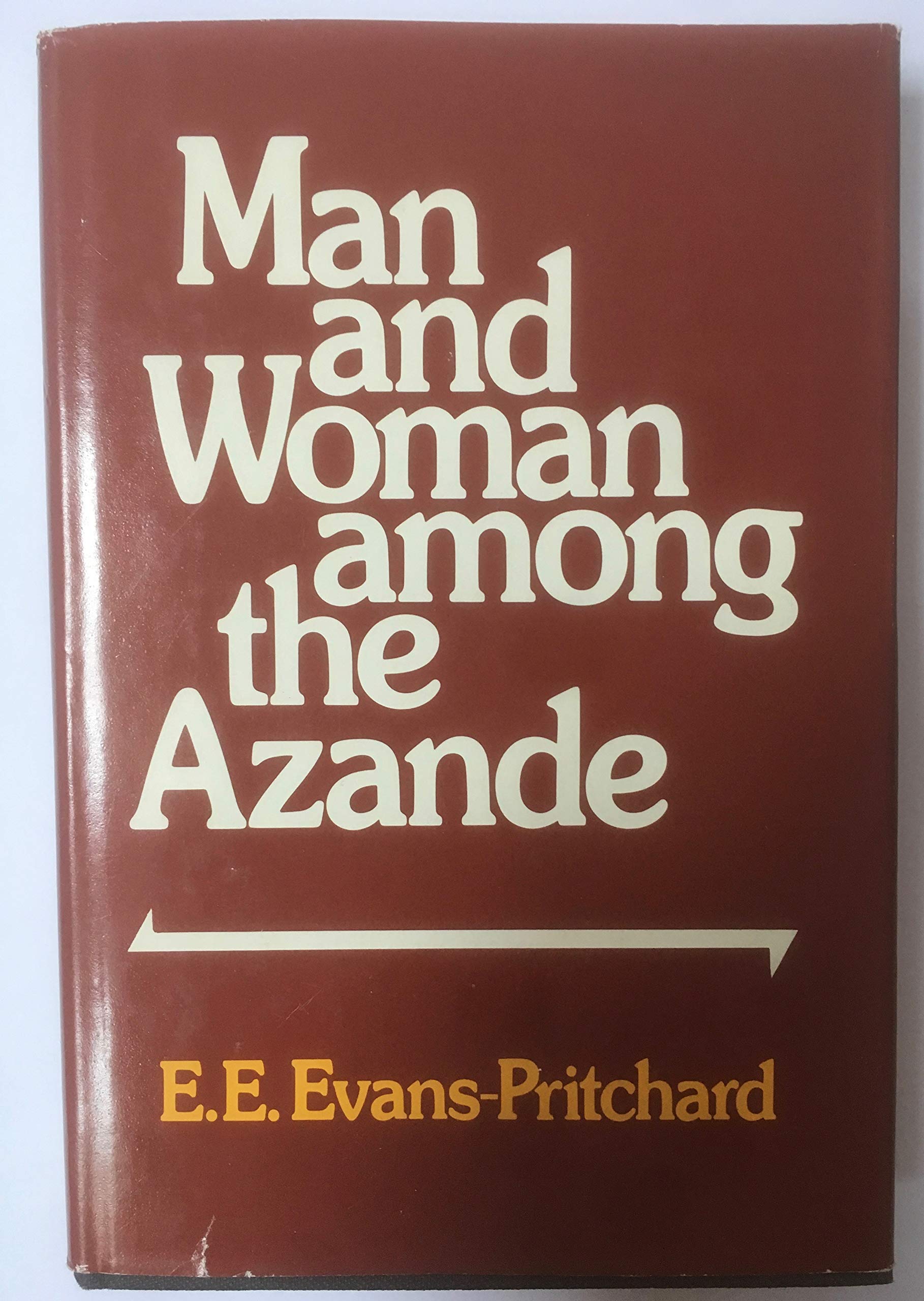
How did the Azande of Central Africa view the relationship between men and women? How much importance do they attach to domestic life, to food, and sex? What role does magic and superstition play in their lives? in Men and Woman among the Azande, a renowned anthropologist records his feelings of the Azande themselves on these and other topics. E. E. Evans-Pritchard first began visiting and writing about the Azande in the late 1920s. The first part of hte book reflects on these "Old Times." The selections in tthe second section, "Modern Times," were taken down nearly forty years later. The two sections offer a comparison of attitudes toward such subjects as husbands and wives, family, kin, and in-laws, and lovers, and adulterers.While Evans-Pritchard found major changes had occurred in industry and the economy during the span of years, he concluded that many habits of thought and feeling seemed to have changed little and that the relationship between the sexes did not seem to be fundamentally different than it had been a half-century ago. Man and Woman among the Azande not only presents a particular African way of reflecting on how men and women see one another, but offers a contribution to the perennial debate on how men and women regard each other and get along together in any part of the world.
Sir Edward Evan "E. E." Evans-Pritchard (21 September 1902 – 11 September 1973) was an English anthropologist who was instrumental in the development of social anthropology. He was Professor of Social Anthropology at the University of Oxford from 1946 to 1970.