

What do you think?

The Inner Beauty
This Book "The Inner Beauty" has been considered important throughout the human history, and so that this work is never forgotten we have made efforts in its preservation by republishing this book in a modern format for present and future generations. This whole book has been reformatted, retyped and designed. These books are not made of scanned copies of their original work and hence the text is clear and readable.
22 pages, Paperback
First published January 1, 1910
About the author
Maurice Maeterlinck
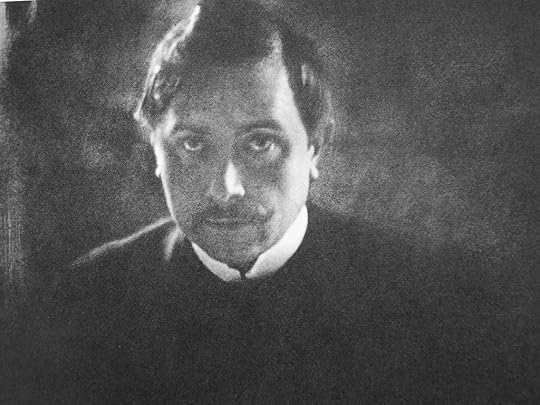
1,408 books309 followersMaurice Polydore Marie Bernard Maeterlinck (also called Count Maeterlinck from 1932) was a Belgian playwright, poet, and essayist who was a Fleming, but wrote in French.
He was awarded the Nobel Prize in Literature in 1911 "in appreciation of his many-sided literary activities, and especially of his dramatic works, which are distinguished by a wealth of imagination and by a poetic fancy, which reveals, sometimes in the guise of a fairy tale, a deep inspiration, while in a mysterious way they appeal to the readers' own feelings and stimulate their imaginations".
The main themes in his work are death and the meaning of life. His plays form an important part of the Symbolist movement.
He was awarded the Nobel Prize in Literature in 1911 "in appreciation of his many-sided literary activities, and especially of his dramatic works, which are distinguished by a wealth of imagination and by a poetic fancy, which reveals, sometimes in the guise of a fairy tale, a deep inspiration, while in a mysterious way they appeal to the readers' own feelings and stimulate their imaginations".
The main themes in his work are death and the meaning of life. His plays form an important part of the Symbolist movement.
Ratings & Reviews
Friends & Following
Create a free account to discover what your friends think of this book!
Community Reviews
Displaying 1 - 4 of 4 reviews

May 16, 2017
“Thousands of channels there are through which the beauty of your soul may sail even unto our thoughts. Above all is there the wonderful, central channel of love.”
― Maurice Maeterlinck, The Treasure of the Humble
Maurice Maeterlinck (1862-1949) – Playwright, poet and essayist born in Ghent, Belgium and winner of the Nobel Prize in Literature in 1911. I’m new to the author but reading this short work and also a few biographical details of how Maurice Maeterlinck loved life, dedicating many hours to careful observations out in nature - flowers, insects, the sky, the stars - for me, above all else, Maurice Maeterlinck is a mystic.
And I have found the only way to effectively read a mystic is to meditate on their words slowly and carefully, discovering links between what is being expressed and the depths of one's own interior life. Reading and rereading The Inner Beauty, here are the four lines in particular that really resonated. I am moved to share my own experiences and reflections.
“Nothing in the whole world is so athirst for beauty as the soul, nor is there anything to which beauty clings so readily.”
Our spiritual depth, our spirit, is an inner dimension we feel more than see. But curiously, our soul yearns for those sight and sounds that expand us well beyond the range of words or concepts. There's the story of a prisoner locked away in a dingy cell and what kept his spirits up was the opportunity to behold a flower, just one flower, when he would take his afternoon exercise in the courtyard. Likewise, I recall riding the train to work one morning to a job I found both suffocating and degrading, when I happened upon a beautiful passage in Calvino about the flight of birds. I held that passage close to my heart for days.
As a young man, I had the good fortune to discover during yoga class, the beauty of breath, its fourfold movement: in-breath, the moment of stillness at the base, out-breath, the moment of stillness at the top. The more I became aware of the act of breathing, the more I became a connoisseur of the breath, feeling the full gamut of sensations, progressively more attuned to the subtlety of the entire process. I then moved on from breath awareness to breath control through the many varieties of pranayama techniques, such that for many years now, the breath has taken on an inner beauty that is nothing less than magnificent.
"Beauty is the only element wherewith the soul is organically connected, and it has no other standard of judgment. This is brought home to us at every moment of our life, and is no less evident to the man by whom beauty may more than once have been denied than to him who is ever seeking it in his heart."
I can personally attest to the weighty truth articulated here. I recall a time in my life as a teenager, when my soul and its sensitivity to beauty went into deep hibernation. Although I was enveloped by ugliness - coarse, crude and nasty in the extreme - I failed to see or sense all the ugliness. Then one muggy afternoon, age eighteen, sitting in a locker room, waiting to take the field with the other players on the football team, forced to listen to a coach’s ravings, it happened: like receiving a smack by a Zen master’s rōshi stick, as if the ocean wave of my own inner beauty opened my eyes and heart and swept every grimy inch of the foul ugliness away, I awakened. When the other players ran out to take the field, I remained seated. Then, calmly walking over to the equipment room, I turned in my uniform and pads.
The next morning, perfect timing - I attended a class in the humanities where the professor spoke about the beauty of classical music and played a piano sonata by Frédéric Chopin. Ah, how refreshing. how uplifting and how absolutely exhilarating. Such beauty, I reflected, is what I am at my very center, a beauty that is my authentic nature. I never forgot my awakening; I vowed never again to fall into such a deadening slumber. In a real sense, my adult years have been dedicated to maintaining a connection to my own inner light and inner beauty.
"All the doors are unlocked, we have but to push them open, and the palace is full of manacled queens."
Similar to John O’Donohue, Maurice Maeterlinck is urging us to "beautify our gaze" since our experiencing beauty out in nature, in other people, in our many encounters on life’s path, is the unfolding of an inner transformation not a change of scenery. This is one prime reason, if I may say so, I attempt to focus on the inspiring and enriching features and qualities of the books and art I review. Considering all the many great authors and artists who have dedicated their lives to their respective mode of expression, I place the burden on myself as reader to open as much as possible in order to uncover literary and artistic gold and behold the beauty and splendor.
“We must cultivate silence among ourselves, for it is then only that for one instant the eternal flowers unfold their petals, the mysterious flowers whose form and colour are ever changing in harmony with the soul that is by their side.”
Over the past years, each time I’ve gone into silent retreat, sometimes a short as one day or as long as two weeks, dedicating my time to meditation and a quiet moving about, I have always emerged refreshed an rejuvenated. Frank, my dear lifelong friend, spent eighteen years in silence as a Trappist monk. Although many years removed from the monastery, anyone who comes in contact with Frank senses the presence of silence in Frank’s every word and gesture. This to say, when we cultivate silence in our own lives, as Maurice Maeterlinck observes, our soul is brought into harmony with nature and the cosmos. What a gift. But in our modern world, it is up to us to make the effort.
An especial gesture of thanks to my good friend Jean-Paul Werner Walshaw-Sauter from Lausanne, Vaud, Switzerland for bringing the essays of Maurice Maeterlinck to my attention.

July 3, 2014
Nothing in the whole world is so athirst for beauty as the soul, nor is there anything to which beauty clings so readily.
(5)
This has been a particularly hard piece to read, and by a necessary consequence, to write a review of. Maurice Maeterlicnk is, before anything else, a Nobel laureate (1911) who earned the coveted award for his plays which form a substantial part of the Symbolism Movement. Adherents believed that absolute truths could only be described indirectly, which necessitates a style of writing punctuated by metaphorical and suggestive prose. This is now our caveat by which we seek to assuage any difficulty in tackling this work.
The work is divided in three parts, Inner Beauty, Invisible Goodness, and Silence. This is a spiritual and ruminative work in all its aspects.
"Beauty is the only language of our soul: none other is known to it." (10)
Beauty is of course acts that we could generally and objectively categorize as good in man. Maeterlinck states that every man, even the unhappiest and the most destitute have at the depths of their being, this beauty that he speaks of. This necessarily lays down the premise that men by nature are good, or, in Maeterlinck's words, are naturally beautiful beings, who need only to acquire the habit of dipping into that nature, into that soul, and the greatest act by which we enliven this beauty is by loving.
Is it not in love that are found the purest elements of beauty that we can offer to the soul? (19)
To him, to love means losing every bit of 'ugliness' in our souls. It is the state by which we come closest to God. But to be good, to be able to love with real ardent affection, we must first go through suffering, a harrowing by which we are molded to become better and end up in tune with our soul, our inner beauty. "Grief is love's first food, and every love that has not been fed on a little pure suffering must die like the babe that one had tried to nourish on the nourishment of a man." (20)
And there would always remain between us truth which had not spoken, which we had not even thought of speaking... and only in silence could we perceive it.
And he counsels the reader to search for these intermittent pockets of silences in life which holds the 'real' secrets and calls them 'secret silences'.
One has to forgive my limited and modest uptake of Maeterlinck's philosophy as contained in this work. Admittedly, this is only one way to look and deconstruct this highly suggestive and metaphorical work. It bears mentioning that nowhere was beauty explicitly defined within the work except from derivable contextual references, and even then it was questionable and equivocal. The work, however clearly references to spirituality and to God, to a human soul, but not religion. The chapter on Invisible Goodness clearly refers back to the Soul and its nature of goodness and nobility. The silence he refers to is also curious as he does not clarify as to whether he refers to spiritual silences or a physical world of a noiseless condition. Indeed he says that:
There is no silence more docile than the silence of love, and indeed it is the only one that we may claim for ourselves alone. The other great silences, those of death, grief or destiny, do not belong to us. They come towards their own hour, following in the track of events, and those whom they do not meet need not reproach themselves. But we can all go forth and meet the silence of love.
But then again he writes,
If I tell someone that I love him - as I may have told a hundred others - my words will convey nothing to him, but the silence that will ensue will make it clear.
This book forms part of my remarkably extensive reading list on Nobel Prize for Literature Laureates
This review, along with my other reviews, has been cross-posted at imbookedindefinitely
This has been a particularly hard piece to read, and by a necessary consequence, to write a review of. Maurice Maeterlicnk is, before anything else, a Nobel laureate (1911) who earned the coveted award for his plays which form a substantial part of the Symbolism Movement. Adherents believed that absolute truths could only be described indirectly, which necessitates a style of writing punctuated by metaphorical and suggestive prose. This is now our caveat by which we seek to assuage any difficulty in tackling this work.
The work is divided in three parts, Inner Beauty, Invisible Goodness, and Silence. This is a spiritual and ruminative work in all its aspects.
"Beauty is the only language of our soul: none other is known to it." (10)
Beauty is of course acts that we could generally and objectively categorize as good in man. Maeterlinck states that every man, even the unhappiest and the most destitute have at the depths of their being, this beauty that he speaks of. This necessarily lays down the premise that men by nature are good, or, in Maeterlinck's words, are naturally beautiful beings, who need only to acquire the habit of dipping into that nature, into that soul, and the greatest act by which we enliven this beauty is by loving.
Is it not in love that are found the purest elements of beauty that we can offer to the soul? (19)
To him, to love means losing every bit of 'ugliness' in our souls. It is the state by which we come closest to God. But to be good, to be able to love with real ardent affection, we must first go through suffering, a harrowing by which we are molded to become better and end up in tune with our soul, our inner beauty. "Grief is love's first food, and every love that has not been fed on a little pure suffering must die like the babe that one had tried to nourish on the nourishment of a man." (20)
And there would always remain between us truth which had not spoken, which we had not even thought of speaking... and only in silence could we perceive it.
And he counsels the reader to search for these intermittent pockets of silences in life which holds the 'real' secrets and calls them 'secret silences'.
One has to forgive my limited and modest uptake of Maeterlinck's philosophy as contained in this work. Admittedly, this is only one way to look and deconstruct this highly suggestive and metaphorical work. It bears mentioning that nowhere was beauty explicitly defined within the work except from derivable contextual references, and even then it was questionable and equivocal. The work, however clearly references to spirituality and to God, to a human soul, but not religion. The chapter on Invisible Goodness clearly refers back to the Soul and its nature of goodness and nobility. The silence he refers to is also curious as he does not clarify as to whether he refers to spiritual silences or a physical world of a noiseless condition. Indeed he says that:
There is no silence more docile than the silence of love, and indeed it is the only one that we may claim for ourselves alone. The other great silences, those of death, grief or destiny, do not belong to us. They come towards their own hour, following in the track of events, and those whom they do not meet need not reproach themselves. But we can all go forth and meet the silence of love.
But then again he writes,
If I tell someone that I love him - as I may have told a hundred others - my words will convey nothing to him, but the silence that will ensue will make it clear.
This book forms part of my remarkably extensive reading list on Nobel Prize for Literature Laureates
This review, along with my other reviews, has been cross-posted at imbookedindefinitely

September 15, 2025
INNER BEAUTY
"There is nothing on earth so curious for beauty or so absorbent of it, as a soul. For that reason few mortal souls withstand the leadership of a soul which gives to them beauty."
“And again, I doubt whether anything in the world can beautify a soul more spontaneously, more naturally, than the knowledge that somewhere in its neighborhood there exists a pure and noble being whom it can unreservedly love.”
“Here not to know oneself means to be unconscious of all the divine that throbs in man. As we wander from the gods within us so does ugliness enwrap us; as we discover them, so do we become more beautiful.”
“I said just now that the soul changed into beauty the little things we gave to it. It would even seem, the more we think of it, that the soul has no other reason for existence, and that all its activity is consumed in amassing, the depths of us, a treasure of indescribable beauty. Might not everything naturally turn into beauty, were we not unceasingly interrupting the
arduous labours of our soul?”
“Perhaps a great wrong may have been done you today, the act itself being mean and disheartening, the mode of action of the basest, and ugliness wrapped you round as your tears fell. But let some years elapse, then give one look into your soul, and tell me whether, beneath the recollection of that act, you see not something that is already purer than thought; an indescribable, unnameable force that has nought in common with the forces of this world; a mysterious inexhaustible spring of the other life, whereat you may drink for the rest of your days.”
“It means that the beauty that turns into love is undistinguishable from the love that turns into beauty. It means to be able no longer to tell where the ray of a star leaves off and the kiss of an ordinary thought begins.”
SILENCE
“if it be granted to you to descend for one moment into your soul, into the depths where the angels dwell, it is not the words spoken by the creature you loved so dearly that you will recall, or the gestures that he made, but it is, above all, the silences that you have lived together that will come back to you: for it is the quality of those silences that alone revealed the quality of your love and your souls.”
“that words can never express the real, special relationship that exists between two beings.
Were I to speak to you at this moment of the gravest things of all-of love, death or destiny-it is not love, death or destiny that I should touch; and, my efforts notwithstanding, there would always remain between us a truth which had not been spoken, which we had not even thought of speaking; and yet it is this truth only, voiceless though it has been, which will have lived with us for an instant, and by which we shall have been wholly absorbed.
“must cultivate silence among ourselves, for it is then only that for one instant the eternal flowers unfold their petals, the mysterious flowers whose form and colour are ever changing in harmony with the soul that is by their side. As gold and silver are weighed in pure water, so does the soul test its weight in silence, and the words that we let fall have no meaning apart from the silence that wraps them round.”
INVISIBLE GOODNESS
“Why are we so fearful lest we exhaust the heaven within us? We dare not act upon the whisper of the God who inspires us. We are afraid of everything that cannot be explained by word or gesture; and we shut our eyes to all that we do, ourselves notwithstanding, in the empire where explanations are vain!”
“I have known more than one man who performed every act of kindness and mercy without touching a single soul; and I have known others, who seemed to live in falsehood and injustice, yet were no souls driven from them nor did any for an instant even believe that these men were not good. Nay, more, even those who do not know you, who are merely told of your acts of goodness and deeds of love if you be not good according to the invisible goodness, these, even, will feel that something is lacking, and they will never be touched in the depths of their being.”
"There is nothing on earth so curious for beauty or so absorbent of it, as a soul. For that reason few mortal souls withstand the leadership of a soul which gives to them beauty."
“And again, I doubt whether anything in the world can beautify a soul more spontaneously, more naturally, than the knowledge that somewhere in its neighborhood there exists a pure and noble being whom it can unreservedly love.”
“Here not to know oneself means to be unconscious of all the divine that throbs in man. As we wander from the gods within us so does ugliness enwrap us; as we discover them, so do we become more beautiful.”
“I said just now that the soul changed into beauty the little things we gave to it. It would even seem, the more we think of it, that the soul has no other reason for existence, and that all its activity is consumed in amassing, the depths of us, a treasure of indescribable beauty. Might not everything naturally turn into beauty, were we not unceasingly interrupting the
arduous labours of our soul?”
“Perhaps a great wrong may have been done you today, the act itself being mean and disheartening, the mode of action of the basest, and ugliness wrapped you round as your tears fell. But let some years elapse, then give one look into your soul, and tell me whether, beneath the recollection of that act, you see not something that is already purer than thought; an indescribable, unnameable force that has nought in common with the forces of this world; a mysterious inexhaustible spring of the other life, whereat you may drink for the rest of your days.”
“It means that the beauty that turns into love is undistinguishable from the love that turns into beauty. It means to be able no longer to tell where the ray of a star leaves off and the kiss of an ordinary thought begins.”
SILENCE
“if it be granted to you to descend for one moment into your soul, into the depths where the angels dwell, it is not the words spoken by the creature you loved so dearly that you will recall, or the gestures that he made, but it is, above all, the silences that you have lived together that will come back to you: for it is the quality of those silences that alone revealed the quality of your love and your souls.”
“that words can never express the real, special relationship that exists between two beings.
Were I to speak to you at this moment of the gravest things of all-of love, death or destiny-it is not love, death or destiny that I should touch; and, my efforts notwithstanding, there would always remain between us a truth which had not been spoken, which we had not even thought of speaking; and yet it is this truth only, voiceless though it has been, which will have lived with us for an instant, and by which we shall have been wholly absorbed.
“must cultivate silence among ourselves, for it is then only that for one instant the eternal flowers unfold their petals, the mysterious flowers whose form and colour are ever changing in harmony with the soul that is by their side. As gold and silver are weighed in pure water, so does the soul test its weight in silence, and the words that we let fall have no meaning apart from the silence that wraps them round.”
INVISIBLE GOODNESS
“Why are we so fearful lest we exhaust the heaven within us? We dare not act upon the whisper of the God who inspires us. We are afraid of everything that cannot be explained by word or gesture; and we shut our eyes to all that we do, ourselves notwithstanding, in the empire where explanations are vain!”
“I have known more than one man who performed every act of kindness and mercy without touching a single soul; and I have known others, who seemed to live in falsehood and injustice, yet were no souls driven from them nor did any for an instant even believe that these men were not good. Nay, more, even those who do not know you, who are merely told of your acts of goodness and deeds of love if you be not good according to the invisible goodness, these, even, will feel that something is lacking, and they will never be touched in the depths of their being.”

July 13, 2013
How contorted could the sense of exterior perception be? And how immensely beautiful are the ones who truly shine from within? The answers have been most satisfactorily described with simplicity and bliss. A good read on a calm summer day!
Displaying 1 - 4 of 4 reviews