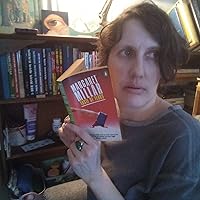
When Frances Howard's husband vanishes almost immediately after their marriage, she pursues him to remotest Turkey, where she learns his family's secret and discovers an archaeological relic that may help reveal his whereabouts
Felicity Avery (Anne Stevenson, pen name) was born in Cardiff in 1928, she read History at St. Anne’s at the University of Oxford from 1946 to 1949. After her degree, she worked as historical archivist for the Holland-Martin banking family, before turning to journalism and fiction, which was initially published in the form of short stories and serials in magazines and journals. Composed under the nom de guerre of Anne Stevenson, her first novel, Ralph Dacre, was immediately snapped up by Billy Collins in 1967 and quickly became a best seller. It was followed by eight further novels that spanned various genres from thrillers to historical sagas. She has variously been compared to Mary Stewart and, in her pared-down shorter fiction, to Graham Greene and during her most prolific years in 1960s and 1970s, she gathered a considerable number of loyal readers for her intelligent, well-crafted thrillers.
She was married to the economic journalist and naval historian, Ronald Avery (1915-1996) and spent the last years of her life in Oxford, before losing her fight with breast cancer in 2008. She is survived by her daughter, Anne Louise, and grandson, Inigo. There are plans to republish her works in the next couple of years, following a resurgence of interest in her fiction.
Originally published on my blog here in January 2001.
A whirlwind romance ends in marriage for Frances Howard and Robert Denning, but when Robert disappears Frances starts to learn things about her new husband that she had never suspected. She follows him to Greece and then to the tense area around Van in eastern Turkey - near the Russian border, and home to rebellious Kurdish tribes.
In essence, Turkish Rondo is a standard Cold War thriller, but with the elements twisted around and the marriage given so much importance that it becomes more the centre of the novel than the usual parts of the plot. (This of course helps greatly for the characterisation of Frances.) Having a thriller begin with a marriage is quite unusual; as a result, Turkish Rondo is inventive and romantic.