Less than an hour later, the nude body of the dead man lay in the outhouse which did duty at St. Mead as the official mortuary. Anthony Bathurst is taking the sea-air at the village of St Mead, when the local constabulary drag him into the investigation of a local murder. The mystery is someone has stripped the body, left it in a field and shaved the victim's moustache off. Soon a second body is found, along with a mentally-challenged young man whispering about "gold" . . . With these obstacles in his path, can Bathurst possibly unmask the killer? The Case of Elymas the Sorcerer was first published in 1945. This new edition features an introduction by crime fiction historian Steve Barge.
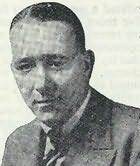
"Brian Flynn, English author and an accountant in government service, a lecturer in elocution and speech, an amateur actor. He wrote about 50 novels, mostly for the library market. His serial character is Anthony Bathurst." - fantasticfiction.com
All the Anthony Bathurst books have an intriguing and complicated plot, this one is no exception. I enjoy a glimpse into a period and lifestyle that I can only imagine.
Anthony Bathurst is recuperating from muscular rheumatism, by the sea, when he becomes involved in his 31st investigation, first published in 1945.
The discovery of the naked body of an unidentified man is swiftly followed by a second, in the same field, and Bathurst is roped into the case, soon backed up by Andrew MacMorran of Scotland Yard. He quickly intuits a connection, and, when the second man is identified as a rather solitary Londoner, the pace of the murder enquiry quickens.
In London, Bathurst is lured to a decrepit house and into a strange interlude involving a small person, a goat, a tarantula and a young woman in a white robe kneeling by a coffin. The solution is less esoteric than this scenario might suggest, although there is drama in the denouement and in the arrest of the murderer.
Annoyances abound, however. Flynn is as snobbishly disparaging of left-wing politicians as he was in The Fortescue Candle and his rendering of Cockney and various working-class speech patterns is poor, given his background in elocution and amateur dramatics. There is also a degree of superiority in his parading of knowledge about art, albeit that such knowledge is important to the solution.
A satisfyingly convoluted case with but few clues for the reader-detective.