

What do you think?
Regional Perspectives on Early America
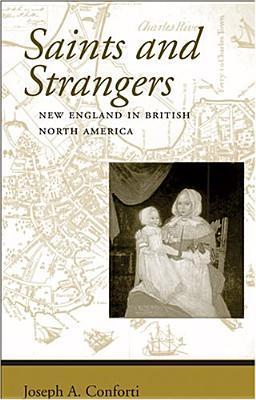
Saints and Strangers: New England in British North America
Outstanding Academic Title for 2007, Choice Magazine In the first general history of colonial New England to be published in over twenty-five years, Joseph A. Conforti synthesizes current and classic scholarship to explore how Puritan saints and "strangers" to Puritanism participated in the making of colonial New England. Massachusetts Governor John Winthrop's famous description of New England as a "city upon a hill" has tended to reduce the region's history to an exclusively Pilgrim-Puritan drama, a world of narrow-minded founders, the First Thanksgiving, steepled churches, and the Salem witchcraft trials. In a concise volume aimed at general readers and college students as well as historians, Conforti shows that New England was neither as Puritan nor as insular as most familiar stories imply. As the region evolved into British America's preeminent maritime region, the Atlantic Ocean served as a highway of commercial and cultural encounter, connecting white English settlers to different races and religious communities of the transatlantic world. The Puritan elect—but also Natives, African slaves, and non-Puritan white settlers—became active participants in the creation of colonial New England. Conforti discusses how these subcommunities of white, red, and black strangers to Protestant piety retained their own cultures, coexisted, and even thrived within and beyond the domains of Puritan settlement, creating tensions and pressure points in the later development of early America.
248 pages, Paperback
First published January 1, 2005
Ratings & Reviews
Friends & Following
Create a free account to discover what your friends think of this book!
Community Reviews
Displaying 1 - 2 of 2 reviews

August 12, 2011
Good synthesis of the many clashing theories about New England and the Puritans.

June 23, 2015
I find it helpful (alongside the other thousands of books about New England)... Often, pages go by without footnoting. At this point in his career the Professor has earned the right not to bother?
Displaying 1 - 2 of 2 reviews