Charles Chenogne, un famoso violoncelista, decide abandonarlo todo y retirarse en la vasta finca de su familia, en la región alemana de Wurtemberg, antaño parte de Francia. Durante las largas horas en soledad, revisita su infancia. La recuerda como un mundo entre dos idiomas, lleno de gatos, niños y viejas damas de un refinamiento de otro tiempo. Y marcada por la ausencia de la madre, que le abandonó cuando él tenía cuatro años. Pero sobre todo Charles rememora una y otra vez lo que quizá fue el centro de su vida: la profunda amistad que le unió a Florent en los años sesenta, una amistad que acabó en drama cuando Isabelle, la esposa de Florent, abandonó a su marido por Charles. El salón de Wurtemberg es una novela conmovedora, refinada, irónica, una historia de amistad y amor entre tres personajes que al encontrarse muchos años después de la época en la que se frecuentaban, descubren que no tienen ningún recuerdo en común. «Creo que la memoria no existe -comenta Quignard-, sólo existen las narraciones de la memoria, los relatos en los que creemos. En mi opinión, la memoria no contiene verdades, sino que más bien consiste en un continuo trabajo de transformación.»
Romancier, poète et essayiste, Pascal Quignard est né en 1948. Après des études de philosophie, il entre aux Éditions Gallimard où il occupe les fonctions successives de lecteur, membre du comité de lecture et secrétaire général pour le développement éditorial. Il enseigne ensuite à l’Université de Vincennes et à l’École Pratique des Hautes Études en Sciences Sociales. Il a fondé le festival d’opéra et de théâtre baroque de Versailles, qu’il dirige de 1990 à 1994. Par la suite, il démissionne de toutes ses fonctions pour se consacrer à son travail d’écrivain. L’essentiel de son oeuvre est disponible aux Éditions Gallimard, en collection blanche et en Folio.
===
Pascal Quignard is a French writer born in Verneuil-sur-Avre, Eure. In 2002 his novel Les Ombres errantes won the Prix Goncourt, France's top literary prize. Terrasse à Rome (Terrasse in Rome), received the French Academy prize in 2000, and Carus was awarded the "Prix des Critiques" in 1980. One of Quignard's most famous works is the eighty-four "Little Treatises", first published in 1991 by Maeght. His most popular book is probably Tous les matins du monde (All the Mornings in the World), about 17th-century viola de gamba player Marin Marais and his teacher, Sainte-Colombe, which was adapted for the screen in 1991, by director Alain Corneau. Quignard wrote the screenplay of the film, in collaboration with Corneau. Tous les matins du monde, starring Jean-Pierre Marielle, Gérard Depardieu and son Guillaume Depardieu, was a tremendous success in France and sold 2 million tickets in the first year, and was subsequently distributed in 31 countries. The soundtrack was certified platinum (500,000 copies) and made musician Jordi Savall an international star. The film was released in 1992 in the US. Quignard has also translated works from the Latin (Albucius, Porcius Latro), Chinese (Kong-souen Long), and Greek (Lycophron) languages.
Two men are Army buddies in France. They maintain their friendship after one marries. They even live in the same country house with an elderly relative. Eventually the second man has an affair with his friend’s wife. Later in life they reconcile and eventually the married man dies.
The real story begins then. The book becomes a reflection late in life by the remaining friend. He discovers that a lot of his early memories were distorted or even false. The book is translated from the French, so the emphasis on memory and a bit of hypochondria fit squarely in the tradition of Proust.
The tone of the book is is poignant and remorseful with much great writing. I'll let the author speak for himself with these examples:
“It was as if she were using imaginary quotation marks as tongs to pluck such words out of the fire without soiling her fingers or burning or sullying her lips.”
“Our given names, though we didn’t choose them ourselves, are a kind of skin that has grown up with us and been fed and watered by all that we are.”
“Our eyelids are forever opening and shutting, but in between we don’t see very much.”
“We put our arms around people who are suffering because we can’t bear to look at them.”
Two more:
“His face had grown ugly, petrified in the frightening grimace worn by those particularly craven men who’ve sworn never to cry.”
“In her company I’d learned to live alone.”
This is a great book; thought-provoking, very literary and well-written.
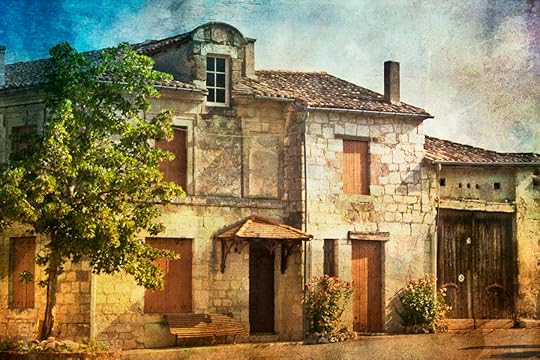
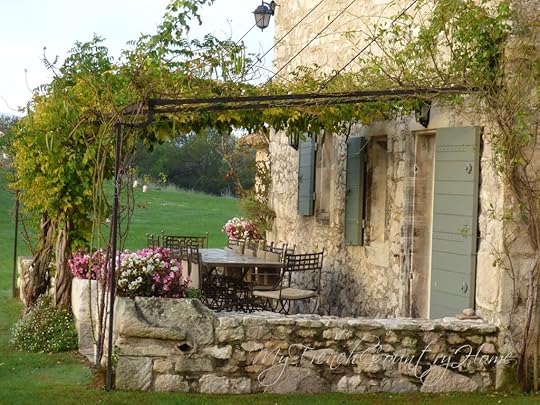
Top: a photograph by Georgia Fowler, The Old French House, fineartamerica.com Bottom: from sharonsantoni.com
Dos hombres, antiguos compañeros del ejército en Francia, mantienen una sólida amistad incluso después de que uno de ellos se case. Ambos comparten una casa de campo con un pariente anciano. Sin embargo, la traición se cierne cuando el segundo hombre tiene un romance con la esposa de su amigo. Con el paso del tiempo, logran reconciliarse antes de que el esposo fallezca.
Es entonces cuando la verdadera historia comienza. El libro se convierte en una reflexión tardía de la vida por parte del amigo que queda. Descubre que muchos de sus recuerdos tempranos estaban distorsionados o incluso eran falsos. La traducción del francés resalta la importancia de la memoria y una pizca de hipocondría, en línea con la tradición de Proust.
El tono de la obra es conmovedor y arrepentido, acompañado de una escritura magistral.