

What do you think?
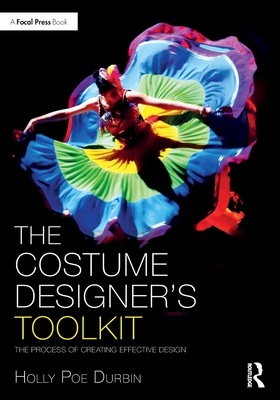
The Costume Designer's Toolkit: The Process of Creating Effective Design
The Costume Designer’s Toolkit explores the wide-ranging skills required to design costumes for live performance in theatre, dance, opera, and themed entertainment. Arranged in chronological order to create a design, each chapter describes tools, strategies, and techniques costume designers use to create lively and believable characters within a story environment. The book provides a step-by-step outline of the costume design process beginning with developing as an artist and creating an artistic vision for a script. It covers a wide range of topics, Each topic includes case studies and tips from experienced professionals, identifies vital skills, describes techniques, and reveals the essential elements of artistic leadership, collaboration, and cultural acumen. The Costume Designer’s Toolkit is the perfect guidebook for the student, aspiring, or early-career costume designer, to be used alone or in costume design university courses.
352 pages, Paperback
Published December 15, 2022
Ratings & Reviews
Friends & Following
Create a free account to discover what your friends think of this book!
Community Reviews
Displaying 1 - 1 of 1 review

January 14, 2023
Thank every MF star in the sky that Holly Poe Durbin has written this desperately needed book.
Honestly, people have been teaching costume design using textbooks written before the internet and smartphones, because there wasn't any updated references since Covey & Ingham's Costume Designer's Handbook (1983);
That book is now an interesting peek into how designers did their work prior to the ubiquity of computers/software, instant digital communication, etc., but it's as helpful as a book on shoeing horses for a car mechanic now. (That's a hyperbolic comparison, but the point is that this new text of Durbin's was SO BADLY NEEDED.)
Durbin breaks down the job to the absolute basics, so this is potentially a good text for an Intro to Costume Design course, but she also dives deep in terms of how the design process scales up from the expectations of a theatre with a one-person costume department to a big- budget production where the designer has a dedicated team of production artists for draped/tailored made-to-measure costumes (or, how the designer overhires/contracts people for such things). So whether a professor is teaching students who don't know what a "costume crafts artisan" is/does at the beginning of the class, or students who don't know how to find/hire one at a theatre without a crafts artisan on staff, this is an excellent textbook choice.
I love that Durbin addresses what's required conceptually in terms of creative freedom and exploration at the beginning of the process, but also devotes a setion to "Feasibility," and how basically a designer can stay true to the aesthetic spirit of their design while remaining mindful of the parameters of budget and time. It's difficult--especially for young designers--to take a concept that would be incredible with an international opera company's budget behind it and figure out where to prioritize/compromise/reconceive for a small regional theatre with more limited resources.
Much like in the other related book in this series, The Costume Supervisor's Toolkit (which I also recently reviewed), it's fantastic to find coverage of post-opening roles of the designer in terms of costuming understudies/swings, which is invaluable in the age of COVID when those performers are much more likely to go on at all levels of production and will need costumes.
This book's appendix is helpful as well--sample resume structure. A costume designer's resume does not look like "traditional" resumes for corporate jobs. This will help students and young designers begin to compile their own resume according to a useful format, rather than trying to figure out how to shoehorn their work into a standard corporate template from a career development center.
In conclusion, this book is a much-needed reference for the professional libraries of all contemporary costume studios/departments, and an excellent option for a new and highly-relevant textbook in costume design courses at all levels--introductory to advanced.
Disclosures: This book is published by Routledge, which also published my book, A History of the Theater Costume Business: Creators of Character. I received a complimentary review copy but with no expectation of a public review of this sort, good or bad. Useful info tho: All their titles are 20% off right now!
I have also worked with the author--she designed a show at the theatre where I work some years ago. I have a generally positive professional impression of her but we are not currently coworkers, friends, or otherwise such that I would feel "obligated" to review the book positively if I read it and felt otherwise.
Honestly, people have been teaching costume design using textbooks written before the internet and smartphones, because there wasn't any updated references since Covey & Ingham's Costume Designer's Handbook (1983);
That book is now an interesting peek into how designers did their work prior to the ubiquity of computers/software, instant digital communication, etc., but it's as helpful as a book on shoeing horses for a car mechanic now. (That's a hyperbolic comparison, but the point is that this new text of Durbin's was SO BADLY NEEDED.)
Durbin breaks down the job to the absolute basics, so this is potentially a good text for an Intro to Costume Design course, but she also dives deep in terms of how the design process scales up from the expectations of a theatre with a one-person costume department to a big- budget production where the designer has a dedicated team of production artists for draped/tailored made-to-measure costumes (or, how the designer overhires/contracts people for such things). So whether a professor is teaching students who don't know what a "costume crafts artisan" is/does at the beginning of the class, or students who don't know how to find/hire one at a theatre without a crafts artisan on staff, this is an excellent textbook choice.
I love that Durbin addresses what's required conceptually in terms of creative freedom and exploration at the beginning of the process, but also devotes a setion to "Feasibility," and how basically a designer can stay true to the aesthetic spirit of their design while remaining mindful of the parameters of budget and time. It's difficult--especially for young designers--to take a concept that would be incredible with an international opera company's budget behind it and figure out where to prioritize/compromise/reconceive for a small regional theatre with more limited resources.
Much like in the other related book in this series, The Costume Supervisor's Toolkit (which I also recently reviewed), it's fantastic to find coverage of post-opening roles of the designer in terms of costuming understudies/swings, which is invaluable in the age of COVID when those performers are much more likely to go on at all levels of production and will need costumes.
This book's appendix is helpful as well--sample resume structure. A costume designer's resume does not look like "traditional" resumes for corporate jobs. This will help students and young designers begin to compile their own resume according to a useful format, rather than trying to figure out how to shoehorn their work into a standard corporate template from a career development center.
In conclusion, this book is a much-needed reference for the professional libraries of all contemporary costume studios/departments, and an excellent option for a new and highly-relevant textbook in costume design courses at all levels--introductory to advanced.
Disclosures: This book is published by Routledge, which also published my book, A History of the Theater Costume Business: Creators of Character. I received a complimentary review copy but with no expectation of a public review of this sort, good or bad. Useful info tho: All their titles are 20% off right now!
I have also worked with the author--she designed a show at the theatre where I work some years ago. I have a generally positive professional impression of her but we are not currently coworkers, friends, or otherwise such that I would feel "obligated" to review the book positively if I read it and felt otherwise.
Displaying 1 - 1 of 1 review