The Age of Beginnings has ended. The Age of heroes is now beginning.
What if Beowulf is the written account of a story that stretches back to the dawn of time? Helen Bowie asks this question. Hrunting, daughter of Unferth, the mage of Heorot, lives it. Both women fight for the rights of social outsiders against powerful men, heroes with the power to change society, perhaps for the better, perhaps not. The stories of two women who lived 25,000 years apart asks the reader to consider who determines who is human and who must be destroyed.
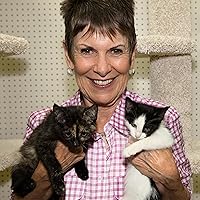
Jennifer Bohnhoff is the author of a trilogy of middle grade novels set in New Mexico during the Civil War, a YA novel about a girl who suffers through a wildfire that destroys her home, several stand-alone middle grade historical novels, a duel narrative YA novel that examines the Beowulf story in both a contemporary and paleolithic setting, a series of funny contemporary middle grade novels and an adult novel set on a ranch in Southern New Mexico during WWI.
A former middle school social studies teacher, she loves travel and history.
Mrs. Bohnhoff is the mother of three handsome men, the mother-in-law of three beautiful daughters and the grandmother of three very smart granddaughters and a grandson. She lives in the mountains of central New Mexico with her husband, and a tank of a Rottweiler named Panzer.
Mrs. Bohnhoff is available to present on writing and history both online and in person.
At the beginning, I wasn’t quite clear on the connection between the two time periods even though this was described as “A dual timeline novel about the origins of prejudice and cultural exclusion”.
Reading the opening paragraph had me feeling as if I were sitting around a fire during story telling – sitting quietly and feeling the shadows playing on the walls and people. Reading the high school drama had me feeling like shaking the main character’s shoulders as well as sitting down her BFF for a “little chat”. THEN… OMG!!!! Once I saw how the two stories paralleled each other, I went into a completely different reading mode. More and more similar situations kept occurring. I even went back to find out what I had missed earlier. The author might very well have been listening to Ravel’s Bolero to weave the stories then build up to the crescendo.
Reading this book was an experience; not just in two stories in two separate time periods, but rather a lesson in human nature. I only hope that we learn from it…
An incredible parallel between 27,000 b.c.e and today The Last Song of the Swan is told by two narrators: One young girl who lived in ancient times, and a modern-day high school senior. The story is inspired by the Old English epic poem, Beowulf. It would seem that these characters would have nothing in common, but in each story Bohnhoff shows parallels. Each character grapples with peer pressure, jealousy, cliques, and members of their close circles considered outcasts just because they were different. Compelling are the fights for survival, for Hrunting it was a case of life and death. Modern-day Helen’s struggle reflects painful experiences most of us have had in high school. Her best friend has a crush on Helen’s boyfriend, and when Helen makes friends with Gurvinder, a new student from India, she is ostracized. And that’s just the tip of the iceberg. I found the story compelling and came away with lots to think about. It is a unique story, one that will stay with me. I highly recommend it as a terrific read.
The parallel tales of a girl in Beowulf’s time, Hrunting, and a contemporary high school senior, Helen, was handled so well that I was never confused. The similarities between the tales were surprising, and yet believable. Both girls were outcasts and befriended boys who were considered enemies. Another main theme of the stories was, especially in the Beowulf one, that the facts can be embellished to prove what someone wants to prove. And one final thing that tied the two stories together was that Helen was reading the Beowulf saga for English and working on a paper about it. Her theory in it was similar to what actually happened in Hrunting’s time.
After reading this account of Beowulf and Grendel, I had some serious thoughts about mankind's thin veneer of civilization. Who was the monster, Beowulf with his intolerance for others who are not like him or Grendel who tried to avenge his family by attacking Beowulf's camp? It seems we have not changed much since caveman days. I received a copy of this book from Story Origin, but my review is voluntary and unbiased.