La expansión colonial fenicia al Mediterráneo central y occidental fue fruto de una larga y fructífera experiencia de las ciudades fenicias y, en particular, de Tiro, en el comercio internacional, del papel de intermediarias de estas ciudades portuarias entre las grandes potencias del interior —Asiria, Babilonia, Urartu— y el Mediterráneo y de una situación única de demanda de materias primas, que favorecía la búsqueda de nuevos mercados. Entre los siglos IX y VI a.C. Tiro y otras ciudades fenicias establecieron el primer sistema mediterráneo de comercio internacional fundando numerosas colonias en Sicilia, Cerdeña, Andalucía, Ibiza, bahía de Túnez, Portugal y Marruecos atlántico e incorporando vastas regiones de la Europa «bárbara» a sus circuitos de intercambio. Todo ello reportó enormes beneficios y transformó a Tiro en la primera potencia comercial y colonial de la época. Además, Tiro supo aprovechar los circuitos comerciales del área atlántica, introduciendo en Occidente un nuevo metal, el hierro, con la consiguiente depreciación del bronce y el colapso de las economías prehistóricas tradicionales, cuya producción había dependido casi enteramente del bronce. Un episodio colonial, por consiguiente, nada inocente, que tendría importantes repercusiones en el desarrollo socioeconómico de las comunidades indígenas. Recientes hallazgos arqueológicos, en particular en Portugal, Andalucía y Levante español, han permitido ampliar el horizonte geográfico de esta diáspora comercial y ajustar su cronología. En esta nueva edición, se incorporan y dan a conocer los últimos descubrimientos arqueológicos y las nuevas cronologías, que obligan a situar el inicio de la expansión colonial fenicia mucho antes de lo que se había establecido.
For New Years Eve, I had thought of going to visit old Carthage, that is, modern Tunisia, but then it was too late to book anything and I decided to follow the Phoenician theme for my farewell to 2024 and arranged to visit Gadir, that is, modern Cádiz. Shamefully I had never been there before.
Now I think it is one of my very top provinces in Spain.
Anyway, I had also watched a series of six lectures on the Phoenicians in a Foundation in Madrid, and in the first lecture they declared that the series was dedicated to Maria Eugenia Aubet, who had passed away recently (1943 – February 2024) and that her book (this one) had been a landmark. Aubet had also given a lecture of ancient Tyre, in modern day Lebanon. She had been digging there for a while.
This is an academic book, and since I was pressured for time and not going to Lebanon but to a Western Phoenician colony, I decided to start reading the second section first, the one that deals with the colonization of this ancient community, and then read the first one, in which Aubet explains who the Phoenicians were. This plan worked out well.
There is a tremendous amount of information in this treatise, but I managed to extract some basic concepts. The main one is that I learned to differentiate among the various Phoenician cities in Lebanon – each one acting as a distinct city-state, and Tyre was her main focus. I also realized the difference between the Phoenicians of Lebanon and those of Carthage (the colony they founded around 820 BC, and which became the preeminent center once Tyre fell under Nabuchodonosor in 573 BC – and this second political community is better known as ‘Punic’). This clarified the different relationship that the original colonists had with the locals in Gadir, from those that the Carthaginians established later, and which came to worry the Romans so much.
Aubet’s book is also a convincing exposé of a series of general characteristics of the Phoenicians abroad: The so-called colonization of the Western Mediterranean by the Tyreans, from about 850 to 750, was not homogeneous, for it responded to unequal economic situations, there were deficit and surplus of various materials and at different times. The expansion responded both to individual and private enterprise and to a state-led initiative. The varied circumstances and causes explain that the settlements differed so that the Phoenician presence in Gadir was different to that in Carthage. The posts also developed and what could have begun as a purely commercial outpost, became with time either a well-established emporium or a colony.
In this the Phoenician expansion differed from the Greek one. The latter followed an agricultural impetus, and the traits of colony were clearer. Greeks moved because they needed more land and had demographic problems at home. These Greeks kept a sense of what their origins were. The Phoenicians were not looking for land but access to needed raw materials and, if possible, in places where trade and exchange was also possible and where they established economic relations with the locals. In this the exception was Carthage, since there the Phoenicians were also interested in appropriating land. In Carthage the colonization was carried out by an aristocratic section of the population of Tyre (and so Virgil was right) who distributed the new lands according to their relative status. It was therefore an institutionalized colony.
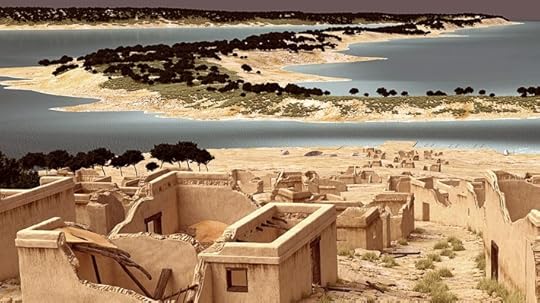
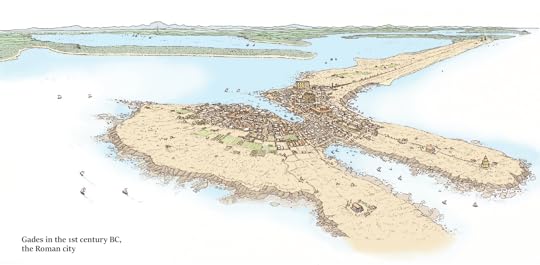
Returning to Gadir, what had originally been a simple outpost with commercial interests, became thanks to the fruitful alliances with the locals of Tartessos (modern Huelva), a major Phoenician Emporium. Both private and state enterprise founded their activities there and the establishment of a major temple dedicated to Melqart (now a much-appreciated tourist enclave) gave Gadir a distinct mark.
Anyway, a fascinating subject that relates to a beautiful city that has obsessed people along the ages.