In After Us The Deluge, photographer Kadir van Lohuizen, co-founder of the photo agency NOOR Images, shows the consequences of the rising sea level for mankind. He travelled to six different regions in the world (Greenland, US, Bangladesh, the Netherlands, UK and the Pacific) and recorded the effects of global warming.
The result is an equally disturbing and aesthetically impressive time document and photo book. For each chapter an expert wrote a contribution at place about the specific problems in his or her country.
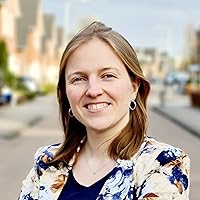
Kadir van Lohuizen (The Netherlands, 1963) has covered conflicts in Africa and elsewhere, but is probably best known for his long-term projects on the seven rivers of the world, the rising of sea levels, the diamond industry and migration in the Americas. He started to work as a professional freelance photojournalist in 1988 covering the Intifada. In the years following, he worked in many conflict areas in Africa, such as Angola, Sierra Leone, Mozambique, Liberia and the DR of Congo. From 1990 to 1994 he covered the transition in South Africa from apartheid to democracy.
After the collapse of the Soviet Union, Kadir covered social issues in different corners of the former empire. In 1997 he embarked on a big project to travel along the seven rivers of the world, from source to mouth, covering daily life along these lifelines. The project resulted in the book Rivers and Aderen (Mets & Schilt). Kadir has received numerous prizes and awards in photojournalism. In 2000 and 2002 Kadir was both a jury member of the World Press Photo contest and on the supervisory board of the World Press Photo foundation. In 2004 he went back to Angola, Sierra Leone and the DR of Congo to portray the diamond industry, following the diamonds from the mines to the consumer markets in the western world. The exhibitions that resulted from this project were not only shown in Europe and the USA, but also in the mining areas of Congo, Angola and Sierra Leone. The photo book Diamond Matters, the diamond industry was published by Mets & Schilt (Holland), Dewi Lewis (UK) and Umbrage editions (USA) and awarded the prestigious Dutch Dick Scherpenzeel Prize for best reporting on the developing world. The project was also recognized with a World Press Photo Award.
In that same year, Kadir initiated a photo project together with Stanley Greene and six other photographers on the issue of violence against women around the world. After hurricane Katrina destroyed New Orleans, he made several trips to the USA to document the aftermath of the storm. In the summer of 2010, to mark the fifth commemoration of Hurricane Katrina, Kadir exhibited images of Katrina’s devastation and the aftermath in a truck-exhibition that drove from Houston to New Orleans, a project in collaboration with Stanley Greene.
From 2011 to 2012, Kadir created Vía PanAm; a visual investigation on migration in the Americas. In 12-months, he travelled along the Pan American Highway from Tierra del Fuego in Patagonia to Deadhorse in Northern Alaska. Originally made as an interactive application for the iPad, Vía PanAm was also made into a traveling interactive multimedia based exhibition, installation and a book. With the project Where will we go, Kadir looked at the global consequences of rising sea levels caused by climate change. The project is designed to highlight both the immense complexities associated with in-island and inter-island/country movement, and the human rights implications involved in such displacements.
Kadir’s environmental projects continue with Wasteland, where he investigates in six megacities (Jakarta, Tokyo, Lagos, Amsterdam, São Paulo and New York) how they manage or mismanage their waste. For this project he uses photography, video, drone footage and audio. For this project he received 1st World Press Photo Prize in the Environmental category. In 2018, Kadir van Lohuizen and Yuri Kozyrev were the laureates of the 9th Prix Carmignac for Photojournalism, where they undertook a year long expedition through the Arctic, documenting the consequences of the climate crisis.
In Kadir’s most recent and ongoing project Food for Thought, he investigates the entire Dutch food chain and how cutting-edge tech made the tiny Netherlands a major exporter of food. This extensive project has been covered by prominent international media publications such as The Washington Post and Trouw.
Thought-provoking essays on human consequences of climate crisis supplemented by beautiful, yet heartbreaking, imagery.
The human face of climate crisis is often overlooked as we get tangled up in CO2 emission numbers, meters of sea level rise and international agreements. This book brings these faces to life - villagers faced with relocation as the sea erodes the very foundations of their homes, farmers moving homes 5+ times in a short lifetime, people losing the ways of life that sustained them for generations.
Beautiful call to action from authors that are at the frontlines of climate crisis.
Nothing real new, although the former president of Kiribati is a new voice. So don’t buy it for the texts. But it’s a magnificent and terrifying photo book!