Falling snow. A stranger. A needle. A world turned upside down. That's all Taite can remember when she wakes up alone and disoriented in a desert.
Lost and confused, Taite is desperate to return home to her over-protective father and the dull life she had once hoped to escape. Crossing paths with a suspicious girl, Taite accepts an invitation to join her as she travels to meet her brother. A means to an end, Taite's only goal is to find a way home as soon as possible. A goal she may never reach.
Entrenched in their own rebellion, the brother and sister lead Taite on a journey that will change her forever. She doesn't know if she can trust them, but believing them means accepting her life has been a lie. Believing them means home may be light years away. Believing them might be the only way she can survive past seventeen.
In the first half of this diptych, a teenage girl in the not-so distant future finds herself in a new reality where her own identity and sanity is under question. Previously published under the title Duratio under a pseudonym before undergoing further editing.
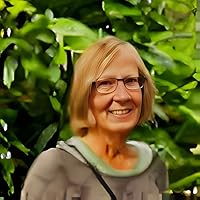
J.M. Rutherford creates things: Art, stories, messes, and whatever else she feels like. She has a Master's degree in painting, so she is currently attempting a double life as an artist and author. This is her first finished novel. Others float around half-completed or as vague impressions in her head. She resides in Illinois where she can sometimes be found sipping tea with her daughter, attending art shows, working her day job, or complaining about taxes.
This is the story of Aisea Taite, who prefers to go by Taite. The daughter of a single parent, (her mom is absent from the beginning of the book) she doesn't much like her life. When suddenly, one day, while on a bus, she is abducted, whisked confusingly away to end up...she's not quite sure. Not knowing where she is or why, she meets Lanie, and Lanie's brother Baylin. But who are they, and what are they doing? Are they even good guys, or bad? The premise is promising, and the storyline is exciting in parts. But there were a number of errors that kept me from enjoying the story as much as I would have liked.
There were some problems with the pacing of the story, and descriptions. For example: "Finally, Lanie stopped with out a word and dropped to the ground. "Since clouds covered the sky, Taite had no guess of the time, but it seemed a few hours later when two large buildings came into view. Like the others near the check point, they were concrete and simple."
It goes on to say that Lanie was walking again. But the abrupt shift from one paragraph to the next where she drops to the ground but then they’ve walked more without explaining that she had gotten up again was a bit jarring and confusing.
There were also a couple of instances where the narrative went to present and back to past without an explanation. Like this: “The con tents of Taite's back pack lie strewn on the sand at his feet. A few scraps of paper fluttered away in the night wind.” The first sentence says that they currently “lie” on the sand, then in the next sentence, the paper “fluttered” in the past.
Sometimes the writing is vague, and confusing. “It would've taken a miracle for her to have lived, but he refused to accept it.” Accept what? What is "it" referring to? That she lived? That wouldn’t make sense but the only thing that is mentioned before the pronoun "it", is the miracle that she might have lived. I can only assume that “it” means he refused to accept that she had died. But the sentence doesn’t say that.
There are times when we’re with Baylin, and he is only ever mentioned in the chapter as “he”. Even though he’s the only male protagonist, having his name mentioned a little bit more in those spots would help us connect with him a little better.
In another scene, Taite is sitting on her bed when the doctor comes in. He gets angry, and pushes her up against the wall. Nothing is mentioned about jerking her off the bed, but he would have had to, since she was sitting on the bed, and not standing. And there’s little sensory input about her hitting the wall, or pain, or anything.
There are lots of descriptions of what things look like, but other senses feel, taste, smell, touch are not brought in as often. And time often compresses unnecessarily. In one moment, the doctor is yelling at her, and then abruptly it says “Only moments later, Taite was led through a sterile corridor with countless doors.” How did Taite get from one place to this new place in just moments? That isn’t explained very well.
The end is set up suggesting that a sequel is coming. And I like that while there are still some loose ends left to work on in a sequel, the book doesn't have a hard cliffhanger. Some things are resolved, but there are still questions to look forward to being answered in another book.
Life on other planets is a popular topic in science fiction. And the planet Aises, much like Earth, is the setting for this curiously named novel. Colonizing Aises was conceived as an opportunity to build an ideal society. However, Aises has rapidly become a totalitarian state. Seventeen year old Taite finds herself mysteriously catapulted into this strange, yet somewhat familiar, environment. Why is she there and how did she get there? What unfolds is a long tale of escape and captivity, with some vividly imagined scenes; their flight through the canopy of an immense forest is brilliantly imagined. Taite soon falls in with a band of resistance fighters and endures hazardous journeys and painful imprisonment. The pace is uneven. There is tension from the start but there are also long episodes which are almost leisurely, despite the perils she faces. A seventeen year old American high school senior, Taite is, not surprisingly, rather self-centered. She also shows herself to be resilient, nimble and strong. Rather too often, she's bad-tempered, grumpy and almost whiny, which I suppose demonstrates that she's a real person. Baylin, the resistance leader, is a likeable and practical young man, but his character does not develop. The plot is complex and well thought out. For much of the book, the narrative point of view alternates between Taite and Baylin. This works well, although I was occasionally confused by apparent jumps in the time line. Halfway through there's an unexpected twist which prompts some serious ethical questions, adding a deeper dimension to the story. There are more than a few editorial flaws, but by and large it's well written. J.M. Rutherford has a tendency to flow literary from time to time; her writing is better when she just gets on with her tale. The title, “Fearfully Unmade” made no sense to me. It's probably way too subtle for this reader. As the story was building to a thrilling conclusion, I was hoping for a happy resolution of Taite's many problems. But in the end, I was left with the promise of a sequel. Recommended with qualifications to older teens.
I didn’t know what to expect of Fearfully UnMade when I first started reading it, but ended up loving it! As a caveat, there are some typos or grammatical errors here and there, but if you look past that kind of thing for the story underneath, I hope you’ll enjoy it too.
Taite is your everyday teenage girl…never knew her mom, father often absent. Stuff most of us can relate to in one way or another. She’s got all the problems you expect with teen life, including which college she wants to go to and why her father won’t let her hang out with her friends and enjoy high school.
But then things go horribly awry, and we end up in a dystopian “paradise.” Not. Interestingly, I find these kinds of books more triggering after living through recent American history…but this book was still one I was always eager to get back to in order to find out what came next and what happened to Taite.
Apparently there will be a book two, which I will read when it comes out!
A friend writes urban fantasy so I occasionally pick up books in this subgenre. Generally, I like the creativity and world building, but sometimes, as here, you just have to slog through with the heroine to figure out what’s going on. The story does pick up in the second part, but some revision and tightening of the opening would help. Taite makes an interesting character and I enjoyed her adventure. The book wraps for the primary conflict while leaving a few items open for the next in the series.
This is a cool dystopian sf story about a girl who wakes up in an unrecognizable world. She meets some members of a rebellion and it develops from there.