

What do you think?

Systematic Theology #1
Systematic Theology (Volume 1): Grounded in Holy Scripture and understood in light of the Church (Systematic Theology
“I have written this first volume, thinking of my heritage as both Reformed and Catholic; gladly appropriating crucial insights of the whole people of God over the last two thousand years – Eastern Orthodox, Western Catholic, and Reformation Protestant – as they sought to live out the foundational truths of the inspired Word of God.” Doug Kelly
- GenresTheology
640 pages, Hardcover
First published December 30, 2008
About the author
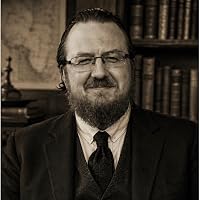
Douglas F. Kelly
32 books15 followersDr. Kelly is the Professor of Theology Emeritus. Dr. Kelly received his B.A. from the University of North Carolina, Chapel Hill, Diploma from the University of Lyon, his B.D. from the Union Theological Seminary, and his Ph. D. from the University of Edinburgh. He is the author of many written works including, If God Already Knows, Why Pray?, Preachers with Power: Four Stalwarts of the South, New Life in the Wasteland, Creation and Change, and The Emergence of Liberty in the Modern World. His firm grasp of multiple languages and his theological competence are capably demonstrated in translating such works as Sermons by John Calvin on II Samuel. He is serving with David Wright of the University of Edinburgh as a general editor for a revision of Calvin’s Old Testament Commentaries. Before joining the faculty at RTS, Dr. Kelly traveled extensively throughout the world preaching and teaching. He was also enlisted to serve on the Jurisprudence project of The Christian Legal Society and serves on the Credentials Committee of the Central Carolina Presbytery.
Ratings & Reviews
Friends & Following
Create a free account to discover what your friends think of this book!
Community Reviews
Displaying 1 - 10 of 10 reviews

October 18, 2012
Absolutely epic. This is the way all evangelical and reformed theology should be done. Kelly is brilliant! I cannot recommend this volume to you enough. His exegesis is solid and fair. He is very well informed historically. His theological method is honest, candid and above all practical. He engages all traditions East and West. And in areas where he and I do not see eye to eye, he is always charitable. Having had the blessing to engage him over the years, I can say that in his personal life, as in his writings, he is a consummate gentleman. I hope one day, this text (along with Frame's DOG) become the standards in the reformed traditions. If so, perhaps their is still hope yet for the church in the West.

January 16, 2011
Great book. What I love about Kelly's Syst. Theology is his incorporation of the early fathers of the church. Kelly is a learned Patristic scholar. Because of this the work also provides a nice historical theology resource.

June 25, 2022
A biblical and beautiful example of reformed catholicity, this volume made me want to read the other two in the system. The thing that set this systematic apart was the amount of interaction with the church fathers and the pan-orthodox world. Read it slowly and enjoy!
November 5, 2023
I really enjoyed this. Kelly’s breadth of knowledge is staggering. This work, however, is not for the lay theologian. The only critique I would have is the organization, otherwise it was excellent!
March 2, 2022
A systematicians systematic.
As delighted as I find myself with it, wishing as I typically do with good theology that everyone read it, Kelly's Systematic is not a good starting point for those unfamiliar with the discipline. When I first read it back in 2014, much of what is in here went right over my head. This is for a number of reasons:
1.) Kelly dives into the depths of very complex controversies. He covers the Filioque controversy and how it bears on subordinationism, he discusses in detail the philosophical problem of the Many and the One, he thoroughly critiques Higher Criticism, and he details the first part of the mind-bending proof of Duns Scotus (just to name a few). If one doesn't have the basics down, they will certainly drown trying to keep up.
2.) Kelly doesn't always translate into English for the reader. Hebrew, Latin, Greek, and even French words and even whole sentences are often just placed there with no help to English-only readers. Unlike my first read, I can now do Greek and muddle my way through some Hebrew and small amounts Latin, but the untranslated French especially exasperated me.
3.) Kelly spends the majority of the book quoting theologians from different traditions and time periods. This is not an exaggeration. Many pages consist only of extended quotations. Their writing styles are not modern in the slightest and can often be difficult to parse as well as differ vastly from one another (At least he translates the paragraph quotations... if it's not in a footnote).
Despite this, for those who have a couple systematics under there belt, or who are willing to put in a lot of time and effort to follow the dense argumentations, Kelly's deep and humble meditations on the various topics are well worth the time to dive into. I highly recommend his book.
As delighted as I find myself with it, wishing as I typically do with good theology that everyone read it, Kelly's Systematic is not a good starting point for those unfamiliar with the discipline. When I first read it back in 2014, much of what is in here went right over my head. This is for a number of reasons:
1.) Kelly dives into the depths of very complex controversies. He covers the Filioque controversy and how it bears on subordinationism, he discusses in detail the philosophical problem of the Many and the One, he thoroughly critiques Higher Criticism, and he details the first part of the mind-bending proof of Duns Scotus (just to name a few). If one doesn't have the basics down, they will certainly drown trying to keep up.
2.) Kelly doesn't always translate into English for the reader. Hebrew, Latin, Greek, and even French words and even whole sentences are often just placed there with no help to English-only readers. Unlike my first read, I can now do Greek and muddle my way through some Hebrew and small amounts Latin, but the untranslated French especially exasperated me.
3.) Kelly spends the majority of the book quoting theologians from different traditions and time periods. This is not an exaggeration. Many pages consist only of extended quotations. Their writing styles are not modern in the slightest and can often be difficult to parse as well as differ vastly from one another (At least he translates the paragraph quotations... if it's not in a footnote).
Despite this, for those who have a couple systematics under there belt, or who are willing to put in a lot of time and effort to follow the dense argumentations, Kelly's deep and humble meditations on the various topics are well worth the time to dive into. I highly recommend his book.

July 6, 2019
You will find deep learning, mature reflection and prodigious scholarship in this first volume of systematic theology. Kelly centers the task of theology within the church. What this reader appreciated was the irenic use of the patristic theologians, both of the Eastern and Western traditions. Kelly draws upon a wide range of resources, but applies the insights to the current cultural moment in various appendices. The weak link in my opinion was his discussion of covenant theology. One wishes he had some interaction with articles such as John Stek's "Covenant Overload in Reformed Theology."

February 28, 2023
It is hard to explain how one feels about this volume from the highly-revered Douglas Kelly. In many ways, this is not a normal systematic theology textbook. Some of Kelly’s chapters seem oddly placed. Following every chapter, moreover, is an appendix (or appendices) that is highly technical and seems to detract from the flow of the book. That is my one criticism of the book. On the other hand, Kelly knows more about theological method and the Trinity than most professors, Reformed or otherwise, ever will.
How do we Know?
Reality Comes First, and the mind second (Kelly ST I:41ff). The question before us: how do you form beliefs in your mind? To which Kelly responds, there is a real world that imposes itself on your mind. In other words, and with the historic Reformed (and classic) tradition, the order of knowing follows the order of being. And the order of being is God himself.
As it stands, that paragraph is standard Reformed prolegomena. Kelly takes it a step further. Kelly is one of the few Reformed theologians to include a section on how the mind, particularly the redeemed mind within the covenant community, forms beliefs. First, truth causes belief (17). “God’s reality imposes itself upon those whom He has made to know him” (17-18).
There is almost a “reflex-action” in the mind. As Clement of Alexandria said, “Knowledge is excited by outwardly existing objects” (quoted in Kelly, 18). Faith, and here Torrance draws heavily from his mentor, Thomas Torrance, “involves a conceptual assent to the unseen reality.” Faith is the obedient response to truth.
Following the Stoics, though not blindly, Kelly remarks that the basis of the system “is the assumption that the real world imposes itself upon the recipient mind of man.” An “outer reality presses in on the mind.” This is “apprehensive presentation” (41). Indeed, within the mind are “class concepts, which serve to give the mind clues into the objectivities of reality” (44). One can call them “proleptic pointers” that allow the mind to jump from clues to conclusion
Applied to theology, faith is the heart response to the aforementioned proleptic assent (46).
Kelly has several chapters on the Trinity, but no one chapter on the Trinity that neatly corresponds to standard treatments. At this point in the book (chapter four) he does not give a clear presentation. What he does do, however, is press the meaning of the term “person” as it relates to the Trinity. This represents a clear advance in modern systematic theology. The key point is that the being of God leads itself to the concept of “person.” That is good. What is not so good, however, is Kelly’s use of John Zizioulas’s idea “being as communion.” I think I know what Zizioulas means: being is being as communion. It seems it means “the being of God” is the being as persons in communion. Maybe. The problem is Zizioulas will take the Person of the Father as the monarchy of the Trinity. Kelly rightly rejects this move. Athanasius (and for what it’s worth, Augustine) sees the being of the Father as the monarchy. This is much better, for it allows one to say that with the being of the Father, we automatically get the Son. If we follow the Easter route of the Father as Cause, then we have introduced a sequence of causes in the Trinity.
I cannot go into detail here, but Kelly has a wonderful section on person and “modes of being” and why we prefer the former and not the latter (503ff). A person is inherently relational. A mode of being is not. “The personal distinctions within God are constituted by eternal relations, as indicated by Father, Son and Spirit; or, by begetting and proceeding” (521). With Didymus the Blind, we say the persons refer to the order of relations (kata schezein) rather than to the essence (521-522).
The later Cappadocians, excepting Gregory Nazianzus, account for the persons by the Father as cause or monarchy. They do not intend any latent Arianism by the word cause (since it happens before time), but, nonetheless, a person is now part of a causal sequence in the Godhead.
Conclusion
By no means is this a beginner’s textbook. Kelly’s ordering of topics does not always follow the standard accounts. Moreover, the reader risks getting lost in some of his appendices. On the other hand, few Reformed authors today demonstrate Kelly’s grasp of Nicene Trinitarianism and the idea of person in the Godhead, and for that reason this volume is highly recommended to the intermediate student.
How do we Know?
Reality Comes First, and the mind second (Kelly ST I:41ff). The question before us: how do you form beliefs in your mind? To which Kelly responds, there is a real world that imposes itself on your mind. In other words, and with the historic Reformed (and classic) tradition, the order of knowing follows the order of being. And the order of being is God himself.
As it stands, that paragraph is standard Reformed prolegomena. Kelly takes it a step further. Kelly is one of the few Reformed theologians to include a section on how the mind, particularly the redeemed mind within the covenant community, forms beliefs. First, truth causes belief (17). “God’s reality imposes itself upon those whom He has made to know him” (17-18).
There is almost a “reflex-action” in the mind. As Clement of Alexandria said, “Knowledge is excited by outwardly existing objects” (quoted in Kelly, 18). Faith, and here Torrance draws heavily from his mentor, Thomas Torrance, “involves a conceptual assent to the unseen reality.” Faith is the obedient response to truth.
Following the Stoics, though not blindly, Kelly remarks that the basis of the system “is the assumption that the real world imposes itself upon the recipient mind of man.” An “outer reality presses in on the mind.” This is “apprehensive presentation” (41). Indeed, within the mind are “class concepts, which serve to give the mind clues into the objectivities of reality” (44). One can call them “proleptic pointers” that allow the mind to jump from clues to conclusion
Applied to theology, faith is the heart response to the aforementioned proleptic assent (46).
Kelly has several chapters on the Trinity, but no one chapter on the Trinity that neatly corresponds to standard treatments. At this point in the book (chapter four) he does not give a clear presentation. What he does do, however, is press the meaning of the term “person” as it relates to the Trinity. This represents a clear advance in modern systematic theology. The key point is that the being of God leads itself to the concept of “person.” That is good. What is not so good, however, is Kelly’s use of John Zizioulas’s idea “being as communion.” I think I know what Zizioulas means: being is being as communion. It seems it means “the being of God” is the being as persons in communion. Maybe. The problem is Zizioulas will take the Person of the Father as the monarchy of the Trinity. Kelly rightly rejects this move. Athanasius (and for what it’s worth, Augustine) sees the being of the Father as the monarchy. This is much better, for it allows one to say that with the being of the Father, we automatically get the Son. If we follow the Easter route of the Father as Cause, then we have introduced a sequence of causes in the Trinity.
I cannot go into detail here, but Kelly has a wonderful section on person and “modes of being” and why we prefer the former and not the latter (503ff). A person is inherently relational. A mode of being is not. “The personal distinctions within God are constituted by eternal relations, as indicated by Father, Son and Spirit; or, by begetting and proceeding” (521). With Didymus the Blind, we say the persons refer to the order of relations (kata schezein) rather than to the essence (521-522).
The later Cappadocians, excepting Gregory Nazianzus, account for the persons by the Father as cause or monarchy. They do not intend any latent Arianism by the word cause (since it happens before time), but, nonetheless, a person is now part of a causal sequence in the Godhead.
Conclusion
By no means is this a beginner’s textbook. Kelly’s ordering of topics does not always follow the standard accounts. Moreover, the reader risks getting lost in some of his appendices. On the other hand, few Reformed authors today demonstrate Kelly’s grasp of Nicene Trinitarianism and the idea of person in the Godhead, and for that reason this volume is highly recommended to the intermediate student.

July 1, 2023
Such a massive scholar. Very sharp but gracious, too. Very learned.
And I am like those bean sprouts that absorb like 1% of the water when waterered. I absorbed only a little (yet with much edification) when I read this book. However, I will keep coming back to this volume as I grow in faith more. I am sure I will pick up more the next time around. His colleague Prof John Frame's ST got me into the intermediate depth of waters -- only after reading Frame's, I was absorb even a little bit from Prof Kelly's ST this time around. (I think Prof Kelly's is a bit deeper as his book engages with many figures in history and modern day.)
And I am like those bean sprouts that absorb like 1% of the water when waterered. I absorbed only a little (yet with much edification) when I read this book. However, I will keep coming back to this volume as I grow in faith more. I am sure I will pick up more the next time around. His colleague Prof John Frame's ST got me into the intermediate depth of waters -- only after reading Frame's, I was absorb even a little bit from Prof Kelly's ST this time around. (I think Prof Kelly's is a bit deeper as his book engages with many figures in history and modern day.)
July 20, 2011
I really appreciated this first volume of Doug Kelly's systematics, which covers some matters of prologoumena and the doctrine of God. One of the unusual features (in modern times, anyway) of this work are the numerous lengthy quotations from primary theological sources on nearly every page: far from being laborious, the reader is treated to a feast drawn from Kelly's lifetime of study (especially of the Fathers, Calvin, Barth and T. F. Torrance). His analysis of the parallels between ancient pagan culture and the Enlightenment is excellent, as are the many appendices that support and engage that comparison. Finally, Kelly draws on a great breadth of untranslated secondary literature (in French, particularly) that greatly enriches his contribution. Aside from a few weaknesses (his insistence 24 hour creation days, for instance) Kelly has succeeded in gifting the church with a (truly!) Reformed catholic treatment of Trinitarian theology.
October 19, 2022
This is a great systematic theology due to it’s humility, broad exposure to multiple Christian traditions, and critical interaction with modern thought. Seems less formally/comprehensively structured than some other systematics, though I’m not sure whether that’s a value or drawback.
...
See my full review...
...
See my full review...
Displaying 1 - 10 of 10 reviews