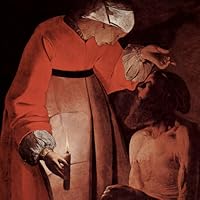
Vasily Vasilievich Radlov or Friedrich Wilhelm Radloff was a German-born Russian founder of Turkology, a scientific study of Turkic peoples. Working as a schoolteacher in Barnaul, Radlov became interested in the native peoples of Siberia and published his ethnographic findings in the influential monograph From Siberia (1884). From 1866 to 1907, he translated and released a number of monuments of Turkic folklore. Most importantly, he was the first to publish the Orhon inscriptions. Four volumes of his comparative dictionary of Turkic languages followed in 1893 to 1911. Radlov helped establish the Russian Museum of Ethnography and was in charge of the Asiatic Museum in St. Petersburg from 1884 to 1894. During the Stalinist repressions of the late 1930s, the NKVD and state science apparatus accused the late (ethnically German) Radloff of Panturkism. A perceived connection with the long-dead Radloff was treated as incriminating evidence against Orientalists and Turkologists, some of whom - including A. N. Samoilovich, in 1938 - were executed.
The Manas born under the difficult conditions. In the book, Public of Kyrgyz expresses including with their legendary wars. The subject of book a bit different, good book
This book has the original poem in two columns (it's short lines) on the left page, prose translation on the right. It continues on after the section titled 'The marriage, death and return to life of Manas' into the deeds of Semetey, his son (the whole epic is a three-part cycle; Manas, his son, his grandson). 200 pages commentary.
Bravo A.T. Hatto for his devotion, in retirement from medieval European duties, to epic from the steppe. This book is a great contribution, and a handsome trophy for your shelves. The translation is functional, and tends to give you the genuine article -- that is, the idioms and figures of speech that are so thick in the text. His notes attempt to explain the idioms although he can't always. Mainly because of this figurative language, there's a crash course in the culture between these covers. Meanwhile, you can glance across to the original text for a dim appreciation of the rhyme schemes.
Arthur T. Hatto is a believer in the 19thC versions, taken down by Radloff, as against the "effusions of the great singers of the twentieth century." Effusions that have too much of self-consciousness about them for Hatto: "innovations... an intellectualist vein." His introduction becomes argumentative, and no wonder the online Manas, translated by a Kyrgyz scholar, has to argue back.
What Hatto describes is a style I loved in the online Manas, from Sayakbay, one of those last singers Hatto calls too "exuberant" with their talent--like Wolfram's Parzival, he says. I can value both a traditionalist and an innovative, or rather an ongoing Manas. It means, to me, the song was still alive in the 20th century. Of course I am glad to have the song as it stood in the 19thC too. Hatto thinks the old is simply better epic poetry--but this is seen against the world tradition of epic (indeed he insists on the need to judge Manas within this tradition, as has been done by neither Western nor Kyrgyz scholars). But how few world epics were alive in the 20thC--to gather to themselves these effusions?
Indeed, one episode, performed for Radloff, introduces a new storyline: "Manas's subordination to the Czar--a feature peculiar to this bard..." and topical politics in the day, as Hatto notes, "for the Bugu tribe, among whom this epic was collected in 1862, had submitted to the Czar in 1855."
Oğuz Kağan Destanını okuyunca Manas'ın daha iyi olacağını biliyordum. Okumaya başladıkça ve kitabın ön sözünde açıklamalar da yer alınca destanı okurken anlaması daha da kolaylaşıyor. Şu an Manasın ölüp dirilmesi bölümünü bitirdim. Bu bölüme kadar Türk atalarımızın neden birbirleri ile kavga ettiklerini anladım. Ama dostlukların ve verilen sözlerin sadece Kağanın yaşadığı süre boyunca geçerli olması çok üzücü. Bu kadar çok devlet kurup devlet yıkma geleneğimizin asıl nedeni verilen sözlerin Kağan için verilmesiymiş. Birlik olmakta sorunumuz yok ta ki baş hakka yürümesin. 02.11.25
Kitabı okumam tamamlandı ve bence kitap çok iyi. Kırgızlar hakkında mitolojik bilgileri öğrenmek ve nasıl hareket ettiklerini anlamak açısından çok önemli idi. Kitabın ilk 100 sayfasında destan hakkında detay ipuçları vermesi kitabı anlamak açısından çok gerekli.
Okumak için listenizde sırada bekletiyorsanız en ön sıraya alıp okumalısınız.
The Manas is the great epic of the Kyrgyz people, and though it is best known today in tellings by Soviet-era bards, the epic in full was first transcribed by linguist and ethnographer Wilhelm Radloff in the 1860s. Radloff's edition is here translated into English with a commentary by Arthur T. Hatto, who spent most of his career as a specialist in German medieval epic and, far from settling down in his retirement, made the unexpected jump into Kyrgyz storytelling traditions. "The Memorial Feast for Kokotoy-Khan" was the first Manas text that Hatto edited and published, but this is the first full-length cycle to be rendered into English.
This is a facing-page translation. The Kyrgyz is presented more or less as Radloff took it down, though many errors are corrected. There's no normalization of orthography, but anyone with a background in Turkic linguistics can follow the text fairly easily. The notes cover linguistic aspects of the text and explain cultural references that non-Kyrgyz could easily miss out on. Hatto's translation is not an especially polished one. Instead of being meant to stand on its own as a work of literature, as the usual translation of Homer or Vergil you'd pick up in a bookstore, the English text here is meant only to clarify the sometimes difficult Kyrgyz for scholars. Still, if you make an effort, after a few tens of pages you'll be caught up in the tale.
If you're interested in the Manas and unable to use Russian or German-language works, this is a fine introduction to a key part of the Kyrgyz national ethic. My only complaint would be with Harrowitz's handling of Hatto's manuscript, which evidently didn't include editing and exhibits a number of infelicities of typesetting.