Over half the world's population is now online, interconnected through a globally-networked media and consumer society. The convergence of information, media, and technology has created the predominant ecosystem of our time. Yet, most educational institutions are still teaching what and how they have for centuries, and are thus increasingly out-of-date and out-of-touch with our current needs. The Critical Media Literacy Engaging Media and Transforming Education provides a theoretical framework and practical applications for educators and teacher education programs to transform education by putting critical media literacy into action in classrooms with students from kindergarten to university. Douglas Kellner and Jeff Share lay out the evolution of thinking and development of media and cultural studies, from the Frankfurt School to current intersectional theories about information and power that highlight the importance of race, gender, class, and sexuality. They provide insightful and accessible entry into theorizing education and information communication technologies through linking the politics of representation with critical pedagogy.
The increase in fake news, alternative facts, bots, and trolls, challenge our abilities to judge credibility and recognize bias. Kellner and Share present a critical lens and strategies to contextualize and analyze the dominant ideologies going viral across social media platforms and disseminated globally from enormous transnational corporations. The Critical Media Literacy Guide is a powerful resource to analyze and challenge representations and narratives of multiple forms of identity, privilege, and oppression. Since the struggle for social justice and democracy require new theories and pedagogies to maneuverer the constantly changing terrain, this book is essential for all educators.
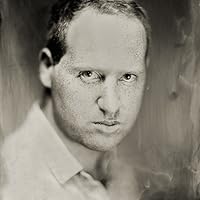
Douglas Kellner is a "third generation" critical theorist in the tradition of the Frankfurt Institute for Social Research, or Frankfurt School. Kellner was an early theorist of the field of critical media literacy and has been a leading theorist of media culture generally.[citation needed] In his recent work, he has increasingly argued that media culture has become dominated by the forms of spectacle and mega-spectacle. He also has contributed important studies of alter-globalization processes, and has always been concerned with counter-hegemonic movements and alternative cultural expressions in the name of a more radically democratic society.
Kellner has written with a number of authors, including (with Steven Best) an award-winning trilogy of books on postmodern turns in philosophy, the arts, and in science and technology. More recently, he is known for his work exploring the politically oppositional potentials of new media and attempted to delineate what they term "multiple technoliteracies" as a movement away from the present attempt to standardize a corporatist form of computer literacy. Previously, Kellner served as the literary executor of the famed documentary film maker Emile de Antonio and is presently overseeing the publication of six volumes of the collected papers of the critical theorist Herbert Marcuse. At present, Kellner is the George Kneller Chair in the Philosophy of Education in the Graduate School of Education and Information Studies at the University of California, Los Angeles.
The Critical Media Literacy Guide rightly brings to attention the problem of overlooking the influences of media as we become so quick to embrace all its new forms. I think it makes a great claim that literacy education should pertain to not only written works, but also the different forms of media texts that have permeated our modern lives. The guide also discusses pedagogical approaches that integrate modern media forms and adapt to the technological age.
The Critical Media Literacy Guide fully engages with many important social and political conversations of the 21st century through the lens of media literacy. Prior to this book, I considered myself to be rather critical of the media, since I always acknowledged that it was biased. However, this guide provokes a deeper reflection, and encourages much more than just a passive acknowledgment of existing biases. It provides a framework (the Critical Media Literacy Framework) that includes multi-dimensional guiding questions, which I found particularly useful in analyzing and dissecting biases, stereotypes, and assumptions inherent in many media texts.
I read this book as part of a college course in education, but I believe this is a great book not only for students and educators, but also for anyone who wishes to remain sharp-eyed and clear-minded in navigating the kaleidoscopic multi-media world.
This book truly opened my eyes to just how important it is to apply critical media literacy (CML) into my everyday life when interacting with just about everything. This book is student-friendly and provides many exercises that teachers can implement into their teachings about CML and its importance. This book was greatly used for the purpose of one of my university classes as a tool for understanding the importance of CML, its theories, and how to spot when to use CML. This book is very relevant to my life as my degree is learning about communication and CML is critical for having a decent experience when interacting with social media, something that is so largely used in my everyday life. Without the proper understanding of CML I may not have the same experiences with social media as I do now that I understand its importance. I would recommend this book to all teachers who are teaching young students as more and more young people are interacting with social media. Great read!