In early September 1943, Italy capitulated to the Allies. Australian prisoners of war, POWs, seized this watershed moment and snatched supplies before walking out of Italy’s rice farms scattered on the Piedmont plain west of Milan. Escapes were mostly easy but freedom was vexed. The ultimate challenge for escaped POWs was to navigate and to outlive the volatile context of post-armistice Italy beyond their prison camps. Wearing uniforms or a motley clash of civilian cast-off clothing, escapers had a price on their heads as they headed north towards alpine passes and neutral Swiss territory, or as they wandered in search of advancing Allied Lines in south Italy. During their treks through mountains, valleys and ‘freedom trails’, Australians teamed up with New Zealand, British and South African POWs to dodge German and fascist militia and to take up arms with fledgling Resistance brigades. Not all escaped POWs survived. At its heart, Shooting Through highlights a unique shared history between Australian escapers and the Italians who risked severe retributions to host and guide the POWs. Drawing extensively on first-hand accounts sourced from Australian and British archives, as well as memoirs and oral accounts by ex-POWs and Italian witnesses, Katrina Kittel weaves the stories of thirty escaper groups through time and theme to reveal key evasion routes and the various outcomes that befell escaped POWs in Italy. The veterans’ accounts burst with humour and compassion as they offer their insights into Italy’s war. From her perspective as a graduate historian and as a daughter to a former POW, Katrina Kittel has uncovered a richer story behind the few enigmatic details that her father, Colin Booth, and many of his fellow POWs chose to share with their families. Shooting Through includes a nominal roll of Australian POWs interned at the Campo 106 rice farms. Shooting Through includes a foreword by Professor Peter Monteath.
I was recently sent a copy of Katrina Kittel’s book; “Shooting Through: Campo 106 escaped POWs after the Italian Armistice”. At first I wasn’t too sure if this was a book I wanted to read, I had so many other books sitting in my library waiting for my attention. However I picked it up a few times and had a browse and that was enough to get me interested in reading this book on Australian POW's struggling to find freedom after Italy's armistice in 1943.
I was surprisingly hooked on the book after only a few pages, mainly due to the author's use of first-hand accounts from ordinary Australian soldiers to tell the story. Sometimes the stories of our POW’s are lost in the greater story of the Allied victory in WW2. I also think that many people believe that their experiences don't count in the overall scheme of things; after all they were captured and didn’t really do much fighting.
This book shows that idea is wrong, that these men fought a hard and courageous war and were captured due to no fault of their own and then were thrown into a totally alien environment in which they had to survive. Working on farms scattered throughout Italy they used their keen wits to foil the enemy by little acts of sabotage, to gain extra rations and to gather news on how the wider war was progressing.
Then in September 1943 Italy dropped out of the war, the POWs enemies were now their allies. Camp gates were left open, former guards became friends but the war wasn’t over, Italian fascists and Black Shirts were still operational in the area of the camps and German forces were flooding into the country heading south to confront Allied forces landing on the toe of Italy.
This period of flux and confusion opened the door to many POWs to make a run for freedom, north to the harsh mountainous area of the Alps and the Swiss border or south and across the Po River to the allied lines, both directions had risks. Who to trust in the population, who was a fascists and who was a royalist, who wanted to turn you in and who would help.
Sometimes a former enemy became your best bet for survival as in this case;
"The Italian colonel gave a 50 Lire note to each POW, and retrieved two folded maps from his coat pocket. He tore off the covers to remove his name and handed the maps to Joe Newbey as senior officer. The maps detailed roads and trails west of Genoa to France, to the central north of Italy, and into Switzerland."
As the author explained:
"Rules of war changed once they stepped out of prison camps. Italians proffered tips about being Italian. To look like peasants, walkers must not walk abreast nor talk to each other. Better still, one should adopt a slouch and walk slowly with hands down or in pockets. No military bearing was to be conveyed by the walker. Men with red hair must source hats. If a POW's unusual Italian accent was queried, a POW could pretend to be mute, or to hail from south of Rome. Northern Italians were mostly unfamiliar with southern Italy, akin to another country. Italians swiftly spotted a on-Italian. One British escaper, a medical officer, was aghast that Italian peasants recognised him as British despite best efforts to pass himself off as a local. Locals told him that his hair was parted the wrong way, that he walked and sat the wrong way, and that anyone as scruffy-looking as him would not have possessed glasses."
Throughout the book we follow a number of former Australian POWs along with Kiwis, South Africans and Brits as they make their way south or north to seek sanctuary across the Swiss border or safety back across Allied lines to the south. The author uses numerous first-hand accounts sourced from Australian and British archives, as well as memoirs and oral accounts by ex-POWs and Italian witnesses to tell the story. Accounts like this are spread throughout the book:
"Col Booth and another POW, probably Peter Erickson, met l'americano Francesco 'Frank' Secchia at Rovasenda, 15 kilometres east of Biella. Frank, who'd spent time in New York before the war, put the POWs up in the family barn under the living quarters. Ten-year-old Piero Secchia was sworn to secrecy about the strange fugitives stored with the family animals.
In 2012, aged ninety-nine, Frank's wife Nina regretted that she had little food to share with the POWs under her living room. But respite and compassion were enough to sustain Col's trust and gratitude, and he made a point of noting Frank's name and place in his notebook. To acknowledge 'assistance given to Allied soldiers during wartime that enabled them to evade recapture from the enemy', after the war Francesco 'Frank' Secchia received a certificate from Field Marshal H. R. Alexander, commander of Allied troops."
Many of the POWs mentioned the beauty of the area they were traversing to the south, the majestic scenery of the Alps, of the friendly Italian civilians in villages and towns who nearly always helped the POWs with food, shelter, transport and information. There are numerous accounts of the how poor Italian villagers gave the POWs food; sharing what little they had to help these men escape the clutches of the Germans and fascists.
There are also numerous accounts of the desperate struggle against the elements and terrain as they scrambled up peaks in the Alpine region to gain the safety of the Swiss frontier. I was amazed at how some of these men, in there weakened condition and without the proper clothing, boots or equipment managed to cross over the Alps and regain their freedom, this was nearly always done with the assistance of the local population.
There are many funny accounts as well. Usually like this one when many POWs are close to crossing over into Switzerland but are taken aback by the uniform of the Swiss border guards:
" ... 'Then I saw the coal-shuttle helmet and grey uniform suddenly appear from behind a rock, casually but firmly cradling a rifle in one arm. I almost burst into tears.' Flabbergasted, Bill panicked, 'All this way and a bloody German frontier guard!'
The guard beckoned Bill, tapping his chest with his free hand. Bill picked up a stone as a weapon and slowly stepped forward. The buttons on the guard's uniform lit up Bill's eyes. 'He was a Swiss frontier guard and I had made it. My tears were those of joy!' Bill exhaled his inner relief: 'Thank God!' The guard responded in English: 'Ah, English is it? I have been watching you for some time. You'd better come on down and have a cup of tea'."
Not all accounts had that happy ending:
"Lismore's Ross Mudge, a stretcher-bearer in the 2/3rd Pioneer Battalion, was at a farmhouse near Donato when a German/fascist rastrallamento round-up hit on 13 November. He was shot in the leg by a German soldier to slow him down for recapture, but the soldier added a shot to Ross's abdomen. It was reported that the soldier also kicked and spat at Ross, and left him in agony for over two hours before an Italian soldier helped him. Taken to hospital in Ivrea, Ross died. He was just twenty-three years of age. Ross's grave, until re-interment in Milan's Commonwealth War Graves Commission cemetery, was tended to by Ivrea woman - acknowledged by Ted Peachey as a 'Number 1 underground worker' - Selina Roffino."
The book has two maps covering the area of the Campo 106 farms and the Italian/Swiss border region. The book is 338 pages in length of which 271 pages is narrative including a large B&W photo section, the rest is Acknowledgements, Notes, Bibliography and Appendix (1. – nominal roll of Australian POWs at Campo 106, 2. – New Zealand POWs reaching Switzerland) and Index.
Overall this is a very engaging and interesting book and I would recommend it for anyone who would love to know more about how men struggled to regained their liberty in Italy during the war or who just enjoy a good book on WW2 history. For her first book Katrina Kittel has provided a solid piece of literature that should be enjoyed by many.
It’s always a good sign when the cover of a new book instantly portrays its contents and irresistibly entices a reader to delve deeper. ‘Shooting Through’ by the historian Katrina Kittel is such a book and it fully delivers on the promise of its cover.
The use of a specific Australian slang term for the title takes the reader straight to an era well before the internet and globalisation changed our world. The sub title ‘Campo 106 escaped POWs after the Italian armistice’ defines the era as WW2 and the place as Italy. The photograph of a group of rather hunky and determined-looking bronzed Aussies flanked by snow-covered peaks and the Mattmark Hotel tells us to expect tales of their adventures in unfamiliar and challenging terrain.
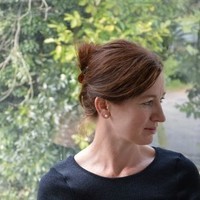
The small photo on the back cover, of a thoughtful young woman considering the contents of a picture or a document, conveys another theme of the book. This was Katrina Kittel’s challenge as a mature woman, revisiting her own childhood and seeking to understand some of the forces shaping her father’s life. Her opening and closing chapters frame this quest. The image is purely evocative, as a photo within the book reveals the young woman’s identity as the wartime Italian teenager Carla Bonello who now lives in Milan.
The words on the back cover neatly summarise the book’s content:
In September 1943, Italy capitulated to the allies. Seizing the moment, Australian and New Zealander prisoners of war walked out of Italian rice farms dotted across the Piedmont plain west of Milan.
Escape, for most, was easy. But what came next, the evasion phase of their war - the weeks and months on the loose, foot-slogging to the frontier, identifying friend from foe, scraping up a feed, weighing up needs for shelter and the dangers for Italian helpers, discovering the breadth of the Italian resistance - was in all likelihood more taxing and nagging on their resilience than the longer periods spent within prison camps.
Drawing on first-hand accounts and archival records, Katrina Kittel weaves the stories of escaper groups through time and theme to reveal key evasion rotes and the outcomes that befell them.
Three testimonials then assure us that this book is well worth reading.
For four years, intermittently, I have lived through the gestation of ‘Shooting Through’. Its research and drafting was already well advanced when Katrina Kittel first asked me to look at some early chapters. She was grappling with how to create a narrative out of a mass of detailed research about a large number of captured soldiers assigned as workers to around 30 Italian rice farms forming the administrative unit known as Campo 106. How to shape and structure this material was a challenge.
Now that the printed book is finally held in my hands I congratulate the author for a fine achievement. Her work over so many years has paid off. ‘Shooting Through’ makes a truly valuable and original contribution to our military and cultural history. It does justice to the source material, the experiences of the author’s father and the complexities of the men’s lives, during and after World War 2. A page-turning book has been forged from a mass of detail about names, geographic places and military units.
I read ‘Shooting Through’ to absorb its ‘whole’, its structure and its ‘intent’, but its finer details will be of great interest to the descendants of the men concerned. Finding mention of their relatives within the book will require a bit of page-turning, as the index has an unusual indexing format, using chapter numbers and not page numbers.
Humorous anecdotes and the use of telling ‘snippets’ from war diaries, letters and personal interviews convey a wonderful sense of the characters and places encountered in this book. Escapers used an interesting variety of transport modes – trains, buses, bicycles, even walking along in plain sight. All readers will be constantly amazed at the obvious resourcefulness of the Australians and the generosity of so many Italians. Both groups, former enemies in warfare, showed courage despite their uncertainties over who could be trusted during the shifting alliances of 1943.
While the frequent use of colourful Australian slang brought that wartime era to life, some poetic and evocative language is also sprinkled through various chapters. For example, Chapter 15 begins with the words ‘Near the end of September, an approaching northern winter sent chilly calling cards to the plains’. In Chapter 17: ‘Peaks pierced mercilessly through sliding clouds, mist flopped like dry ice on sunken shoulders’ and ‘Col dragged his step like a dishevelled delinquent entering detention’. These turns of phrase greatly enhanced the book as a reading experience.
The 40 (unnumbered) pages of black & white illustrations add an invaluable dimension to the story. Two maps help too. The first map shows the location of the various rice farms on the Piedmont plain which made up the complex known as Campo 106. Milan, tucked away in the bottom right hand corner of the second map, anchors the geography in the mind of the reader, showing the wider Piedmont plain area, from the river Po to the Swiss border. Excitingly for me, my first trip to northern Italy in 2018 brought this environment vividly to life, although I travelled into the Swiss Alps northeast of Milan, via the eastern shore of Lake Como and the Bernina Express.
‘Shooting Through’ is an important book for the large Italian community in Melbourne and elsewhere in Australia. It resonated with me too, as a daughter of a young Australian ex-soldier who had served in the Middle East. In the immediate post WW2 years we lived in Brookvale, at that time an Italian market-gardening area in the Northern Beaches area of Sydney, and our neighbours across the road were the Paolas. This book made me think back. We all lived through the start of multicultural Australia and, to this day, I’ve never heard that Mr Paola’s WW2 background in Italy was ever an issue with his Aussie neighbours.
‘Shooting Through’ has yet another claim to broad historic significance. This was recognised by the ABC’s 7pm television news in October 2019, which gave extensive coverage to the funeral of 101-yr-old Bill Rudd, a grandson of EW Cole of Melbourne’s famous Cole’s Bookshop and another POW escaper in Italy.
‘Shooting Through’ is so much more than a military history. As Professor Peter Monteath wrote in his Foreword, ‘this book is not just a remarkable tale, it is a true one. It defies the imagination, and it satisfies it too’.
Although I have done a fair bit of research concerning World War II, I was shocked to find out only last year that many Australian servicemen were held as prisoners of war in Italy. I feel the average Australian would be surprised to hear of this just as I was and was therefore excited to go to the launch of Katrina Kittel’s book “Shooting Through: Campo 106 escaped POWs after the Italian armistice”. Kittel has done a wonderful job of drawing together first hand accounts to make sense of this incredible, little known part of our World War II history. The author’s father was one of over 400 Australians who managed to escape to Switzerland via the Italian alps, and the hardships these men faced makes for sometimes difficult reading. “In two waves during April 1943, POWs were marched four kilometres under armed guard from compounds at the large Australian and New Zealander Grupignano camp to the small medieval town of Cividale del Friuli. At Cividale del Friuli station, near the Yugoslavia border, POWs were jammed into overloaded cattle-train ‘truck’ compartments to head west to the rice-cultivation plains of the Piedmont plain between Turin and Milan and north of the Po River. Because young Italian men were away fighting the war, POWs provided a ready labour source.” Gradually, through each chapter, Kittel focuses on different aspects of the POWs life at Campo 106 - what happened to the men when Italy capitulated, what each group or individual decided to do: to head north to find a way to reach Switzerland, to head South instead, to stay put or to even join the partisans. What surprised me is how much the Italians sacrificed for our men, some families feeding several POWs for months, another family sending a young child to guide POWs towards the summit of Mount Moro. So many Italians helping with food and clothing on a daily basis. This is a very detailed and thoroughly researched book that includes copious references and a nominal roll of Australian POWs at Campo 106. I was just a little confused where Campo 57 (the prison camp) and the Campo 106 farms sit in the context of Australian Prisoners of War in Italy. There is mention in the introduction of many Italian POW camps but no outline at all. I just found it hard as a reader, unfamiliar to this amazing subject, to step right into the world of Campo 106 without a frame of reference. 4 and a half stars.
3.5 stars rounded up. Great stories and really well-researched but let down by poor editing and a confusing structure. May have been better to tell a couple of stories in depth rather than trying to cover everyone. The stories about men trekking across the Alps were really engaging and tense, but then other sections skipped from repatriation in 1945 to people fighting with partisans in 1943. So it felt a bit disjointed. And there were too many sentences like this that just don't really make sense and interrupted the flow: "Jim had taken ill, vomiting blood, when he and Herbert 'Harry' Sincock were in Marseilles, wandered to the dockyards."
My grandfather was given to hiding things around the house. He was one of the 80,000 prisoners-of-war, who had found themselves in Italian prisoner-of-war camps during World War Two. Katrina Kittel’s vignettes of their attempts to escape after the Italian armistice reveal the generosity of spirit and ingenuity of the locals and resistants, and guards, who helped some 4,000 soldiers escape either to Switzerland, in the case of Harry Collins, my grandfather, or down to the South of Italy, where the Americans were gaining ground. I highly recommend “Shooting Through” for its attention to detail and the affection that Katrina Kittel has been able to show for the men like her father. The history in the book itself makes for an unexpected descent into what it would have been like to make do in an unimaginable situation on the other side of the world. Living so close to Italy myself, I would hope that Italians would read these accounts and that some of them might be translated.
My grandfather was given to hiding things around the house. He was one of the 80,000 prisoners-of-war, who had found themselves in Italian prisoner-of-war camps during World War Two. Katrina Kittel’s vignettes of their attempts to escape after the Italian armistice reveal the generosity of spirit and ingenuity of the locals and resistants, and guards, who helped some 4,000 soldiers escape either to Switzerland, in the case of Harry Collins, my grandfather, or down to the South of Italy, where the Americans were gaining ground. I highly recommend “Shooting Through” for its attention to detail and the affection that Katrina Kittel has been able to show for the men like her father. The history in the book itself makes for an unexpected descent into what it would have been like to make do in an unimaginable situation, on the other side of the world. Living so close to Italy myself, I would hope that Italians would read these accounts and that some of them might be translated.