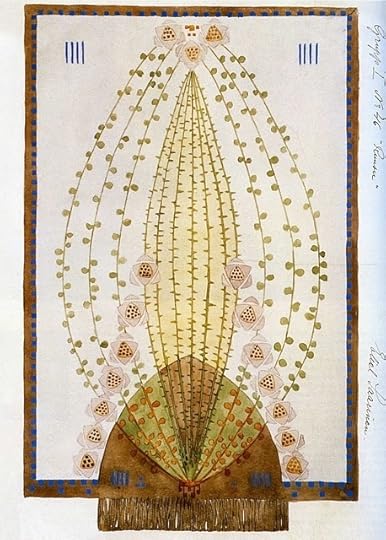
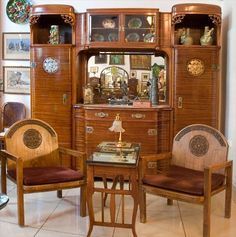
Richly illustrated essays which explore aspects of romanticism in art, architecture and design in North America, England, Russia, Norway, Finland, Japan, Poland, Hungary and Ireland. They outline the expression that evolved as each nation sought the roots of its own culture, in developing a powerful visual vocabulary.
This is a collection of papers given at a conference; as usual with such volumes there is considerable variation both in terms of the quality of the papers and of their approach to the subject. Therefore the coverage of the overarching topic is not very even or thorough, but some of the individual article are interesting.
Contents:
Introduction : national romanticism : vernacular expression in turn-of-the-century design / Nicola Gordon Bowe
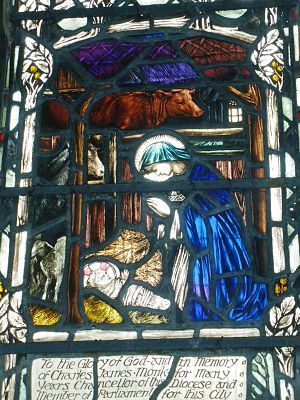
Recreating a tradition : Christopher Whall (1849-1924) and the arts & crafts renascence of English stained glass / Peter Cormack Whall was influenced by the Pre-Raphaelites, especially Morris, and often included local details from the places where he was installing the glass. The last, post-war, decade of his life was employed primarily with war memorials, aided by his daughter Veronica Whall, who continued the business after his death, until 1953. The Whalls were influential on stained glass work in Britain and her (former) colonies and France.
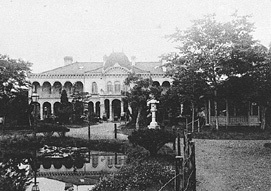
Vernacular expression or Western style? : Josiah Conder and the beginning of modern architectural design in Japan / Toshio Watanabe Rokumeikan pavilion Condor was invited to take part in modernization efforts after the Meiji Restoration. Only 24, he had won prizes during his studies under T.R. Smith but had never built an actual building. Although the overall appearance of his work is Western, he incorporated many Japanese design elements.
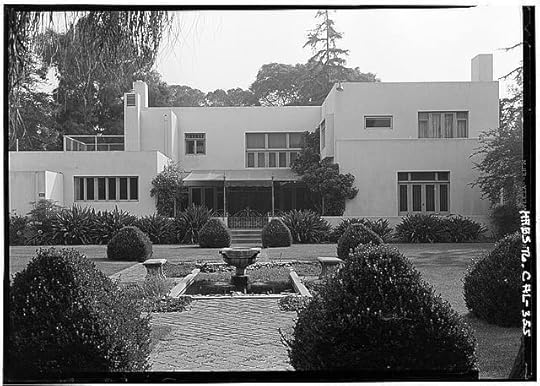
The vernacular in America, 1890-1920 : ideology and design / Wendy Kaplan Dodge House, Los Angeles "The idea that every country should have architecture and design that reflected its own particular history, geography and climate was central... The goal was an 'organic' architecture... The interpretation of the vernacular varied widely in different areas of the country." (53) Well, yes, given the first statement the last would pretty much have to be true, wouldn't it?
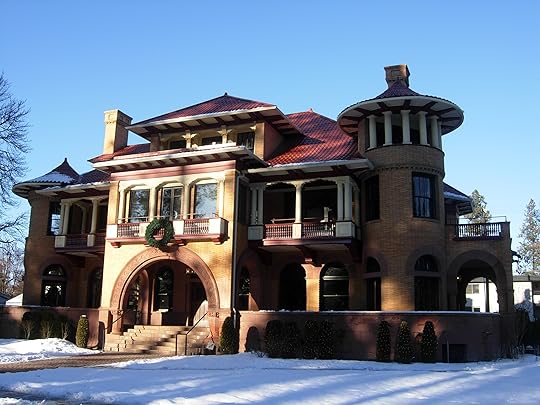
The search for a northwest vernacular : Kirtland Cutter and the rustic picturesque 1888-1920 / Henry Matthews "in the case of the American Northwest, there was in the minds of settlers no indigenous architecture from which to draw... It was not until the late 19th century, when Americans were closer to achieving the conquest of the wilderness that they could see the pioneer cabin as a romantic source for their own architecture."
Reviving folk art in Russia : the Moscow Zemstvo and the kustar art industries / Wendy Salmond "In the closing decades of the 19th century, two antithetical forms of economic and social life battled for supremacy and survival in Russia. Capitalist expansion and the rapid growth of factories... threatened the continued existence of Russia's predominantly agricultural economy and the rural cottage industries... kustar industry was practised by the millions of peasants who farmed the land during summer and spent the winter months working with their families to earn an essential supplementary income." Under Count Witte the Ministry of Finance was eager to support modernization and supplemented it financially, allowing it to produce cheaper (and often better) goods. Kustari industries had to focus on artistic and luxury goods. They also had an emotional foothold with the many Russians (including Grand Duchess Elizavetta Fedorovna) who felt their country was becoming too westernized.
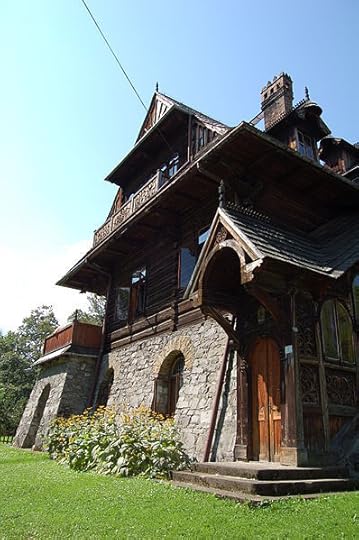
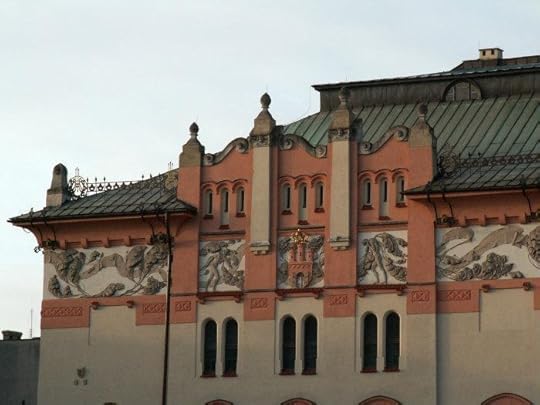
Searching for a national style in Polish architecture at the end of the 19th and beginning of the 20th century / Malgorzata Omilanowska Pod Jedlami Villa To find a more vernacular style less imbued with foreign influences, Polish architects turned to folk art. The first manifestation of this was called the Zakopane style, after a mountain which became popular with artists in the 1880s; it worked well for wood but didn't transfer well to brick. Then came the Vistula-Baltic Gothic, which looked back to Renaissance and Baroque monuments. Kraków Old Theater
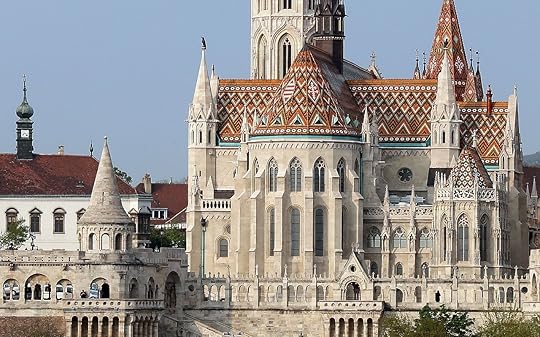
Romantic elements in Hungarian art nouveau / Katalin Geller. Mátyás-templom, Buda. Medieval but extensively (and controversially) altered by Frigyes Schulek in the late 19th century. Pointed steeples and turrets were popular in Hungarian art nouveau.
Vernacularism and its special characteristics in Hungarian art / Katalin Keseru Regionalism as a deliberate attempt rather than a naturally occurring local style.
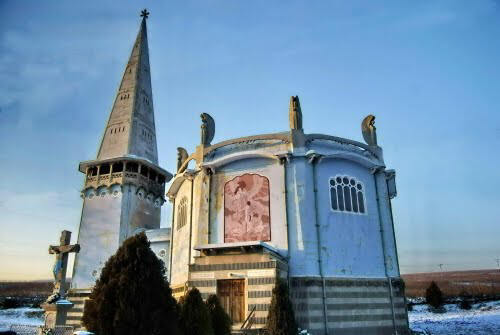
What is vernacular? or, the search for the "mother-tongue of forms" / Janos Gerle Medgyaszay István: Rárosmulyadi templom. Medgyaszay had one of the most Orientalist styles.
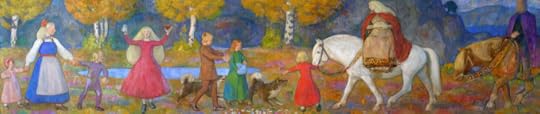
Norwegian craft theory and national revival in the 1890s / Patricia G. Berman Erik Werenskiold's wall paintings (1904-1907) for Fridtjof Nansen's home, Polhøgda, illustrating the Norwegian folk song "Liti Kjersti". "Central to Norwegian crafts history was the positioning of the 'peasantry', or 'folk', as a model of cultural purity, and of 'folk arts' as models for modern decorative art.
How nationalism was expressed in Finnish architecture at the turn of the last century / Ritva Wäre The same Finnish architecture has been interpreted as nationalist or internationalist and modern, depending on who was doing the interpreting. There were active discussions in all areas of the arts about what would constitute "Finnish style".
A contextual introduction to romantic nationalism and vernacular expression in the Irish arts and crafts movement, c.1886-1925 / Nicola Gordon Bowe. This article is outdated now as it asserts that Ireland wasn't thought of as having an Arts and Crafts movement and that there is little work on the subject. Come to think of it, Jeanne Sheehy had already published on some related subjects before this came out.