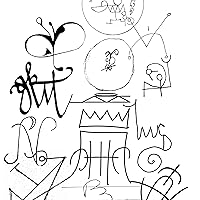
In this interpretation of the thought of the heretical philosopher Giordano Bruno (1548-1600), Karen de L.-Jones depicts the influential thinker as mystic and cabbalist. She rejects the popular view of Bruno as hermetic magus - a position initiated by Frances Yates and widely accepted by succeeding scholars. Bruno's interest in mysticism and the Kabbalah was not merely intellectual or satiric, de L.-Jones a close look at his study of the Kabbalah reveals him as a practising believer. For Bruno, the Kabbalah reconciled science with theology and provided a biblical support for theories such as metempsychosis that he wished to prove scientifically through atomic theory and physiognomy. Balancing his mystical Cabala dialogue with the hermetic vein of his dialogue "Spacio della bestia trionfante" and the Napoleonic emblems of "Degli eroici furofi", Bruno creates a solid syncretic trilogy, as well as a modern apology for scientific and philosophical debates still of interest today.
Karen Silvia de León-Jones, Ph.D. (The University of Chicago, 1994; M.A., UChicago, 1988), is a financial consultant who previously served as a research fellow in religious studies at the Centre d'Études des Religions du Livre within the Centre National de la Recherche Scientifique (CNRS) in Paris, as well as the Institut Karma Ling. Her scholarship focused on early modern esotericism, Renaissance humanism, Christian thought, and Jewish mysticism. Her publications on Giordano Bruno (1548–1600) argued that he was a practicing Kabbalist, rather than a Neoplatonic or Hermetic magus—the prior academic consensus established by Dame Frances Yates.