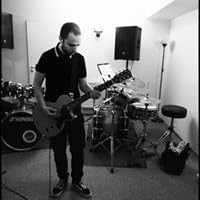
Vic Flick's connection with the films in the James Bond series is legend. His guitar sound on the “James Bond Theme” stirred the hearts and imaginations of a generation. He knew the music business from the inside, including the good and the bad business practices, the money, the agents, and the managers. From The Beatles to Nancy Sinatra, from Tom Jones to Dusty Springfield, they're all within the pages of Vic Flick's autobiography. In the late 1950s, Flick joined The John Barry Seven, and his first composition for the group was “Zapata.” With them, he played the guitar riff for the theme of the popular TV show, Juke Box Jury, and appeared on every episode of BBC TV's Drumbeat. When Hollywood beckoned him to work on soundtrack for Dr. No (1962), he played lead guitarist on the "James Bond Theme.” He continued to contribute to the James Bond soundtracks from the 1960s through the late 1980s. He also contributed to the soundtrack of The Beatles musical, A Hard Day's Night, playing his Olympic white 1961 Fender Stratocaster on "Ringo's Theme (This Boy)" instrumental. He has worked with many notable artists, including Herman's Hermits, Nancy Sinatra, Engelbert Humperdinck, Tom Jones, Cliff Richard, Eric Clapton, and Jimmy Page. He played the 12-string guitar part on Peter and Gordon's 1964 # 1 record, "A World Without Love.” In 2005, he provided his guitar talents to the soundtrack of the From Russia With Love video game. On October 5, 2012, Vic Flick was honored at the Academy of Motion Pictures Arts and Sciences for "The Music of The First 50 Years." "Vic's book is an amazing read, full of his entertaining sense of humor and a reservoir of miscellaneous facts and tales of the studios and the musicians who made London such a fabulous place to be in the '60s. Miss it at your peril."– Pipeline (UK)
Autobiography of one of the most noted studio musicians of the 1960s.
Famous for playing the guitar on the original James Bond theme, Flick takes us through the enviable life of a session musician, from backing huge stars of the era (Dusty, Sandie etc), playing on film soundtracks ("Ringo's Theme" from "A Hard Days Night"), in bands (The John Barry Seven), and from radio and TV shows to cruise ships.
We learn much about the eccentricities of his fellow musicians, and the difficulties of finding a parking-space near central London recording studios, but the workaday tone makes a remarkable life seem almost humdrum; and the lack of a discography is sorely felt.
Still, it's a fascinating historical document. For pop nerds only.
This book is a perfect read for fellow musicians who want to to find out about one of our greatest, and most famous session guitarists. Vic relates his story in a precise and exacting manner, though one wishes he had used a "session" writer to eliminate certain writing faux pas like forgetting full stops occasionally. Amazing errors for one of his musical stature. Overall, though, it was a great read and it was interesting to find out about people I was familiar with, like Denny Mann, who I worked alongside on the Q.E.2 . Highly recommended. Read this book it you love the history of music.
Not the easiest book read ,rather disjointed use of " American" words/names annoying ( I suppose Mr Flick is "hedging his bets" !)on the plus side insights into recording techniques & some of the more colourful characters enjoyable