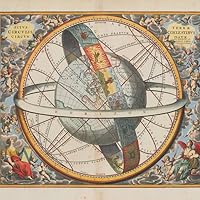
Originally published during the early part of the twentieth century, the Cambridge Manuals of Science and Literature were designed to provide concise introductions to a broad range of topics. They were written by experts for the general reader and combined a comprehensive approach to knowledge with an emphasis on accessibility. The Wanderings of Peoples by Alfred Cort Haddon was first published in 1911 and reissued as this corrected edition in 1912. The text contains a survey of the trends in human migration, offering information on their main causes and effects.
Writer and director Michael Eaton studied anthropology at Cambridge and in 2010 made a film 'The Masks of Mer' about the unique film shot in the Torres Straits by Alfred Haddon in 1898 lasting for less than a minute and the world's first example of anthropological cinema. 'The Masks of Mer' tells the extraordinary story of this experiment and traces the masks worn in the sacred initiation ceremony Haddon filmed.
The remainder of this description refers to Michael Eaton, not Alfred C. Haddon!!! As a writer he is best known for his investigatory dramas for television, which include 'Shipman' and 'Shoot to Kill'.
Film & Television Heartbeat (ITV); New Street Law (Red/BBC); Shipman (ITV); Nightshift (Maverick/C4); Flowers of the Forest (BBC Scotland); Signs & Wonders (BBC); Shoot to Kill (YTV); Why Lockerbie [aka The Tragedy of Flight 103] (Granada/HBO); Fellow Traveller (HBO/BBC/BFI); Border Crossing (C4); In Suspicious Circumstances (Granada); Darkest England (C4); Frozen Music (BFI); Visions (C4)
Theatre The Families of Lockerbie (Nottingham Playhouse), Charlie Peace, His Amazing Life and Astounding Legend (Nottingham Playhouse and Belgrade Theatre, Coventry).
Radio Waves Breaking on a Shore (with Neil Brand)(Promenade/BBC); The Conflict is Over (Promenade/BBC); Felix Holt (Promenade/BBC); Pickwick Papers (Promenade/BBC); Bride's Chamber (Promenade/BBC);Cave of Harmony (BBC); George Silverman's Explanation (Promenade/BBC); Dickens in London (BBC).
Value: While this book is cool, the format takes away from the amount of information provided. The Cambridge Manuals of Science and Literature were purposefully made to be small, and so many of the interesting details have been left out (this is even mentioned by this specific author A. C. Haddon in the introduction). Unfortunately this makes the actual book of little value when trying to learn. The sentence structure is a constant repetition of “they went here, then these people went there and these guys went here and…etc” and it never tells you why. Because the formatting is so small, many of the details that makes this information interesting are omitted. The book continues to introduce new family groups and peoples without explaining who they are, or how they are different from the other people already named. While I understand that this tiny book can’t fit an essay on each individual mentioned, I still wish they added a bit more? To anyone thinking of purchasing this little volume, do it for the antiquity and how nice it would look on your bookshelf, not for the content.
Historical Prejudice: This book (or at least my edition) was published in 1927, and thus includes lots of racism. Haddon is not as crude with it as others, however he still refers to specific regions of people’s with derogatory language, (primitive, backwards, civilized vs uncivilized, cultured vs. uncultured) ancient Africans especially. He calls groups of people “stocks” (as in: "the ___ of ___ most likely originated from the Polynesian stock" or something like that) and he loves to refer to a specific African stock as “the Bushman.” His terminology for Africa is specifically atrocious, as the scientific name for the Bushman is apparently the “Negroid stock” or the “Negrollies,” which to be honest, he should’ve just said the N word and I would’ve been less offended. He also calls people primitive and barbaric, but that being said, the racism was less than expected.
Informational Gaps: This discipline was very much new at the time and it shows. There are large gaps of information, specifically in Africa (the author even mentions that not much history is known about ancient Central Africa) and South America. I’m not shocked that the most well documented history happens to be about the Middle East and Europe, but the fact that Australia isn’t even mentioned blew my mind. It was as if Australia didn’t exist. To anyone wishing to know “The Wanderings of People’s” in Australia, you won’t find it here.
Writing: The writing was fine.
Edition: My edition of this book included fold out maps of each continent (besides Australia) at the very end. There were arrows showing the lines of migrations and the people attached to it. This was my favorite part of the book, so if later editions don’t include this, know that the 1927 one does! No color though, some of the pages are uneven. Books is physically small and easy to take around.