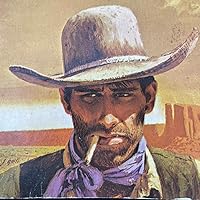
Lewis Byford Patten was a prolific author of American Western Novels, born in Denver, Colorado. Often published under the names Lewis Ford, Len Leighto and, Joseph Wayne.
John Sessions returns to his Kansas home and finds his wife scalped and sons tortured to death. His hidden cash box has been looted and, after a hard turn of grief, he buries his family and realizes that three horse tracks leaving his ranch weren't left by murderous Indians but by three white men pretending to be Indians.
Sessions follows the tracks to a nearby outpost where a commander is assembling a troop of scouts to respond to Indian raids nearby. He determines that the killers joined this troop so Sessions also joins, intending to find out which of them did it, and ends up fighting alongside these murderers against a large group of blood-crazy Northern Cheyenne.
“Red Runs the River” falls into a regrettable repetitive pattern while the unit is laid under siege by these Indians for most of the story; with the confined space and unchanging situation, there are a lot of duplicated plot sequences and inner thoughts from Sessions.
Verdict: "Red Runs the River" (1970) is an okay western adventure vengeance tale.
Jeff's Rating: 2 / 5 (Okay) movie rating if made into a movie: PG-13
This book makes a little more sense now that I know it was published in 1970. It tells the story of Sessions, having tracked his family's murderers to a troop chasing Indians, joins the troop to exact his revenge. Trapped on an island, he must survive the murders, his wounds, and the heat.
Four things: 1) I don't believe Forsyth would accept a volunteer who is bent on killing three of his recruits; 2) Grover would not know the bullet is lying next to an artery without being able to see it; 3) Sessions choosing not to shoot Jouett is an out-of-character decision; 4) even given the effects of adrenaline, Forsyth must have been superhuman