This book was converted from its physical edition to the digital format by a community of volunteers. You may find it for free on the web. Purchase of the Kindle edition includes wireless delivery.
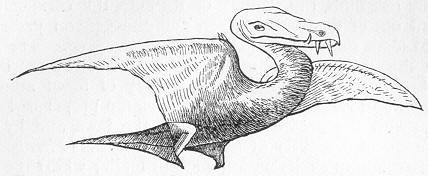
I bought this old textbook because I liked the illustrations-- 270 etchings. You can read it at Project Gutenberg, but the reproductions of the illustrations are not high enough resolution to capture the beautiful lines. There's a fun frission in reading books so strongly imbued with two dimensions of time: the deep time of the fossils and the changes over the 121 years since the book was published. It's paleo-paleontology. The most interesting thing for a modern reader of this 1899 text is what has changed in our understanding of paleontology and what has stayed the same. Nicholson is carefully scientific in his approach, and doesn't make unsupported guesses where he doesn't have evidence. He makes no date claims at all, for example, except that the time-scales involved are far longer than all of human history. It places a lot of emphasis on the layers of sediment in various places on earth (you can tell he was trained as a geologist) and most of the illustrations are literal reproductions of the fossils themselves, with relatively few attempts at reconstruction. (There is one particularly derpy-looking ramphorhynchus, though.) One fascinating point is how little material there is on dinosaurs, which he styles deinosauria. He correctly notes that the limb articulation of dinosaurs shows that they didn't walk with limbs splayed, and suspects that large footprints attributed to giant ancient birds may have come from (what we would today call) therapods, which he correctly supposed were bipedal. The one dinosaur fossil illustrated, though, is a megalosaurus jaw, where most of the skull is reconstructed, and includes such incorrect features as a large sclerotic ring. I don't know whether he just didn't have access to the material Cope and Marsh were publishing, or why it wasn't included. There is a lot more information included about the things one more typically finds as fossils-- sea shells, trilobites, corals, plant life, that kind of thing-- and about the "post-Pliocene" mammals. He is on board with Darwinian evolution, though there is more talk of "higher" and "lower" forms of life than would today be considered correct. He believes though, that there is more to the story, as so many forms of life (trilobites, for example) seem to appear suddenly in the fossil record with no precursors.