This title marvels at the titanium wonder that is the Guggenheim museum and takes in its fascinating exhibits. It discovers the unique history behind the Basques, Europe's oldest people. It travels through stunning scenery of velvet green mountains, immaculate villages, vineyards and ancient holy places. It explores both the French and Spanish sides of the Basque country and the dramatic vistas of the Pyrenees. It visits vibrant Vittoria and lives it up in the glittering resort of Biarritz. It has a dynamic new two-colour layout for easy navigation. It has a new magazine style, combining stunning photography, tailored itineraries and a personal take on the country. It features clear, newly-designed two-colour maps throughout for increased ease of use. These are the only guides with full-colour touring maps of the whole region. There are extensive listings of hotels and restaurants - all personally recommended for a really local flavour.It also includes 'Top Don't Miss' sights for each regional chapter, plus 'Author Choices' of personal favourite places to stay and eat.
Dana Facaros wrote her first guide book the Greek Islands at age 20 in 1977, and husband Michael Pauls joined her a few years later in penning guides to Sicily, Sardinia and Corsica. Along with Turkey, these books became the genesis of the first Cadogan Guides in 1985. These were a little revolution at the time: guides ‘for the independent traveller’ as the old slogan put it, with a rich and thorough treatment of history and culture, a little irreverence and a sense of fun.
Over the next 30 plus years, 'the Dynamic Duo of Travel Writing' as they've been called have written over 40 guides to Greece, Turkey, Italy, France and Spain for both Cadogan and Footprint. They even wandered further afield to write travel guides to Mars and Hell, and condensed some of the curiosities they’ve learned along the way in a little ebook called Titmice, Turks and Marinated Mummies.
Currently based in Southwest France, they have contributed to the Independent, the Sunday Times, the Sunday Times Travel Magazine, the Sydney Morning Herald, the Guardian, the Telegraph, National Geographic Traveler’s website and the travel magazine Wanderlust. They appeared on Radio 4’s Excess Baggage, among other shows, and in two episodes of the series Mediterranean Tales (Lion Television/BBCFour), did their best to explain the life and history of Naples and Athens.
At the moment, they are working hard at converting and expanding some of their guides into in depth travel apps: Barcelona Art & Culture and Venice Art & Culture are currently both out in the Apple App Store and on Google Play; the Ultimate Italian Menu Decoder and Bologna Art & Culture will follow shortly.
A good read, actually. This is less like the travel guides I am used to (Michelin, Rough Guide, etc) and more like a descriptive book about an area. After a couple token glossy tourist photos at the front there are no pictures, and fairly substantial articles about mythology, history, and culture outweigh descriptions of the "sights". More something to read ahead of time than a guide for travel planning (which is fine because I'm not going there). I enjoyed this even though it didn't have the information I was searching for, and am now looking forward to picking up a more extension text on Basque mythology.
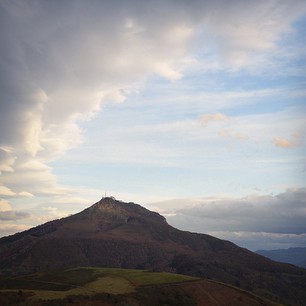
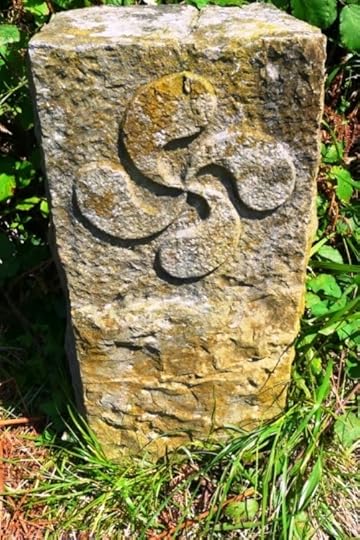
Larhune was a sacred place in Basque mythology, the home of Lehensugea, the first serpent and consort of the mother goddess Mari. It is covered in dolmens, stone circles and other neolithic monuments. Later, and perhaps as a consequence of the ancient sacred sites, the summit had a reputation as an akelarre or ritual meeting place for witches. Up until the 18th century, local villages paid for a monk to live as a hermit at the top of the mountain to keep witches away.
a dandy up to date guide to basque country, both france and spain. of course you always have to take these with a grain of salt, but writers have tried to convey the sublime, the mundane, the joys, and the pains-in-ass, and the "funny" ways of the basques, and one of the coolest places around. and not a strip mall to be found in the whole place.
I do love a travel guide for the 20-page history when what you want is a 20-page history instead of a book-length history. I did this for Myanmar too, when Glass Palace reminded me of another field of my ignorance.