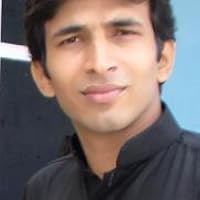
Turning to the first outstanding lesson of the Bharitya Janata Party and the Indian Muslims, Afzal’s effort confronts the general ignorance about India that prevails in Pakistan. While Pakistan is full of ‘experts’ on India fond of making ex cathedra statements, there is practically no meaningful attempt to understand the psychological and historical conditioning of the ‘other’. Afzal deserves to be catapulted to national fame on account of this book. What he has to say in the substance of the book and the knowledge and perspective it contains about Hindu nationalism, Muslim nationalism, and contemporary South Asia are sobering and engaging. Narendra Modi’s rise to the premiership, prior Gujarat massacre notwithstanding, and the BJP’s formation of a majority government in 2014 are both logical outcomes of India’s reversion to pre-British norms of exercising power and reflect the real emotive resonance of India’s Hindu culture and religion. Afzal’s view is rather different and argues that the BJP faces enormous difficulties in forming governments, as well as in staying in them, on account of the divisiveness of its ideology and political program. Pursued aggressively, the Sangh Parivar program would risk the radicalization of India’s minorities, especially the Muslims, and possibly lead to other unwholesome consequences such as liberal and secular forces uniting to resist revision of curricula and dilution of official secularism. Whatever one’s take, the BJP’s rise has clearly not hit a plateau and poses some challenges for Afzal’s analysis and framework.
Overall, Afzal’s Bharatiya Janata Party and the Indian Muslims is a fine book and ought to be widely read in Pakistan. Indeed, it ought to be compulsory reading for Pakistani diplomats and military officers and it represents a refreshing addition in terms of variety to the scholarship being produced in Pakistan. One hopes that Afzal will continue to write about India and, in doing so, add desperately needed depth to the Pakistani understanding of its neighbor. (Words of Dr. Ilhan Niaz, QAU Islamabad)