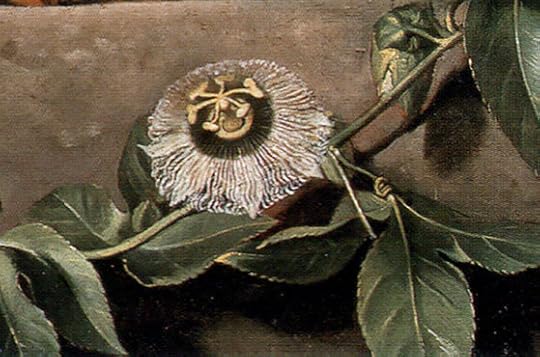
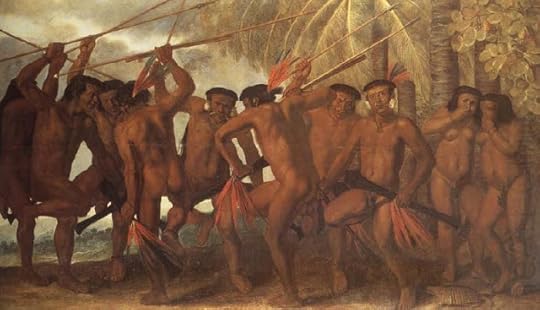
Visions of Savage Paradise is the first major book-length study of seventeenth-century Dutch artist Albert Eckhout to be published in nearly seventy years. Eckhout, who was court painter to the colonial governor of Dutch Brazil, created life-size paintings of Amerindians, Africans, and Brazilians of mixed race in support of the governor’s project to document the people and natural history of the colony. In this study, Rebecca Parker Brienen provides a detailed analysis of Eckhout’s works, framing them with discussions of both their colonial context and contemporary artistic practices in the Dutch republic.
I suspect this was Brienen dissertation, transformed into a book. That's not a criticism -- it seemed intelligent, well-researched. It just had that dissertation vibe where one tries to anticipate every possible point of questioning, describe the state of the field, and explain why the topic is worth knowing about. She clearly knows the topic thoroughly and I think she did a good, clearly-written job covering the subject. It is even moderately readable by a lay person, although probably not of interest to many.
I liked that she addressed historical context, aesthetic issues, and practical concerns such as how expensive it was to get quality art supplies in the colonies. She is interested in Eckhout's reputation as a "real" artist (many art critics don't include realistic botanical work in this category), the place of his work in the context of other ethnographic art, his influence on other artists, and the (questionable) validity of his work as a primary source. That's a lot to over in a relatively short book (quite a few pages are devoted to reproductions) and I think she did an excellent job providing plentiful supporting evidence without bogging down into the researchers' trap of let-me-show-you-everything-I-read.
p.s. Dr. Brienen, did you know you could get a caftan printed with your guy's work? He's relevant!