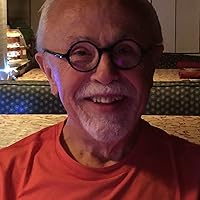
Swami Chinmayananda (May 8, 1916 - Aug 3, 1993) was born Balakrishna Menon (Balan) in Ernakulam, Kerala in a devout Hindu noble family called "Poothampalli". Graduating from Lucknow University, he entered the field of journalism where he felt he could influence political, economic and social reform in India. But his life was changed when he met Swami Sivananda at Rishikesh and became interested in the Hindu spiritual path. [1] Balakrishna Menon took sanyas(monkhood) from Swami Sivananda and was given the name Swami Chinmayananda - the one who is saturated in Bliss and pure Consciousness. Swami Shivananda saw further potential in Swami Chinmayananda and sent him to study under a guru in the Himalayas - Swami Tapovan Maharaj under whom he studied for 8 years. Swami Tapovan maharaj was known for his rigid teaching style, to the point where he told Sw. Chinmayananda that he would only say everything once, and at anytime he would ask questions to him. Even with these extreme terms, Sw. Chinmayananda stayed with Tapovan maharaj until the very end of 8 years. Being a journalist at heart, Sw. Chinmayananda wanted to make this pure knowledge available to all people of all backgrounds, even though Tapovan Maharaj had advised against it. It was then that with Tapovan maharaj's blessings, he left the Himalayas to teach the world the knowledge of Vedanta throughout the world. During his forty years of travelling and teaching, Swami Chinmayananda opened numerous centres and ashrams worldwide, he also built many schools, hospitals, nursing homes and clinics. His interest in helping the villagers with basic necessities lead to the eventual creation of a rural development project, known as the Chinmaya Organization for Rural Development or CORD. It's Naitonal Director, Dr. Kshama Metre was recently awarded the Padma Shree National award in Social Work. Swami Chinmayananda passed away on 3 August 1993 in San Diego, California. His followers regard him as having attained Mahasamadhi at that point. His work has resulted in the creation of an international organization called Chinmaya Mission. This mission serves Swami Chinmayananda's vision of reinvigorating India's rich cultural heritage, and making Vedanta accessible to everybody regardless of age, nationality, or religious background.
Chinmayananda Saraswati, also known as Swami Chinmayananda and born Balakrishnan Menon, was an Indian spiritual leader and teacher who inspired the formation of Chinmaya Mission in 1953 to spread the message of Vedanta. The organization, which was founded by his disciples and led by him, has over 300 centres in India and internationally. He was a disciple of Sivananda Saraswati at Rishikesh, who founded the Divine Life Society. He was later advised by Sivananda to study under Tapovan Maharaj in Uttarkashi in the Himalayas.
Extraordinary philosophy. In significant ways deeper and more complete than much Western philosophy. Uniquely compatible with current physics and perception theory.
It's the best commentary in English you can find. Swamiji's commentary makes it easier to grasp the deep philosophical concepts of AdiShankara's Vedanta treatise.
Given the relatively massive uptick in interest in neo-Advita practices, philosophy and insights. Including my own. But also (oddly) including a good chunk on the internet (something I never saw coming - but I have to admit, that I’m both excited and cringed out by). I have been focusing on the core Advaita Vedanta (non-dual Hindu) literature lately.
Adivta-Vedanta was (basically) introduced to the West beginning with teachers like Ramana Maharishi and Vivekananda, and continuing with Krishnamurthi and Papji, And more recently with figures like Eckhart Tolle and Rupert Spira. And currently with like 1 million people on YouTube trying to be non-dual teachers. That’s the cringe part for me.
But whatever.
I get it.
It’s exciting.
And the world needs it.
So here we are.
Anyway.
My goal is to read the core texts (both classical and contemporary) in non-dual Buddhism, Advita and the non-dual Tantric traditions.
And perhaps beyond.
No idea really where this reading adventure will take me.
So far it’s been pretty unpredictable.
I’m currently working my way through the bibliography suggesting in Adi Da’s Basket of Tolerance (BOT). I am not a Da-votee. Although I deeply appreciate and admire his early writing. I am using BOT as a curated/ranked reading list.
And it actually fucking rules for that.
So anyway.
Regarding the book that I’m supposed to be reviewing:
Adya Shankara’s Vivekachudamani (“The Crest-Jewel of Discrimination”) is a classic text of Advaita Vedanta, probably written in the 8th century CE. It is a practical guide to liberation (moksha) through self-knowledge (jnana) and discernment (viveka).
Its central teaching is that our true Self (Atman) is not the body, mind, or ego. Our real nature is pure, limitless consciousness, which is identical with Brahman, the absolute reality.
Human suffering is caused by ignorance (avidya), especially the mistaken belief that we are the body, mind, and personality. This misidentification leads to attachment, fear, and bondage to the cycle of suffering and rebirth (samsara).
Liberation comes through disciplined preparation and insight. Shankara emphasizes discernment between the real and the unreal, detachment from fleeting pleasures, a sincere longing for liberation, and the cultivation of inner steadiness and ethical self-control.
He describes the “sixfold inner wealth” (shat-sampatti), which includes calmness of mind (shama), control of the senses (dama), withdrawal from distractions (uparati), endurance (titiksha), trust in the teaching (shraddha), and one-pointed concentration (samadhana). Together, these qualities stabilize the mind and prepare it for realization. Ethical discipline, including non-harming, truthfulness, and self-discipline, also supports this path.
The core practice is self-inquiry: examining experience and rejecting everything that is not the true Self through the method of neti, neti (“not this, not this”). Through this inquiry, one directly realizes one’s identity as pure awareness.
The result is liberation. Nothing new is gained; rather, one recognizes what has always been true. The liberated person lives free from bondage, established in non-dual awareness.
A thorough and detailed commentary on Adi Shankara's Vivekacūḍāmaṇi.
Vivekacūḍāmaṇi is the best stand-alone treatise for understanding who we really are. For someone who does an intense study of this text, there will be no necessity to read any other book.
This can serve as an incredible textbook for students striving for an intellectual exploration into the Infinite and the Eternal.
A careful study of this book will give any student a correct understanding of the entire Vedanta. Students can start their practices with tremendous benefit, even without a serious study of the Upanishads. An exhaustive study of this book will help to avoid all pitfalls on the way to progress.
Bhagavan Sri Ramana Maharshi (in the introduction to his Tamil translation of Vivekacūḍāmaṇi) wrote: "Sri Shankaracharya's commentaries on Upanishads, Bhagavad-Gita, and Brahma-Sutras are of little use to those ardent seekers who are intent upon realizing the bliss of liberation, but have not the scholarship necessary for studying them. It is for such as these that Sri Shankara revealed the essence of the commentaries in his Vivekacūḍāmaṇi. It explains in detail the points that have to be grasped by those who seek liberation, and thereby directing them to the true and direct path."
This book has divided Vivekacūḍāmaṇi into various sections with proper section headings, making it easier to understand the content.