Jump to ratings and reviews
Rate this book

Paul Little #1

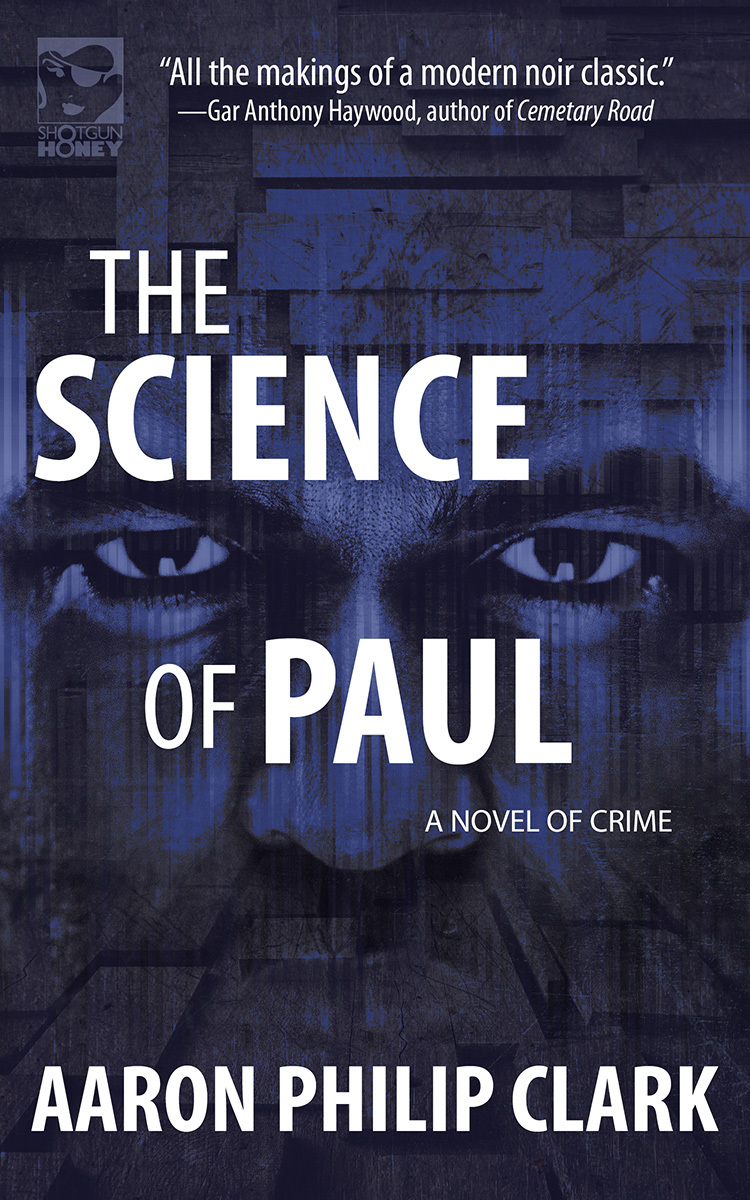
The Science of Paul

Rate this book
Ex-convict Paul Little has just walked out on the only woman who has ever loved him to return to a life of crime in Philadelphia. But when Paul gets involved with a petty thug who is later murdered, he finds himself pinned between the volatile gangster accused of the crime and the straight-laced detective who put Paul away years ago. Realizing the city may be the death of him, Paul looks to escape to North Carolina and live alone on a farm left to him by his recently deceased grandfather.

Can Paul survive long enough to make it to the succor of the farm? Will he inevitably return to a life behind bars? Or is it his fate to die a victim in Philadelphia?

The Science of Paul is a stunning tale of redemption and self-exploration, as one man navigates the precariousness of the streets and the inner workings of his mind.

Praise for THE SCIENCE OF PAUL:

“A finely-drawn character study of a man battling fate to escape the inevitable gravity of a life of crime. Reminiscent of the existential crime novels of Jean-Patrick Manchette. That we care so much about Paul is testament to Aaron Philip Clark’s skill.”—Eric Beetner, author of One Too Many Blows to the Head and Borrowed Trouble

“Aaron Philip Clark’s The Science of Paul has all the makings of a modern noir classic. Noir in its purest form always reads like a punch to the gut and The Science of Paul delivers that kind of blow right from page one. ‘No apologies, no regrets’ should be this novel’s motto.”—Gar Anthony Haywood, author of Cemetery Road

“The eponymous protagonist of Aaron Clarke’s scorching, gripping The Science of Paul is an ex-con, a booze hound, a haunted drifter. Deep in the heart of America’s south, which seems only just north of hell, he emotionlessly buries his grandfather and, with a beautiful woman in tow, drives off at full speed, slap-bang into the classic noir paradigm. This is a car wreck well worth risking your neck to see.”—Paul D. Brazill, author of Last Year’s Man

“With the relentless moth-to-flame inevitability of classic noir, Aaron Philip Clark’s angry ex-con finds trouble on Philadelphia’s mean streets. Vivid characterization and a sharp eye for the fault lines in American society drive this impressive debut.”—Roger Smith, author of Wake-Up Dead and Mixed Blood

“T.S. Eliot referred to it as tradition and individual talent, the manner in which new work at once honors, builds upon, and questions what has come before. Chester Himes, Richard Wright, James Baldwin—Aaron Philip Clark has been paying attention. “—James Sallis, author of Cypress Grove and Chester Himes: A Life

236 pages, Paperback

First published January 20, 2011

27 people are currently reading
90 people want to read

About the author

Aaron Philip Clark

11 books170 followers
Aaron Philip Clark is a native of Los Angeles, CA. He is a novelist, screenwriter, and former recruit of the Los Angeles Police Department. His first novel, THE SCIENCE OF PAUL: A Novel of Crime (New Pulp Press), was published in 2011. The debut was met with interest and acclaim. Clark followed THE SCIENCE OF PAUL with A HEALTHY FEAR OF MAN (Snubnose Press), published the following year. Both novels featured the morally plagued and emotionally damaged ex-con, Paul Little, as he fought to escape the perils of Philadelphia street culture and return to his deceased grandfather’s farm in North Carolina.

After leaving his career in law enforcement, Clark returned to higher education and continued his work as an educator teaching college-level English, Creative Writing, and Humanities. During this time, Clark wrote UNDER COLOR OF LAW, a police thriller inspired by his experiences with the LAPD. The novel centered on Det. Trevor “Finn” Finnegan, a Black LAPD detective, who is tasked with investigating the murder of a young Black academy recruit amid protests against police brutality and calls for reform. The novel won the 2021 Book Pipeline Adaptation Award and was nominated for the 2022 Best Paperback Original International Thriller Writers Award. BLUE LIKE ME, the second Trevor Finnegan novel, was published on November 8, 2022, by Thomas & Mercer. The third novel in the series, THE BLUEST NIGHT, will be published on October 7, 2025.

To learn more about Aaron Philip Clark, visit www.AaronPhilipClark.com and follow him on social media @_realapcbooks (Twitter).

Ratings & Reviews

What do you think?
Rate this book

Friends & Following

Create a free account to discover what your friends think of this book!

Community Reviews

5 stars
16 (37%)
4 stars
14 (32%)
3 stars
12 (27%)
2 stars
1 (2%)
1 star
0 (0%)
Displaying 1 - 12 of 12 reviews
Profile Image for Benoit Lelièvre.
Author 6 books189 followers
April 29, 2011
There should be more novels like The Science Of Paul. That means more MFA graduates should get into crime fiction. I opened Aaron Philip Clark’s first novel, torn between a slight dread and an apologetic approach, which were both completely unnecessary. It’s been a while since I have read a noir novel that packed such a punch. Hell, it’s been a while since I have read a writer’s first novel that was this good. The Science Of Paul crawled under my skin with the slow and methodic approach of a medieval executioner. And I love every single minute of it.

Like the title announces, it’s the story of Paul, Paul Little, an ex-convict who decides to start a new life on his grand-father estate after he inherits of it. But if you lived a life of crime, it’s not easy to put the past behind and get away. His hometown of Philadelphia, like an abusive mother, doesn’t want to let him go. As he plans his escape to his grandfather’s farm in North Carolina, Paul’s good side is going to catch up to him. Karma is a bitch for ex-professional sinners like him.

The Science Of Paul is written in a first person point-of-view, which is a stylistic choice that Clark uses very well, but isn’t without its drawbacks. It’s obviously a character based novel, focused on Paul’s battle with his inner demons and in that regard, it’s remarkably well achieved. His tortured relationships with women is particularly well crafted. His fatalistic views about love give Paul some humanity and put him ahead of all those cardboard characters that you see more often than not in noir fiction.

It’s uneven and overwritten sometimes, which are two traps you can fall in when you write a novel at the first person. For example, I doubt that a jailbird like Paul, no matter how much of an intellectual he is (because he is an intellectual, he reads Hume and gains a good grasp of it), I doubt he’d ever be poetic enough to see a cigarette hanging “loose and defiant” from his girlfriend’s lip. There are some pacing problems in the beginning also, but forty pages in, they disappear as the plot starts to unravel.

Aaron Philip Clark kept me on my toes and kept his novel glued to my hands for the whole two hundred and twenty five pages it lasts. The Science Of Paul is a high minded crime novel about the issues of American street culture, but has enough gusto to keep any hardcore crime readers hooked. It’s a little short and straightforward in its development, but it definitively puts Aaron Philip Clark on the map. Read it if you like literary novels, read it if you like crime novels. If you like both, then read it right now.

Taken from my blog - www.deadendfollies.com
Profile Image for Ross Cumming.
739 reviews24 followers
May 21, 2025
I had previously read and enjoyed Aaron Philip Clark’s two Trevor Finnegan novels, so decided to give this one a try on the strength of those novels.
Paul Little is a black ex-con trying his best to go straight. He is in a seemingly stable relationship but following a road trip, with his girlfriend Tammy , to bury his dead grandfather, Paul finds the claustrophobia of the relationship too much and breaks off with her. He decides to leave Philadelphia and return to his grandfather’s old home and make the place habitable. In order to raise some cash to realise his dream Paul finds himself back in the criminal world where he rashly agrees to a ‘delivery’. However feeling sorry for one of his friends, Marcus, he decides to let him complete the drop off. Things go sideways and Paul finds himself drawn back into the clutches of the underworld with both a gang boss and the cops on his tail.
This is a an enjoyable crime thriller but it’s also so much more, as Paul battles with his demons which keep drawing him back into a life of crime which he ultimately wants to escape. He tries to analyse himself and questions whether it is his race or his character or a combination of these factors that ultimately make it so difficult for him to go straight.
There is a second Paul Little novel which I want to read to see if he can ultimately resolve his situation but I suspect he will keep getting pulled back into the world he wants to escape.
Profile Image for Josh.
1,732 reviews178 followers
March 28, 2015
Paul Little is an ex-con with a destructive personality. Looking for loopholes in life to dodge normalcy he reverts to a life on the mean Philadelphia streets, breaking off a relationship with his level-headed girlfriend, and as soon as his parole period ends, breaks off all ties to the straight and narrow. Why? Well, this really isn't explained apart from the broad sweeping 'call of the streets'.

This frustrated me. Paul didn't have a gang or criminal crew to return to. There was no loyalty to any criminal faction or particular affinity to underworld dealings (apart from a loose connection with a barbershop front) - so why did Paul revert to the dangerous and blood soaked life on the streets of Philadelphia? After reading THE SCIENCE OF PAUL, I still don't know the answer. That's not to say I didn't have a good time reading the book.

Paul post Tammy (the ex-girlfriend) makes for entertaining reading. He manages to get involved in a murder, acts as a stand-over man, and gets in deep trouble with the law. All those aspects were great. Plus, he's a character with a conscious - of sorts - remember, the criminal life crept back into his being so he was never going to be irredeemable, which suits me fine.

Author Aaron Philip Clark knows how to write. THE SCIENCE OF PAUL is downright brutal at times, balanced with a poetic narrative that screams noir. Yet, the major fault, in my opinion, is the rationale. I need to know why Paul sought out the life he did rather than settling for a generic catch phrase.

The SCIENCE OF PAUL is good but it could have been great.

This review first appeared on my blog: http://justaguythatlikes2read.blogspo...
Profile Image for Hyacinth.
2,086 reviews16 followers
November 7, 2012
This was a very well written probing book dealing with the battle of a man and his demons. The conflict between good and evil, guilt, self worth and identity. Clark, the author is very deep for a young man. As I was reading his style puts me in the mind of Richard Wright. I thoroughly enjoyed this book and look forward to reading more from this writer. Paul Little was a man that could not trust the goodness of his heart because of his guilt for his past mistakes he couldn't let go. The evolving of his life left him an emotional wreck in search of the meaning of life and peace...after the death of his grandfather everything changed...I suggest you read this book, it will perhaps give you a different perspective of incarcerated people and how they see life and how they cope with and in the streets. It shows him in the struggle of his humanity, in his fear or being loved...or the feelings of being unworthy or receiving love. There is a lot going on here with Paul Little.
131 reviews
July 21, 2014
I've got to say that this is another great book from New Pulp Press. Very noirish. Paul never truly stands a chance to escape the hell that is his life. Reading the journey he tries to take to redemption is engaging and I was caught up in the story from the first chapter. Two very big thumbs up. Pick up a copy if you like the top new noir writers of the past few years and you will see that Clark has the chops to hold his own against them all.
Profile Image for David Nemeth.
78 reviews14 followers
August 14, 2018
If, like me, you haven’t read Aaron Philip Clark’s “The Science of Paul” before, do so, and no doubt it will be one of the best crime fiction books you’ve read this year. If you read it some ten years ago, now’s a good time to go back and re-read this book, it is a great as you remember.
Profile Image for Mary.
305 reviews3 followers
September 10, 2021
interesting character

Though Paul Little is an interesting character; the story doesn’t go anywhere and leaves this reader unsatisfied with its ending. Paul for some reason leaves his grandfather’s farm in NC , arrives in Philadelphia only to spend his misguided time trying to return. The book ended so abruptly I went looking for it’s ending only to discover that it didn’t have one. Clark is a good writer so I am sorry to say that I don’t recommend The Science of Paul Little due to its non ending.
Profile Image for Kenn Coates.
93 reviews
April 3, 2024
The Science of Paul

I didn't like this book as much as those in the Trevor Finnegan series, the jumbled first person style is jarring, but it held my interest enough for me to finish it.
Profile Image for Nicole.
323 reviews1 follower
Read
September 27, 2024
Clark knows how to write a page-turner. This book captures how one can get trapped in a cycle of crime within a city. You feel the main characters back against the wall and also his inner monolog as his actions conflict with his moral compass
139 reviews4 followers
October 7, 2014
Unlike many of the books published by New Pulp Press, The Science of Paul, is not a brazen hard boiled crime novel. Written entirely in the first person, Aaron Philip Clark tells the story of Paul Little. An ex-con in Philly trying to find some form of redemption from his past. Paul's made his mistakes, done his time, but finds himself unable to adjust to life living in the city that made him the man he is today.

When faced with the possibility of finding an out, Paul destroys his only meaningful relationship and falls back into comfortable and known ways, perpetuating the criminal cul-de-sac.

At once a social commentary and morality tale, Paul's life is a fundamental proclamation that we are products of our social environment. In Paul's world, violent street culture is a cycle that permeates his being, but his realization of this and his move toward redemption are themes the author explores. Paul makes no excuses for who he is, but he doesn't accept this as his fate either.

My assumption is that Clark will show us more of Paul Little in future works.
Profile Image for Rob Kitchin.
Author 55 books107 followers
August 23, 2012
The Science of Paul is a thoughtful book with an undercurrent of philosophy concerning urban society and the meaning of life. The main character is complex and multi-layered. He’s seemingly got his life back on track after prison - a nice home and a beautiful, caring girlfriend - yet deep down he knows he doesn’t belong, that he doesn’t deserve this life, that he needs to find a different path, yet he’s not sure what that path is. Clark tells his tale through a well plotted and paced story full of astute observations about American urban societies. And whilst the story is predominately an in-depth character study, it’s also one of murder and crime, with the mystery as to who killed Little’s friend subtly woven into the narrative. Overall, an enjoyable crime novel that ploughs a different furrow to most fiction in the genre to good effect.
Profile Image for Rory Costello.
Author 21 books18 followers
June 13, 2013
There is plenty to like about this book. Paul is a strong and very well-drawn central character. I'm not surprised to see that the author was influenced by Walter Mosley, because Easy Rawlins (another hard-knocks African-American hero) came to mind straight away. I also thought the supporting cast was really good. Philadelphia really came to life in a seamy way too.

There's a lot of heartfelt writing too (though a sprinkling of little things got by the copy editor). The only part of the story that didn't hang together for me was the subplot involving Kim.

The ending was handled in a satisfying way.
Displaying 1 - 12 of 12 reviews

Can't find what you're looking for?

Get help and learn more about the design.