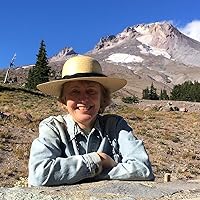
Swami Sivananda Radha, born Sylvia Hellman was a German yogini who emigrated to Canada and founded Yasodhara Ashram in British Columbia. She established a Western-based lineage in the Sivananda tradition and published books on several branches of Yoga.
SIVANANDA RADHA RECOUNTS HER EXPERIENCES WITH MANY TEACHERS
The back cover of this 1991 book states, “A renowned spiritual teacher, Swami Sivananda Radha, invites us to join her on her spiritual journey where we can … meet a range of remarkable teachers---some of whom have never before been introduced to the West… Swami Radha clarifies the difference between genuine teachers and pseudo-gurus, describes seekers’ illusions and false expectations, and states clearly what a true teacher can offer… For more than thirty-five years Swami Sivananda Radha has lectured at universities, psychological institutes, and spiritual centers internationally. She is founder of the Yadodhara Ashram Society in Canada.”
She explained in the ‘Word from the Author’ section, “When it came time to reprint ‘Gods Who walk the Rainbow,’ it seemed a perfect opportunity to expand upon it, and the result is this new edition… I have added… recent reflections on my personal guru, Swami Sivananda, and the stories of my meetings with Sai Baba of Shirdi, and with the Catholic stigmatist Padre Pio. I have also … include[d] my current thinking on aspirants’ illusions, pseudo-gurus, and the responsibilities of gurus and disciples in their relationship… My interest has recently been ignited by a new perspective on my relationship with Swami Sivananda. For the first time I have attempted to let something of our past be known, in the hope of helping others understand the possibility of dimensions beyond those we normally accept.” (Pg. xi)
She wrote in the Introduction, “During my two trips to the East, I was fortunate to meet a number of exceptional teachers who helped me in my personal development and in laying the groundwork for my own teachings… Each guru whom I met demonstrate a different approach by which he or she reached a high level of spiritual attainment… My first journey to the Orient in 1955 was primarily to Rishikesh, India… where I received I received initiation into sanyas from Swami Sivananda… My return to the West was very difficult. I needed to find a place to assess my experiences… Existing ashrams were few and I was refused refuge even as a temporary guest… In 1958 I returned to Sivananda Ashram and to my guru, Swami Sivananda. I also had the opportunity to meet the many other spiritual teachers I describe here… Swami Sivananda, before my first visit, had demanded that I learn to sit for five hours motionless. That discipline, as well as reciting a four-line mantra a thousand times a day for forty-five days, was certainly training that saved me during the practices I was given on this second visit to the East… I hope this book will inspire others to tap into their own mental resources and to keep that spark of learning alive… But I cannot say I was once a student and now I am a teacher. Without continuing to learn, I could not teach… we are to different degrees a student and to different degrees a teacher, at different phases of our lives. In the same way, we cannot say we are only physical beings or we are only spiritual beings… we move between two worlds… Eventually, when we have come to accept both, we realize that the Power behind them is one.”
She states in the first chapter, “Swami Sivananda was my guru---the master who initiated me, the mother who gave birth to my spiritual life…. Because I had this very intimate relationship with Swami Sivananda, I feel all the gurus I have met were part of my spiritual destiny. My interactions with them … helped to reinforce my relationship with him… Many of my meetings with other gurus were arranged by Swami Sivananda himself, to expose me to their particular influences.” (Pg. 5)
Later, “Every visit to the Tibetan yogi was a surprise and a great learning experience. There were not many conversations between us… Many of the Tibetan’s explanations were strange to me at first, but I intuitively knew that at some later time I would understand what he meant. He used dreams as the means to help me see that the waking state is just another type of dream.” (Pg. 38-39)
She states, “I have certainly felt the blessings of Sai Baba in my own life. Though I have never met him in human form nor had the privilege of visiting his temple in Shirdi, I have definitely been touched by the spirit of his teachings. I often have the sense that something of Sai Baba’s spirit, like the spirit of all great saintly people, is protecting the earth from total disintegration.” (Pg. 51)
She observes of Ramakrishna, “While Ramakrishna warned his disciples that women can be so attractive that they can be a diversion from spiritual life, he made a clear distinction between the worldly woman and the one with spiritual potential. His songs composed to Divine Mother are very moving and have a loving sweetness that is inspiring. His devotion to her can be compared to a worldly person who intensely pursues the peak of success in business, or devotes years to establishing an excellent academic reputation. The difference was that Ramakrishna’s dedication was unswerving and without self-interest, and his single-pointedness was directed to his search for the Divine.” (Pg. 84)
She says of Meher Baba, “he became acceptable to me in his uniqueness. He demonstrated a kind of love that was all-encompassing, all-embracing, which I had to admit that I could not offer. I would have found it extremely difficult to have a face, distorted from the scars of smallpox, touch mine; to feel that skin on my skin, to smell the body odor from clothes that are not clean, to worry about the bugs that might get into my sari. So, with this insight, how relevant would my assessment of his kind of communication be?” (Pg. 97)
Of her encounter with Padre Pio, she recounts, “I quickly decided on a purely mental conversation. I said in my mind to him, ‘I don’t speak your language. I have never been to a confession… I will give you access to the back of my mind so you may see everything there is…. Is it true that I have a spiritual mission… If this is so, please show me a sign by raising your right hand.’… The padre reached out his arm. His right hand rose very slowly. All the while, he was looking at me… I did not quite know how to formulate my next question…: ‘Is it true that all religions are valid, though perhaps different expression of mankind’s understanding of the spiritual quest?... If so, please stretch out your left hand.’ … Slowly his left hand reached forward. I had stretched my hand toward him, holding the rosary and the Indian mala. His hand fell in benediction over my hand… I realized that there were lots of people waiting for their confession… I rose… raised my hands over my head… It was the traditional Indian greeting. ‘Namaste.’ To my astonishment, he returned the same salutation, and then drew the curtain back. My most precious audience with Padre Pio was over.” (Pg. 128-130)
During her meeting with the Dalai Lama, she asked, “Your Holliness, is there is no ‘we’ and there are no selves, what is it that is incarnated?’ I suggested, /Can we call it an “essence”?... he laughingly agree, ‘Yes, essence is a very good word.’” (Pg. 138-139)
She also cautions, “There will always be pretenders who claim sainthood and let live by double standards, with basic ethics missing from their lives. These pseudo-gurus often have large followings who are attracted by their apparent success. Attracting large numbers of followers is no guarantee of the guru’s effectiveness. Quality is not in numbers; there are always only a few who are really sincere.” (Pg 189)
She concludes, “The gurus that I met confirmed my understanding that as human beings we are indeed masters of our own destiny. Each of us has autonomy and the ability to direct the course of our life by cooperating with the evolution of our conSIVANANDA RADHA RECOUNTS HER EXPERIENCES WITH MANY TEACHERS
The back cover of this 1991 book states, “A renowned spiritual teacher, Swami Sivananda Radha, invites us to join her on her spiritual journey where we can … meet a range of remarkable teachers---some of whom have never before been introduced to the West… Swami Radha clarifies the difference between genuine teachers and pseudo-gurus, describes seekers’ illusions and false expectations, and states clearly what a true teacher can offer… For more than thirty-five years Swami Sivananda Radha has lectured at universities, psychological institutes, and spiritual centers internationally. She is founder of the Yadodhara Ashram Society in Canada.”
She explained in the ‘Word from the Author’ section, “When it came time to reprint ‘Gods Who walk the Rainbow,’ it seemed a perfect opportunity to expand upon it, and the result is this new edition… I have added… recent reflections on my personal guru, Swami Sivananda, and the stories of my meetings with Sai Baba of Shirdi, and with the Catholic stigmatist Padre Pio. I have also … include[d] my current thinking on aspirants’ illusions, pseudo-gurus, and the responsibilities of gurus and disciples in their relationship… My interest has recently been ignited by a new perspective on my relationship with Swami Sivananda. For the first time I have attempted to let something of our past be known, in the hope of helping others understand the possibility of dimensions beyond those we normally accept.” (Pg. xi)
She wrote in the Introduction, “During my two trips to the East, I was fortunate to meet a number of exceptional teachers who helped me in my personal development and in laying the groundwork for my own teachings… Each guru whom I met demonstrate a different approach by which he or she reached a high level of spiritual attainment… My first journey to the Orient in 1955 was primarily to Rishikesh, India… where I received initiation into sanyas from Swami Sivananda… My return to the West was very difficult. I needed to find a place to assess my experiences… Existing ashrams were few and I was refused refuge even as a temporary guest… In 1958 I returned to Sivananda Ashram and to my guru, Swami Sivananda. I also had the opportunity to meet the many other spiritual teachers I describe here… Swami Sivananda, before my first visit, had demanded that I learn to sit for five hours motionless. That discipline, as well as reciting a four-line mantra a thousand times a day for forty-five days, was certainly training that saved me during the practices I was given on this second visit to the East… I hope this book will inspire others to tap into their own mental resources and to keep that spark of learning alive… But I cannot say I was once a student and now I am a teacher. Without continuing to learn, I could not teach… we are to different degrees a student and to different degrees a teacher, at different phases of our lives. In the same way, we cannot say we are only physical beings or we are only spiritual beings… we move between two worlds… Eventually, when we have come to accept both, we realize that the Power behind them is one.”
She states in the first chapter, “Swami Sivananda was my guru---the master who initiated me, the mother who gave birth to my spiritual life…. Because I had this very intimate relationship with Swami Sivananda, I feel all the gurus I have met were part of my spiritual destiny. My interactions with them … helped to reinforce my relationship with him… Many of my meetings with other gurus were arranged by Swami Sivananda himself, to expose me to their particular influences.” (Pg. 5)
Later, “Every visit to the Tibetan yogi was a surprise and a great learning experience. There were not many conversations between us… Many of the Tibetan’s explanations were strange to me at first, but I intuitively knew that at some later time I would understand what he meant. He used dreams as the means to help me see that the waking state is just another type of dream.” (Pg. 38-39)
She states, “I have certainly felt the blessings of Sai Baba in my own life. Though I have never met him in human form nor had the privilege of visiting his temple in Shirdi, I have definitely been touched by the spirit of his teachings. I often have the sense that something of Sai Baba’s spirit, like the spirit of all great saintly people, is protecting the earth from total disintegration.” (Pg. 51)
She observes of Ramakrishna, “While Ramakrishna warned his disciples that women can be so attractive that they can be a diversion from spiritual life, he made a clear distinction between the worldly woman and the one with spiritual potential. His songs composed to Divine Mother are very moving and have a loving sweetness that is inspiring. His devotion to her can be compared to a worldly person who intensely pursues the peak of success in business, or devotes years to establishing an excellent academic reputation. The difference was that Ramakrishna’s dedication was unswerving and without self-interest, and his single-pointedness was directed to his search for the Divine.” (Pg. 84)
She says of Meher Baba, “he became acceptable to me in his uniqueness. He demonstrated a kind of love that was all-encompassing, all-embracing, which I had to admit that I could not offer. I would have found it extremely difficult to have a face, distorted from the scars of smallpox, touch mine; to feel that skin on my skin, to smell the body odor from clothes that are not clean, to worry about the bugs that might get into my sari. So, with this insight, how relevant would my assessment of his kind of communication be?” (Pg. 97)
Of her encounter with Padre Pio, she recounts, “I quickly decided on a purely mental conversation. I said in my mind to him, ‘I don’t speak your language. I have never been to a confession… I will give you access to the back of my mind so you may see everything there is…. Is it true that I have a spiritual mission… If this is so, please show me a sign by raising your right hand.’… The padre reached out his arm. His right hand rose very slowly. All the while, he was looking at me… I did not quite know how to formulate my next question…: ‘Is it true that all religions are valid, though perhaps different expression of mankind’s understanding of the spiritual quest?... If so, please stretch out your left hand.’ … Slowly his left hand reached forward. I had stretched my hand toward him, holding the rosary and the Indian mala. His hand fell in benediction over my hand… I realized that there were lots of people waiting for their confession… I rose… raised my hands over my head… It was the traditional Indian greeting. ‘Namaste.’ To my astonishment, he returned the same salutation, and then drew the curtain back. My most precious audience with Padre Pio was over.” (Pg. 128-130)
During her meeting with the Dalai Lama, she asked, “Your Holliness, is there is no ‘we’ and there are no selves, what is it that is incarnated?’ I suggested, /Can we call it an “essence”?... he laughingly agreed, ‘Yes, essence is a very good word.’” (Pg. 138-139)
She also cautions, “There will always be pretenders who claim sainthood and let live by double standards, with basic ethics missing from their lives. These pseudo-gurus often have large followings who are attracted by their apparent success. Attracting large numbers of followers is no guarantee of the guru’s effectiveness. Quality is not in numbers; there are always only a few who are really sincere.” (Pg 189)
She concludes, “The gurus that I met confirmed my understanding that as human beings we are indeed masters of our own destiny. Each of us has autonomy and the ability to direct the course of our life by cooperating with the evolution of our consciousness, which is the purpose of life. Each person can only individually experience what is called God or Cosmic Consciousness. No one can really teach another.” (Pg. 214)
This book will be of great interest to those studying Radha, and other Eastern-style spiritual teachers.
I have found this book an inspiration at various times in my life, especially when I came to write a book of my own along similar lines: The Practical Seeker: A Down-to-Earth Guide for Finding Your Spiritual Home Swami Radha was an admirable woman, a model for spiritual seekers and she deserves to be known to a wider public.