A coastline razed and inundated by a hurricane. A traveler journeying towards the flood instead of away from it. A team of rescue workers without anyone to rescue, but who for various reasons can't leave the drowned city. It has been said that those who live by the sword shall die by the sword, but what about those whose job it is to save others? When the storehouse and everything in it has burned down, will we finally be able to see the moon?
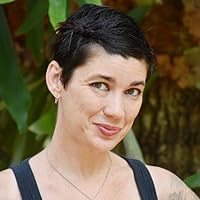
Berit Ellingsen is the author of three novels, Now We Can See The Moon (Snuggly Books 2018), Not Dark Yet (Two Dollar Radio 2015), and Une ville vide (PublieMonde 2014), a collection of short stories, Beneath the Liquid Skin (Queen's Ferry Press), and a mini-collection of dark fairy-tales, Vessel and Solsvart (Snuggly Books). Her work has been published in W.W. Norton's Flash Fiction International, SmokeLong Quarterly, Unstuck, Litro, Lightspeed, and other places, and been nominated for the Pushcart Prize, Best of the Net, and the British Science Fiction Association Award. Berit is a member of the Norwegian Authors' Union. http://beritellingsen.com.
Like its predecessor (Not Dark Yet- for which Now We Can See the Moon loosely follows and continues to follow the character of Brandon), Ellingsen's newest novel is gorgeously stylized and full of haunting landscapes, both natural and cosmopolitan, and stark, sweeping imagery that serves as a backdrop to the greater question of what happens to civilization when the natural world finally rebels and reclaims its due. Ellingsen's quiet tone and meticulously attention to detail made the semi-apocalyptic scenario both believable and accessible and her exploration in this book of many characters' points of views (particularly Raymond and Leah) broadened the experience. Most stunning, but what I've come to expect from Ellingsen, is her ability to breath meaning and beauty into the most mundane of objects, landscapes and moments. She has a particular way of framing a scene that leaves an unforgettable impression on the reader. The only author I could compare her to would be J.G. Ballard, but I believe her style surpasses his for me.
Berit Ellingsen's Now We Can See the Moon is one of the best novels I've ever had the pleasure of reading, because it's a harrowing account of one man's journey through a devastated landscape. It's filled with beautiful and haunting prose that leaves a lasting impression on its readers.
Now We Can See the Moon is a sequel to Not Dark Yet (2015), but can be read as a standalone novel. You don't necessarily have to know anything about the previous novel in order to understand and enjoy this novel, because the story immediately pulls you in and doesn't let go until you've reached the end.
I'm not exactly sure how to properly classify this novel due to its contents, but in my opinion, this novel is literary speculative fiction, because it depicts the events following a catastrophic hurricane that is connected to climate change and its effects on the global weather. I think that readers who love literary speculative fiction will immensely enjoy this novel, because it's something different and has many thought-provoking scenes.
This novel is in equal measure disquieting and harrowing, and its contents will linger on the readers' minds for a long time after the final page has been read. It's a well written tale of what happens to humans when they are faced with a massive natural disaster that leaves their lives shattered by its force (it's an intimate exploration of such themes and issues as personal feelings, longing for one's loved ones, change and loss).
Here's a bit of information about the story:
Brandon Minamoto has taken refuge in a cabin in the mountains while a hurricane has sowed destruction and utterly devastated his hometown. He wants to find out what has happened to his family, his brother Katsuhiro and his boyfriend Michael, so he sets out on a journey towards the town with a few belongings. During his journey, he witnesses death and destruction everywhere. One day he comes across a team of rescue workers led by Leah and her second-in-command, Raymond, and helps them...
The characterisation in this novel is fascinatingly realistic. The characters come alive in the story and feel achingly real. I like the author's way of being able to effortlessly convey the deeds and feelings of the characters to her readers. Her nuanced characterisation is beautiful.
Brandon is a well-created and fascinating protagonist. He's gay and he has a boyfriend, Michael. He used to work in the military. Leah and her team are also interesting characters, because each of the team members have their own expertise. The author writes well about Michael and the team members and how they interact with each other.
The author's vision of the hurricane is stunningly effective, because she describes how much chaos and destruction it causes. The unprecedented size and power of the hurricane is something to behold, because it destroys everything that gets in its way. The almost apocalyptic landscape is memorable in its bleakness, because nothing is the same after the hurricane: broken structures are everywhere and bodies can be found in the cars and other places.
I think that the author has done a lot research before writing this novel, because many things feel believable and realistic. What the rescue workers do and how they set up their operation is convincing, because the author writes about how the team helps the survivors and tries to identify the corpses. Brandon's journey also feels believable, because he carefully moves around the broken landscape.
This novel has a strong theme of survival, but it also tells of longing for one's loved ones and what it feels like when you don't know what has happened to those you love and care about. It also explores what can happen to members of a rescue team.
This novel has many excellent scenes, but the chapter about the museum of art history is one of my favourites. It made a huge impression on me. I was especially impressed by the final sentence, because it was touching.
Berit Ellingsen writes excellent prose. I like her writing style, because she has a gift for writing immersive prose and creating realistic characters. I especially like her way of evoking powerful and unsettling images in the reader's minds with her words and sentences. She has an almost uncanny ability to breathe life and meaning into the happenings and she pays attention to several meaningful details that deepen and enhance the disquieting atmosphere. What makes her prose especially intriguing is that she maintains a perfect balance between nuanced storytelling and accurate descriptions about the rescue work.
When I began to read this novel, I found the melancholy and somber atmosphere slowly seeping into me. I was wholly captivated by what I was reading, because the story was enthralling in a strangely beautiful and unsettling way. It was fascinating to read about what kind of an effect the happenings had on the characters and their state of mind.
Berit Ellingsen's Now We Can See the Moon will fascinate everyone who loves intimate and beautifully written stories. If you enjoy reading literary speculative fiction or literary fiction, you can't afford to miss this harrowing masterpiece, because it's something different and deeply captivating.
AThis book is set in a catastrophic landscape where monster storms have swamped coastlines and drowned cities.
The relief organization team depicted in the book cannot keep up with the death and devastation. We learn of their persistence in finding and identifying the dead, why they contend with a host of issues, including a lack of communications, health and sanitation, abandonment by their own agency, their own increasing isolation and conflict.
Into this comes Brandon, also the protagonist of Ellingsen’s previous book, who returns to the disaster area, looking for his lost family and friends.
He is only referred to by name once in the book, and by the end he seems to have thinned out as a person and dissolved into the drowned world he inhabits. But he is an intrepid explorer, and through his eyes, as he walks, wades, boats, and scuba dives through the submerged city, we encounter the fear, loneliness, and horror of what remains.
As a bonus, in this book, we as readers get a look at what it must be like as a disaster relief worker, a subject I have never seen tackled in fiction before. And Ellingsen’s spare depiction of the day to day work of these people is harrowing. There is a lot of waiting, for government permits, for supplies, for transportation, a lot of work handing out food and providing medical care, and also a lot of danger as they work in post-disaster environments amidst catastrophic conditions.
Ellingsen’s writing is always precise and almost analytical, but the effect is of mounting uneasiness and horror. I might even call this a sci-fi horror story, if not for the fact that Ellingsen’s work isn’t always so easily pigeon-holed into a genre. This is an unusual book, hard to put down once you’ve started, and which leaves a lasting impression once you’ve finished.
I don't remember how I learned about Berit Ellingsen but somehow I did and two years ago read her brilliant and disturbing novel Not Dark Yet. She is a Korean-Norwegian science writer and novelist, living in Norway. I have been following her on Twitter (@BeritEllingsen) and last year experienced her journey to Antarctica through her tweets and excellent photos.
Now We Can See the Moon opens with a devastating hurricane and the description of it effects. Think Houston, Puerto Rico, etc 2017, only 100 times more destructive. Think J G Ballard's The Drowned World. As in Not Dark Yet the location is unnamed except for being somewhere near water in the Northern Hemisphere.
The second chapter introduces the relief team, arriving by helicopter in their very own country. In all their years of experience providing relief for weather disasters around the world, they had never encountered such a thing at home. So it has happened. The growth rate of climactic disaster has outrun the capability of the planet's relief organizations to keep up.
In chapter three, Brandon Minamoto, the main character from Not Dark Yet, reappears. He is still living in his cabin in the mountains but the hurricane reached him there. Once the storm subsides he sets off for his home city to see if he can find his family and boyfriend. After a treacherous journey with echos of McCarthy's The Road, he arrives at his destroyed apartment building and eventually discovers the relief team.
He joins them in their efforts, being a steady, brave and resourceful guy, hoping for help in finding his loved ones. Things go from bad to worse as the team is cut off from any support by their sponsoring organization.
This novel is a chilling portrayal of what may be coming. It is actually quite devoid of some of the bells and whistles of Cli Fi but no less, maybe even more evocative of the psychological damage these disasters inflict on the survivors and on those who do their best to find and help them. It is also an inside look at the political and financial backdrop to such work. If it is even remotely true, it is a harrowing look at how unprepared we are for what lies ahead.
I wish Ellingsen would be picked up by a mainstream publisher and thus be exposed to a wider audience. I fear she may have too much truth to tell. So I, with my small voice and presence in today's cyber world, have become a champion of her very conscious and prescient message. Berit even mentioned my name in the acknowledgements. I wasn't expecting that but it was wonderful to know that she feels my support.
If you want some deep dark awareness of why Puerto Rico is still so ruined just read this book. If you want to bolster your already woke awareness of what climate change can do, just read this book. The last two pages will even bring you to a vision of hope for poor beleaguered Earth.
Buy it from your favorite bookseller (it is in paperback), read it, pass it around. Thank you!
PW Starred: Ellingsen’s deeply affecting follow-up to 2015’s Not Dark Yet finds ex-military man Brandon Minamoto ready to leave the remote cabin (presumably in North America) that he’s taken refuge in. A catastrophic hurricane has devastated his unnamed hometown, and he gathers his few belongings and sets out to find his family, including his brother, Katsuhiro, and his boyfriend, Michael. Meanwhile, a team of aid workers has been sent into the flood zone to catalogue the dead. When Brandon crosses their path, he offers his help, unaware that the group carries ominous secrets. Harrowing, strangely beautiful scenes punctuate Ellingsen’s softly apocalyptic story, particularly one set in a flooded parking garage and another in the waterlogged ruins of an art history museum. Swirling prose seamlessly mingles the brutally matter-of-fact details of crisis management with the fragility and fleeting nature of life. Ellingsen has an eye for the fine nuances of human interaction, quietly elevating the mundane and bringing a deep compassion to the noble work of tallying the human toll of natural disasters. Though the story certainly has something to say about the looming effects of climate change, the focus is on the mystery and wonder of the human subjects of this beautifully written, intimate tale. Agent: Allison Devereux, Mackenzie Wolf Literary. (May)
Ellingsen's novels tell the stories of every-day people living through climate change--falling in love, fighting, reconciling, trying to make sense of things. In this novel, our protagonist watches from a distance as a record-breaking hurricane hits his home city on the coast, and drowns it. His family and his lover live there, and he soon makes his way to the City on foot to see if he can find them or at least find out if they're ok, and falls in with a group of aid workers. The limitations of their ability to provide aid, or of anyone's ability to restore this city to habitability, become clear, and they're confronted with questions of what they can and can't save, and what they should give up on. None of the locations are named, though you can make some educated guesses about where this unfolds: the key piece of information is that this is a wealthy, first world city that previously thought itself immune to climate impacts.
I found her language a bit clunky in this one, but otherwise it was a well written story with believable and compelling characters living a story that will become more and more common as this century unfolds.