

What do you think?
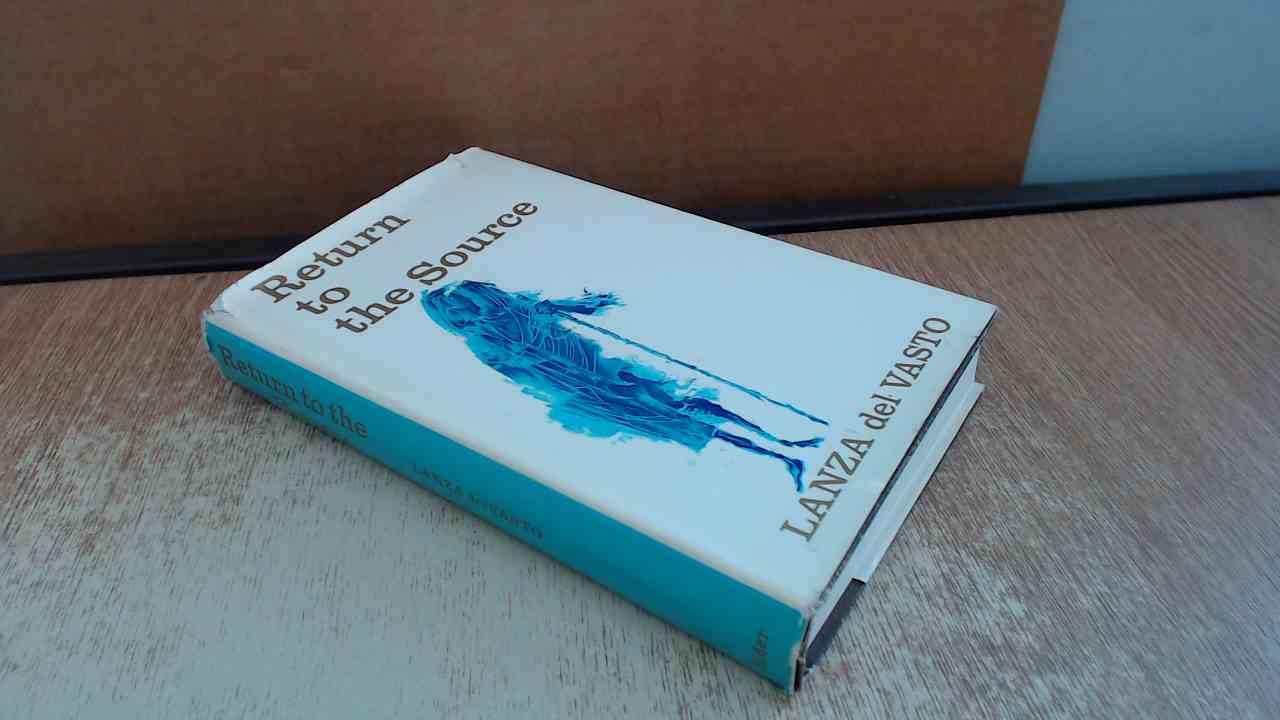
Return to the source
English, French (translation)
- GenresSpiritualityIndia
319 pages, Hardcover
First published December 1, 1972
About the author
Lanza del Vasto
54 books7 followersGiuseppe Giovanni Lanza del Vasto è stato un filosofo, poeta e scrittore italiano. La sua personalità eccezionale riunisce caratteristiche disparate: poeta, scrittore, filosofo, pensatore religioso con una forte vena mistica, ma anche patriarca fondatore di comunità rurali sul modello di quelle gandhiane e attivista nonviolento contro la guerra d'Algeria o gli armamenti nucleari.
Source: http://it.wikipedia.org/wiki/Lanza_de...
Source: http://it.wikipedia.org/wiki/Lanza_de...
Ratings & Reviews
Friends & Following
Create a free account to discover what your friends think of this book!
Community Reviews
Displaying 1 - 2 of 2 reviews

Read
April 2, 2023What an unlikely ode to Gandhi! Here is a Christianity finding a Christian saint in Gandhi and seeking him out in India but how different a way than Gandhi dreamed! Sure, Gandhi is heavily colonised and Christianised but he embodied Hindu religion in a way very few modern Hindu saints and thinkers did. All of this is lost to Vasto - he is disgusted by India for being the site of excess that he sees it as; its people are greedy, lack hygiene, and lack rationality and also decorum. He also passes slurs at Hindus for indulging in untouchability but very quickly a reader will see that in reality what he truly dislikes are the untouchables; of course Manu is reserved all praise for ordering Hindu society with structure and without violence. And the only people he dislikes more than all the rest are Muslims - them barbarians in his eyes.

July 19, 2023
Un récit de voyage et un essai spirituel à saveur bibliographique.
L’auteur a le mérite d’avoir eu une ouverture et d’avoir tentée, le plus possible, de saisir la culture indienne ( tout en gardant intact ses croyances très catholiques).
Il m’a semblé plutôt versé dans la charité religieuse, ennemie du changement, et qui permet aux classes de se maintenir tels quels.
Un discours qui a mal vieilli mais il faut remettre l’homme dans son époque et, à cet égard, il a tout mon respect.
L’auteur a le mérite d’avoir eu une ouverture et d’avoir tentée, le plus possible, de saisir la culture indienne ( tout en gardant intact ses croyances très catholiques).
Il m’a semblé plutôt versé dans la charité religieuse, ennemie du changement, et qui permet aux classes de se maintenir tels quels.
Un discours qui a mal vieilli mais il faut remettre l’homme dans son époque et, à cet égard, il a tout mon respect.
Displaying 1 - 2 of 2 reviews