Leather Binding on Spine and Corners with Golden Leaf Printing on round Spine (extra customization on request like complete leather, Golden Screen printing in Front, Color Leather, Colored book etc.) Reprinted in 2019 with the help of original edition published long back [1900]. This book is printed in black & white, sewing binding for longer life, Printed on high quality Paper, re-sized as per Current standards, professionally processed without changing its contents. As these are old books, we processed each page manually and make them readable but in some cases some pages which are blur or missing or black spots. If it is multi volume set, then it is only single volume, if you wish to order a specific or all the volumes you may contact us. We expect that you will understand our compulsion in these books. We found this book important for the readers who want to know more about our old treasure so we brought it back to the shelves. Hope you will like it and give your comments and suggestions. - ita, Pages 62. EXTRA 10 DAYS APART FROM THE NORMAL SHIPPING PERIOD WILL BE REQUIRED FOR LEATHER BOUND BOOKS. COMPLETE LEATHER WILL COST YOU EXTRA US$ 25 APART FROM THE LEATHER BOUND BOOKS. {FOLIO EDITION IS ALSO AVAILABLE.}
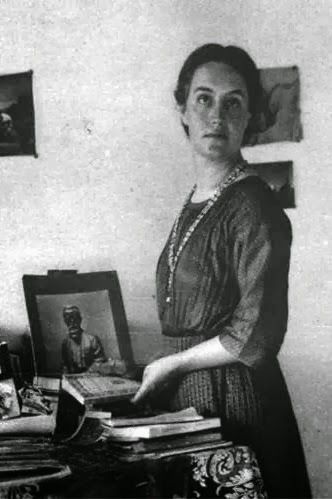
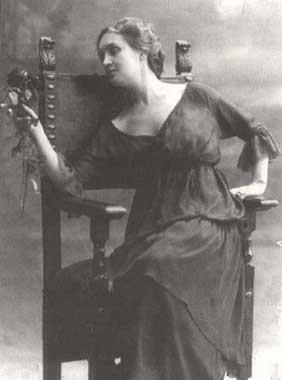
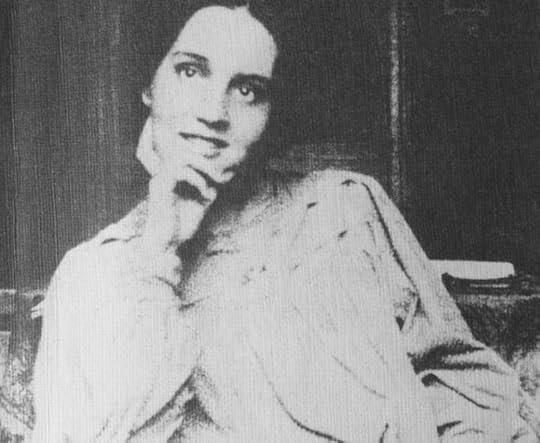
Sibilla Aleramo (14 August 1876 - 13 January 1960) was an Italian author and feminist best known for her autobiographical depictions of life as a woman in late 19th century Italy.
Her first book described her decision to leave her husband and son and move to Rome, which she did in 1901. She became active in political and artistic circles. During this time she writes extensively on feminism and homosexual understanding.
”Adultery is a most conventional way to rise above the conventional.” ― Vladimir Nabokov
The Italian journalist, poet and writer Sibilla Aleramo (1876-1960) was a feminist legend and literary celebrity, as notorious for her feminist and social activism and the artistic, political and intellectual circles she frequented as for her assortment of lovers, amongst whom some famous poets (Dino Campana, Salvatore Quasimodo) and artists (Futurist Umberto Boccioni), men as well as women, rendering her the reputation of a female Casanova. Affirming herself that for her art and life were quintessentially one and indivisible, her fiction work is straightforwardly autobiographical. Covering her life-story, her first and most important novel A Woman (Una donna, 1906) recounts how she abandons her husband and her child for a life of independence and self-determination - then controversial, now considered a feminist classic.
While her aestheticism was inspired by Gabriele D’Annunzio and Nietzsche, Trasfigurazione, novella deals with Aleramo’s characteristic themes as an essential confessional author: female identity and love. In some respects, this novella, published in 1922, could be considered as an exemplification of the bantering observation by Alexandre Dumas fils that ’The chains of marriage are so heavy that it often takes two people to carry them, and sometimes three.’The novella paints adultery from the perspective of the other woman, in the shape of a long monologue embodied in an untransmitted letter. A nameless woman addresses her younger friend who happens to be the wife of the man she loves also. On the surface her account submerses in a wallowing lament, a narcissistic confession of an wretched, piteous and suffering woman to another suffering woman: ‘Per ogni ora di luce un’ora di tenebra’, for every hour of light, there was an hour of darkness. Tears, torment and affliction galore. The other woman beseeches for compassion and indulgence with the man they both love, elucidating the deeper motives for his unfaithfulness.
Alluding on the transforming power of the letter, one could question the other woman’s real purposes in her persuading the spouse into leniency with her argumentum ad passiones. There is poison in this letter, addressing an already suspicious spouse and justifying her husband’s weaknesses, a cruelty in willingly shattering her illusions on love. Can anxiety and love coexist? Going more deeply into the betrayal might touch on and shrewdly validate what some of us might fear even more than erotic infidelity, stirring the unconscious anxiety that what we can offer the beloved emotionally is not enough, that philandering denotes we are rejected as not good enough, that we are not the soulmate they really long for, just a convenient and agreeable presence in their life, representing a smile, a kiss, some children - that their love for us is only skin-deep, and worse, that in reality they are profoundly unhappy about their relationship with us. The throbbing confirmation that we cannot take the trouble from their eyes like a (better) lover could, like Leonard Cohen thanking his rival wearing the famous blue raincoat for doing so. And are we worthy of love without suffering for it?
The true purpose of the other woman attempting to liberate her friend out of her innocent passivity by her confession might be not gender solidarity but more in line with the life of the author whose credo was ‘I Love, Therefore I Am’ ('Amo, dunque sono', 1927). After all, sisterhood or not, all’s fair in love and war. Coloured by her own experiences, even if her lyrical and exalted prose might come along as slightly dated, Aleramo’s absolutist view on romantic love might reflect a quite modern view on love, a demanding view which makes a lifelong monogamous relationship sometimes problematic and infidelity so destabilizing.
This novella can be read online in Italian or in French on the website of the Project Gutenberg.
Although only a short novelette, this text packs a pretty powerful punch. It's already been very well explicated and the background of its author noted, by reviewer Ilsa here on this site so, if you're looking for background, I would refer you there.
All I can add is that the conceit of the text is rather original and therefore fascinating; it snagged my attention as I was browsing some of the ebooks I've downloaded from Project Gutenberg over the years, that it drew me in and hardly before I know it, I'd devoured the whole thing in a couple of hours. Ostensibly, the text presents itself as the a letter written but never sent to the wife of our narrator's lover, at one of those points in an elicit affair in which the married person will probably begin to feel conflicted and may well dare to chose between spouse and children and lover.
Now some of the literary lore surrounding Aleramo's "fiction" is that it's really pretty much only autobiography. But, you know, so what? So much of what we think is really only supposition and our endless imagining of what others are thinking and feeling anyway--especially in a love relationship, and extra especially when thinking of our lover's spouses--that the reality of this letter as an actual unsent letter with an actual beneficiary in mind, doesn't really change my reading of it any.
Aleramo's Italian is very modern, clean, and more in the vein of spoken or colloquial Italian; thus I felt quite intimately drawn into this part meditation of love and duty, part challenge to a married woman to review her marriage and its effects on her artist husband, and part apology for the impulse on the part of single (divorced? She does mention her "lost" child) woman to take a lover and flaunt the conventions of other people's marriages. Thus the text, from 1912, is both formally and socially way ahead of its time. I tip my hat to its voice, even if it was more genuine than invented.
PS I did wonder, given that I saw his name on a list of Aleramo's many lovers, if the man in question--called an "artist" but also "singing" at a certain point in the text--wasn't Salvatore Quasimodo, the poet. Anyone know?