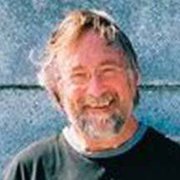
Thomas Merton, religious name M. Louis, was an American Trappist monk, writer, theologian, mystic, poet, social activist and scholar of comparative religion. In December 1941 he entered the Trappist Abbey of Gethsemani and in May 1949 he was ordained to priesthood. He was a member of the convent of the Abbey of Our Lady of Gethsemani, near Bardstown, Kentucky, living there from 1941 to his death. Merton wrote more than 50 books in a period of 27 years, mostly on spirituality, social justice and a quiet pacifism, as well as scores of essays and reviews. Among Merton's most enduring works is his bestselling autobiography The Seven Storey Mountain (1948). His account of his spiritual journey inspired scores of World War II veterans, students, and teenagers to explore offerings of monasteries across the US. It is on National Review's list of the 100 best nonfiction books of the century. Merton became a keen proponent of interfaith understanding, exploring Eastern religions through his study of mystic practice. His interfaith conversation, which preserved both Protestant and Catholic theological positions, helped to build mutual respect via their shared experiences at a period of heightened hostility. He is particularly known for having pioneered dialogue with prominent Asian spiritual figures, including the Dalai Lama XIV; Japanese writer D.T. Suzuki; Thai Buddhist monk Buddhadasa Bhikkhu, and Vietnamese monk Thich Nhat Hanh. He traveled extensively in the course of meeting with them and attending international conferences on religion. In addition, he wrote books on Zen Buddhism, Confucianism, and Taoism, and how Christianity is related to them. This was highly unusual at the time in the United States, particularly within the religious orders.
This 88-part poem, published in 1967 by Trappist monk Thomas Merton, strikes a curious middle ground between playful, even exuberant wordplay and seemingly bitter despair re: modern meaninglessness. Strongest in the beginning (including Merton's amusing, kiss-off non-introduction Prologue) where Merton's use and abuse of language finds its best, sharpest pitch. The rest often feels like clunkier, less-evocative John Ashbery, with scattered strong passages.
Some sample moments I liked:
"Decoding the looks of opposites. Writing down their silences. Words replaced by moods. Actions punctuated by the hard fall of imperatives. More and more smoke. Since language has become a medium in which we are totally immersed, there is no longer any need to say anything. The saying says itself all around us. No one need attend. Listening is obsolete. So is silence. Each one travels alone in a small blue capsule of indignation. (Some of the better informed have declared war on language.)"
(from a section subtitled NEWSCAST):
"Today a small general open space Was found lodged in the immediate shadow Of the heavenly pole. It was occupied Early in the week by Russian force teams Their symbols are thought To be unexplained
In New Delhi a fatal sport parade Involving long mauves and delicate slanders Was apprehended and constrained at three P.M. By witnesses with evening gestures In a menacing place where ten were prohibited Many officers were found missing in colossal purples And numerous raided halls"
(from a section subtitled VITAL IMPERATIVES FOR CHESTER):
"1. Move that system. 2. Eat more chunks and get young. 3. Own a doll that glows. 4. Swallow cash. 5. Advance and have words with Barbecue. 6. Make noise in bed. 7. Treat yourself to the national experience. 8. Move while stopping and save Bucks. 9. Have bliss in presidential Suburb. 10. Form large bends in those rooms. 11. Have fun with secret radio beams."
Merton's strengths--his playfulness, spirituality, and his capacity to use the poetic form to meditate--fuse simultaneously in this long poem. Smart, funny, sonically compelling, and with a persona who moves quickly between tonal varieties, Cables to the Ace is a romp.
I am really not sure, not sure at all. It seemed to me a tumble of self-conscious words going nowhere. I much prefer prefer Merton's lyrical prose to his poetry.