This scarce antiquarian book is a facsimile reprint of the original. Due to its age, it may contain imperfections such as marks, notations, marginalia and flawed pages. Because we believe this work is culturally important, we have made it available as part of our commitment for protecting, preserving, and promoting the world's literature in affordable, high quality, modern editions that are true to the original work.
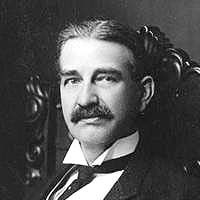
Lyman Frank Baum was an American author best known for his children's fantasy books, particularly The Wonderful Wizard of Oz, part of a series. In addition to the 14 Oz books, Baum penned 41 other novels (not including four lost, unpublished novels), 83 short stories, over 200 poems, and at least 42 scripts. He made numerous attempts to bring his works to the stage and screen; the 1939 adaptation of the first Oz book became a landmark of 20th-century cinema. Born and raised in Chittenango, New York, Baum moved west after an unsuccessful stint as a theater producer and playwright. He and his wife opened a store in South Dakota and he edited and published a newspaper. They then moved to Chicago, where he worked as a newspaper reporter and published children's literature, coming out with the first Oz book in 1900. While continuing his writing, among his final projects he sought to establish a film studio focused on children's films in Los Angeles, California. His works anticipated such later commonplaces as television, augmented reality, laptop computers (The Master Key), wireless telephones (Tik-Tok of Oz), women in high-risk and action-heavy occupations (Mary Louise in the Country), and the ubiquity of advertising on clothing (Aunt Jane's Nieces at Work).
Baum’s short poems and limericks here mimic the style of Mother Goose, though a slightly punnier take more toward the vein of Shel Silverstein. Here’s a sample:
“Polly wants a cracker!” The parrot loud did shout. “Here’s a cracker, Polly,” Said little Dickey Stout.
Polly took the cracker quickly, Not knowing it was loaded, But while she held it tightly It suddenly exploded.
Polly gave an awful cry Of mingled pain and rage. She flew away from Dickey And hid within her cage.
Published before the earliest Oz book, there are seeds of Oz here—like the white and blue gingham dress and the mechanical man Tik-Tok. Some of the poems can be shockingly racist for a modern reader, notably “Little N****r Boy,” which begins “There was a little n****r boy / Hadn’t any shoes; / He heard his mammy shoo the hens / And saved the shoos to use.”
This book hasn’t weathered well and generally wouldn’t do well with children today. But in June 1900 the book was reported to have the largest sale of any juvenile book in America according to the Tribune, selling over 75,000 copies. I imagine a large part of the appeal is Denslow’s artwork and Baum’s whimsical style. As Baum’s first big published success, this book has a solid place in history, but it’s probably best it stays there.