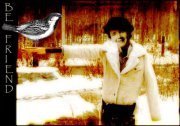
English-born American Christopher William Bradshaw Isherwood was a novelist, playwright, screenwriter, autobiographer, and diarist who portrayed Berlin in the early 1930s in his best known works, such as Goodbye to Berlin (1939), the basis for the musical Cabaret (1966).
After Isherwood wrote joke answers on his second-year exams, Cambridge University in 1925 asked him to leave. He briefly attended medical school and progressed with his first two novels, All the Conspirators (1928) and The Memorial (1932). In 1930, he moved to Berlin, where he taught English, dabbled in Communism, and enthusiastically explored his homosexuality. His experiences provided the material for Mister Norris Changes Trains (1935) and Goodbye to Berlin (1938), still his most famous book.
In Berlin in 1932, he also began an important relationship with Heinz Neddermeyer, a young German with whom he fled the Nazis in 1933. England refused entry to Neddermeyer on his second visit in 1934, and the pair moved restlessly about Europe until the Gestapo arrested Neddermeyer in May 1937 and then finally separated them.
In 1938, Isherwood sailed with Auden to China to write Journey to a War (1939), about the Sino-Japanese conflict. They returned to England and Isherwood went on to Hollywood to look for movie-writing work. He also became a disciple of the Ramakrishna monk, Swami Prabhavananda, head of the Vedanta Society of Southern California. He decided not to take monastic vows, but he remained a Hindu for the rest of his life, serving, praying, and lecturing in the temple every week and writing a biography, Ramakrishna and His Disciples (1965).
In 1945, Isherwood published Prater Violet, fictionalizing his first movie writing job in London in 1933-1934. In Hollywood, he spent the start of the 1950s fighting his way free of a destructive five-year affair with an attractive and undisciplined American photographer, William Caskey. Caskey took the photographs for Isherwood’s travel book about South America, The Condor and The Cows (1947). Isherwood’s sixth novel, The World in the Evening (1954), written mostly during this period, was less successful than earlier ones.
In 1953, he fell in love with Don Bachardy, an eighteen-year-old college student born and raised in Los Angeles. They were to remain together until Isherwood’s death. In 1961, Isherwood and completed the final revisions to his new novel Down There on a Visit (1962). Their relationship nearly ended in 1963, and Isherwood moved out of their Santa Monica house. This dark period underpins Isherwood’s masterpiece A Single Man (1964).
Isherwood wrote another novel, A Meeting by the River (1967), about two brothers, but he gave up writing fiction and turned entirely to autobiography. In Kathleen and Frank (1971), he drew on the letters and diaries of his parents. In Christopher and His Kind (1976), he returned to the 1930s to tell, as a publicly avowed homosexual, the real story of his life in Berlin and his wanderings with Heinz Neddermeyer. The book made him a hero of gay liberation and a national celebrity all over again but now in his true, political and personal identity.
i am so in love with this book. found a 1945 edition (original, maybe?) at a local bookstore. it's just amazing. includes essays by aldous huxley, too--did not know he was into the vedas! i don't get around to doing enough reading lately and am workin on that--but when i do, this is where i go. :)
Ah, spiritual sustenance in the darkest days of the Kali Yuga. What a treat! Vedanta for the Western World is a treasure trove of Advaita Vedanta philosophy from some of the 20th century’s brightest intellectual lights: Huxley, Isherwood, Heard etc. Also, a remarkable document for anyone drawn to readings in comparative religion, the nexus between psychology and mysticism, and the evolution from institutionalized belief into spiritual systems born of experience. This is the timeless wisdom of Adi Shankara and Sri Ramakrishna distilled for the modern man/woman with every ounce of its profundity intact.
Lots of variety, all of which I found to be rewarding and highly re-readable because of its essay format. For those who are looking to cultivate a growing awareness of the changeless and transcendental (Brahman) behind the play of flux and forms (this world of relativity), start here.
One of my first introductions to Vedanta which I have skimmed over for many years reading the essays of icons like Aldous Huxley and Gerald Heard. It may be out of print but I have seen different versions at various used bookstores over the years and have bought it twice now. This volume was also my first introduction to Swami Vivekenanda's writings which have now been with me since I was a teenager. A great introduction to Vedanta and also recommended for fans of Aldous Huxley for some rare-ish essays of his.
I read this brilliant book decades ago, and it has influenced my intellectual and spiritual life through the years. I wonder how I would experience Vedanta for the Western World if I were to re-read it now...