На початку роману піхота заходить на терикон у сірій зоні, нібито на три дні. В кінці роману виходить з нього - за сто днів по тому - передаючи позиції наступникам. В інтервалі дуркує, мотається по шаурму в сусіднє містечко, вимінює і тирить із сусідніх позицій техніку й соляру, все дуже азартно, побутово, абсурдно і смішно, якщо не рахувати постійних обстрілів чи, скажімо, того, що на шляху до шаурми є відтинок пагорба у скількись-там метрів, який добре прострілюється з ворожих позицій. Загалом, чудовий текст про повзучу війну, яку бачила 5-6 хвиля мобілізації - без великих наступальних операцій, без яскравих упізнаваних символів рівня ДАПу, із взаємопроникненням структур війни і побутового життя. Здорово про те, як всі ці фінаналітики, програмісти і менеджери середньої ланки набувають нових ідентичностей - постійний рефрен штибу "курили собі фронтендер і артдир, тобто насправді старлей і майор", повтори про те, що ніхто ж насправді від початку не вмів воювати, всі на ходу імпровізують. І дуже-дуже круто зроблено мовно - при тому, що сюжету особливо немає, вперед тягне саме оповідний голос, імітація усної розповіді, колоритна суміш армійських канцеляритів, сленгу (чи то авторського, чи то реального - не має значення) і чого тільки не, побудова нового ідіолекту для опису нового досвіду. Загалом, "The Things We Carried", на який ми заслуговуємо :)
This is a collection of stories and biographic sketches, some of which were initially published on Facebook, written by a person, who was mobilized to Ukrainian Army and was on Donbas during the first half of 2015.
The title is literally translates as ‘Infantry’ but maybe a better equivalent will be ‘Grunts’. The author, who before the mobilization worked in IT sector in the currently occupied part of Donbas is not a professional solder, as aren’t most of his comrades. At the same time they feel the burden of ‘slow war’, keeping for a hundred days a fortified post on the frontline. Solders from all over Ukraine, not knights in shiny armor but ordinary people with a lot of drawbacks, but as infantry does, they dug in and keep the land with their teeth.
The dialogues are if not witty then certainly sarcastic, the problems of organization are highlighted, from absence of wood for covering trenches to ‘the great paper army’ – the great number of papers, which should be filled like there isn’t anything else to do.
The book is highly recommended to anyone interested in an inside view of the modern Ukrainian army and hybrid war.
Якась така жива книга, наче якийсь шмат життя прожив поруч з автором, і всі ці речі переживаєш бо бачиш як людина повертається туди, звідки важко вибратися. Побут, жарти, люди - саме про ці речі ця книга
Художню цінність книг про українсько-російську війну визначить час. Сьогодні ясно, що такі книги потрібні - бо занадто багато людей від тієї війни втомились, не маючи ніякого уявлення про неї.
Чудова книга про будні піхоти. Тут все - від копирсання в болоті та чищення зброї до щоденників спостереження та відомості витрат боєприпасів Української Паперової Армії. Рекомендується до прочитання колишнім військовослужбовцям та особам, які бажають укласти контракт на проходження військової служби. І всім, хто цікавиться, теж. У тексті зустрічається військова лексика, тому дітям та кисейним панночкам цю книгу не рекомендую.
Навідріз знімає всю романтизацію доблесних воїнів Збройних Сил України. Зате знайомить із звичайними чоловіками, котрі вміють справлятися. Першу частину книжки читала із гуглом, а потім пішло відчуття, ніби й ти там, на передку. І кілька порад теж забрала із собою. Думаю, колишнім військовим чудово зайде. Хоча, які там «колишні»?
Шикарно написана історія про піхоту. З гумором і з гордістю, до сліз (від сміху і не тільки). Окремий діамант - п"єса "АТО в Середзем"ї". 12 балів з 12 можливих. Біжу читати далі, ще 2 частини)
Це книжка для "своїх", хто був там, або знаходиться там зараз. Але вона дає можливість і "мирняку" спробувати зазирнути і уявити хоч приблизно, як живуть наші захисники.
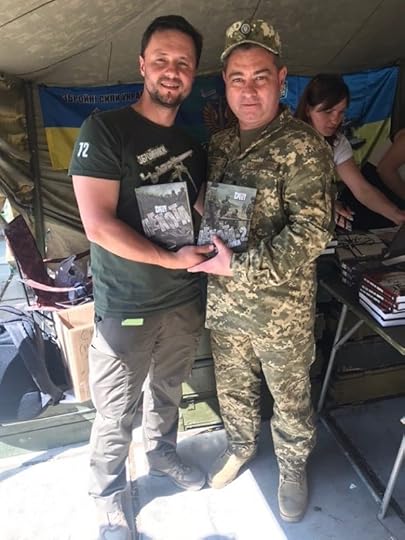
I like Мартин Брест and have been following him on facebook for several years. So I even asked him to sign his books for me in “ВетНамет” last year.
And I liked his books, too. I did not expect much, because he is obviously not a professional writer, and I already see what he can and what he cannot do in terms of writing style/language on facebook (his books basically contain his facebook essays, only in an edited and corrected form, of course). Moreover, as much as I respect our current veterans of the Russian-Ukrainian war, I can say that many of their books about the war are, sadly, unreadable (I tried a couple of them before, and they were just below any judgement).
However, these books are very lively, really interesting, often quite funny, sometimes lyrical and beautiful, and just a pleasant experience — both as reading and as means to learn more about the war and our soldiers. The books also have a good structure, combining real-life war stories with imaginative “Interludes,” pages written in somewhat different style and as if from different points of view, funny and tragic episodes. My favorite parts were “Занімательноє зброєведення” and “Збройні сили Середзем’я,” of course )), but I liked all the parts mixed together into something very fresh and inimitable. I especially appreciated that even although the text is full of very specific military terms and slang, you still have a feeling of understanding all this. You may not know what all those “ДШКМ,” “СПГ,” “РПГ,” “ОГ-9,” “бэха,” “птур,” etc. are, but you understand the mood, you laugh at the jokes, you feel the energy.
When I bought my copies of the books, there were only two of them ("Пехота" (2019) and "Пехота-2: Збройники" (2019)), but later the third one was published, “Пехота-3: Терриконы” (2019). I would like to buy and read this one, too, but I have dozens of paper books to read right now, so maybe later. Anyway, I think that the whole set makes a nice addition to bookshelves for any Ukrainian, and can be a cool gift, for example. Nothing pretentious, heavy, or full of pathos, just a good light-hearted and yet quite serious material about the war.
They are written mostly in Russian / Surzhik (according to the language the author mostly talks and thinks in himself), but reading it, you have no doubts that these are OUR books, books about Ukraine, about Ukrainians, and for Ukrainians. It shows perfectly our mindset, our way of talking to each other, our values, and our priorities. Zero artificiality. And sometimes it’s just heartbreaking. You laugh — and you are clenching your fists.