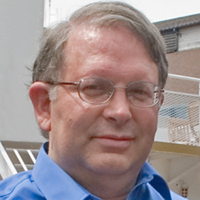
Les années 1920-1950 connurent de grandes transformations dans la manière de décrire les phénomènes, le probabilisme venant notamment se substituer au déterminisme d'antan, en même temps que les progrès dans la recherche théorique et expérimentale montraient qu'un programme d'unification devait maintenant non plus seulement se limiter à l'électromagnétisme et à la gravitation, mais devait aussi tenir compte de deux nouveaux types d'interactions se rapportant au domaine nucléaire : les interactions fortes (qui assurent la cohésion des noyaux atomiques) et les interactions faibles (qui rendent compte de la désintégration spontanée des noyaux atomiques radioactifs). Le programme dit « de grande unification », qui est au coeur de la recherche actuelle en Physique, ambitionne d'unifier entre elles les quatre interactions physiques (électromagnétique, faible, forte et gravitationnelle).La Physique des années 80 avait été conduite à une structure ponctuelle pour la représentation dans l'espace-temps observable (Réel) d'une particule élémentaire constituant la Matière. Aussi va se développer en Physique, à partir de cette époque, l'idée que notre Univers comporte une partie non directement observable, ou, comme on dit encore, des dimensions « cachées » (Supergravitation de Abdus Salam, Supercordes de John Schwarz, Relativité complexe de Jean E. Charon). Seule la Relativité complexe admet qu'à chaque point du Réel correspondent quatre dimensions, le programme dit « cachées », trois dimensions d'espace et une dimension de temps, c'est-à-dire un véritable micro-univers, qu'on nomme l'Imaginaire. Dans une telle représentation, la Relativité complexe montre que, pour la première fois, les quatre interactions physiques sont unifiées et fournit le formalisme mathématique qui représente l'ensemble des phénomènes physiques de notre Univers. En même temps apparaît pour la première fois la possibilité d'étendre cette unification à Matière et Esprit.
Jean-Émile Charon fue un físico nuclear francés, filósofo y escritor. Fue autor de más de 20 libros sobre física, filosofía científica y ciencias de la computación. Realizó investigaciones nucleares en la Comisaría à l'Énergie Atomique de Francia.
This book was originally published in French, so I read the English translation.
The inside cover of the book states, "Complex Relativity proposes a representation of presently observed four physical interactions in a 'complex' time frame, where the four purely Real or Imaginary dimensions of Einstein's General Relativity become four complex dimensions in Riemannian space-time." According to Wikipedia, Jean Charon "was a French nuclear physicist, philosopher and writer.... He was the author of over 20 books on physics, scientific philosophy, and computer science. He conducted nuclear research at France's Commissariat à l'énergie atomique (Atomic Energy Authority)."
My guess is that Jean Charon probably had close to a genius level IQ, which is reflected in this book. It is full of complicated high level mathematical equations which I could not understand if my life depended on it. If you can understand what they mean you may very well enjoy the book. It was not written for the general population. You really need to have a commanding understand of higher mathematics to appreciate the theories that the author is presenting.
Fortunately, the author wrote another book, The Spirit, That Stranger Inside us, which I also reviewed. It is a much simpler presentation of his theories, without all the math. I recommend that book if you are interested in Jean Charon's theories.