

What do you think?
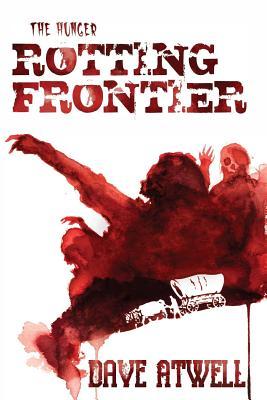
The Hunger: Rotting Frontier (The Hunger Series)
Thomas Hutton, a grower from coastal North Carolina and Civil War veteran, travels west with his family with hopes of a new start. Wanting to leave behind both the memory and misery of war and reconstruction, Hutton sold everything he had, save a pair of oxen, two horses and a wagon full of supplies. Hutton, with his wife and five children, began the long journey to Montana, via the Bozeman Trail. Montana held the promise of gold and the possibility of a new beginning growing crops. When they reach Wyoming Territory, however, they begin to experience much more trouble than expected. Hope turns quickly into survival instinct as the Huttons are faced with outlaws, Native American-hunting militiamen, and worst of all, The Hunger. As The Hunger sweeps like fire through the frontier, the settlers are faced with decisions of life, death, and morality as they make their way through an uncertain future.
296 pages, Paperback
First published May 19, 2015
Ratings & Reviews
Friends & Following
Create a free account to discover what your friends think of this book!
Community Reviews
Displaying 1 - 4 of 4 reviews

July 30, 2015
I bought this book as part of a six-pack, Realmwalker publications "The Portal." Although I had already read one of the six stories "Fae: The Wild Hunt" by Graham Austin-King (You can read my review of it here) five full novels for £5.13 still represented pretty good value.
The second story in the pack to catch my eye was book one of "The Rotting Frontier: The Hunger" by David Atwell and, as it is a separate novel I will review it separately, even if I didn't buy it that way.
Atwell's story snagged my attention because of the setting. As a child in the 70s I lived on a diet of cowboy films. It seemed the wild west, in truth probably far shorter and less bloody than the films would have us believe, was the only thing anyone could make films about. But in the 70s the cowboy meme was already fading from the cinema apart from comedic blips like "Blazing Saddles." Even Clint Eastwood's subsequent intermittent attempts at cardiac de-fibrillation with hits like "Pale Rider" and "Unforgiven," did little to fundamentally reanimate the corpse of a much loved but sadly expired genre. How could majestic scenery and gritty unshaven gunslingers compete with CGI and space opera.
But then I read "Those Poor, Poor Bastards" by Tim Marquitz, J.M.Martin and Kenny Soward. Here was another way in which the good old western was to be resurrected, ironically as a zombie apocalypse. I would say that Shane would be spinning in his grave at the idea, except that he wouldn't, he'd be crawling from it clabbered in grave rot and hungry for human flesh. So that experience gave me an itch to scratch, with other alternative history westerns. I tried and enjoyed Elizabeth Bear's "Karen Memory" steampunk western which started in a bordello but never descended into crudity.
Which set me up nicely for Atwell's take on a different kind of cowboy story. To be fair his is not really a zombie story. The flesh eating human monsters have not died, though their bite does infect and condemn others to the same desperate hunger. They also seem easy enough to kill provided the weight of numbers doesn't do for you. In many ways their affliction is like the rage that consumes people in the films 28 Days Later and 28 Weeks Later.
Atwell's unique take on this notion of infectious cannibalistic human monsters is to delay the onset of insanity. Provided the afflicted feed regularly on human flesh they can stave off the madness and continue to function as rational if somewhat psychopathic human beings. I have seen this kind of motif - the rationality hijacked by a hunger it cannot deny - also used well in the eponymous hero of Glen Duncan's "The Last Werewolf."
That then is the life Atwell breathes into the western format. It is not a spoiler for me to mention it because it emerges pretty early on in the story and in fact even before the story starts with an author's explanation of what it is like to have "The Hunger."
And that is part of the oddity of this book. There is a not quite polished enthusiasm which propels but sometimes encumbers the story.
There is front-matter which might better be placed as back-matter, a note from the author a dedication which reads like acknowledgements, a list of the dramatis personae and the early reveal (pre-reveal) of the nature of the sickness. To me these pages were merely gossameer curtains of distraction to be brushed aside in my desire (hunger?!) to get to the story.
The story proper begins with a wagon carrying Thomas Hutton and his family to a new life in the West. They and their eldest sons bear with them differing traumas from the recently concluded civil war. I was worried at first that Thomas and his wife Beth's penchant for giving all five children names beginning with "A" might cause me a little confusion, but their characters separated out well enough with the two eldest boys, Axel and Amos, a nice juxtaposition of ruthless survivor and naïve idealist.
The family stumble upon an abandoned settlement where all that seems to threaten their peaceful rest are coyotes who would prey upon their oxen. But then the rotters arrive and survival becomes distinctly more difficult.
I don't like to give spoilers. Suffice to say that the Huttons gain help from a surprisingly well concealed community of other survivors including a remarkably resilient blacksmith and part-time pastor. The main engine of the story is the conflict that inevitably occurs when circumstance forces people together in despite of all notions of personal space and under severe external threat. Just as the little community in Anne Frank's attic suffered from mundane tensions in the shadow of horror, so too the Vatt's Crossing crowd face simple real human perils and desires. Notwithstanding the collapse of society around them, prejudice, greed and misplaced morality still drive selfish actions. Foolish choices threaten the survival of everyone and in particular those the perpetrators most profess to love.
There are enemies and allies too beyond their community. There is a militia consumed by hunger, sacrificing their humanity to stay sane. They are led by a charismatic Colonel who would have thought the slaughter of native americans at Sand Creek was a humanitarian act. Indeed reading this quote from Colonel John Milton Chivington the Sand Creek commander
"Damn any man who sympathizes with Indians! ... I have come to kill Indians, and believe it is right and honorable to use any means under God's heaven to kill Indians. ... Kill and scalp all, big and little; nits make lice."
It makes Atwell's Colonel Lexington Banks, far from being the caricature he first appears to be, into something approaching a faithful historical representation.
The Native Americans make credible allies. There is an earnest desire in Atwell to be fair to all groups, to have his characters show a respect for diversity which at times, to an untutored eye, appears more fitting to a modern context than contemporary with the period. But then, Elizabeth Bear's "Karen Memory" had a refreshingly robust attitude to prejudice and why should an author not challenge prejudices and champion humanity while still telling a good story.
There are some acts of generosity and some macguffins of invention which stretch credulity a little. If Tony Stark or Emmett Brown had dropped into the settlement of Vatt's Crossing even they might raise an eye at the imaginative solutions to some insuperable problems, while the gift which set the Hutton's heading west could only be believed if there were some greedier motive of self-interest at work - and perhaps there was.
However, the story is the thing, and the story rattles along at a good pace. Bloody action is described in skull crushing detail and, while some of the plot kinks are foreshadowed a little too obviously and the prose could in parts be more polished, that doesn't make the ride any less enjoyable. Our band of survivors prove a little better at surviving than the miscellaneous groups who gather in a George Romero film. That is to say, a surprisingly large number of them make it to the "final reel", but there are some significant fallers along the way and this is after all only book one. Plenty of life (or death) left in the story yet.
The second story in the pack to catch my eye was book one of "The Rotting Frontier: The Hunger" by David Atwell and, as it is a separate novel I will review it separately, even if I didn't buy it that way.
Atwell's story snagged my attention because of the setting. As a child in the 70s I lived on a diet of cowboy films. It seemed the wild west, in truth probably far shorter and less bloody than the films would have us believe, was the only thing anyone could make films about. But in the 70s the cowboy meme was already fading from the cinema apart from comedic blips like "Blazing Saddles." Even Clint Eastwood's subsequent intermittent attempts at cardiac de-fibrillation with hits like "Pale Rider" and "Unforgiven," did little to fundamentally reanimate the corpse of a much loved but sadly expired genre. How could majestic scenery and gritty unshaven gunslingers compete with CGI and space opera.
But then I read "Those Poor, Poor Bastards" by Tim Marquitz, J.M.Martin and Kenny Soward. Here was another way in which the good old western was to be resurrected, ironically as a zombie apocalypse. I would say that Shane would be spinning in his grave at the idea, except that he wouldn't, he'd be crawling from it clabbered in grave rot and hungry for human flesh. So that experience gave me an itch to scratch, with other alternative history westerns. I tried and enjoyed Elizabeth Bear's "Karen Memory" steampunk western which started in a bordello but never descended into crudity.
Which set me up nicely for Atwell's take on a different kind of cowboy story. To be fair his is not really a zombie story. The flesh eating human monsters have not died, though their bite does infect and condemn others to the same desperate hunger. They also seem easy enough to kill provided the weight of numbers doesn't do for you. In many ways their affliction is like the rage that consumes people in the films 28 Days Later and 28 Weeks Later.
Atwell's unique take on this notion of infectious cannibalistic human monsters is to delay the onset of insanity. Provided the afflicted feed regularly on human flesh they can stave off the madness and continue to function as rational if somewhat psychopathic human beings. I have seen this kind of motif - the rationality hijacked by a hunger it cannot deny - also used well in the eponymous hero of Glen Duncan's "The Last Werewolf."
That then is the life Atwell breathes into the western format. It is not a spoiler for me to mention it because it emerges pretty early on in the story and in fact even before the story starts with an author's explanation of what it is like to have "The Hunger."
And that is part of the oddity of this book. There is a not quite polished enthusiasm which propels but sometimes encumbers the story.
There is front-matter which might better be placed as back-matter, a note from the author a dedication which reads like acknowledgements, a list of the dramatis personae and the early reveal (pre-reveal) of the nature of the sickness. To me these pages were merely gossameer curtains of distraction to be brushed aside in my desire (hunger?!) to get to the story.
The story proper begins with a wagon carrying Thomas Hutton and his family to a new life in the West. They and their eldest sons bear with them differing traumas from the recently concluded civil war. I was worried at first that Thomas and his wife Beth's penchant for giving all five children names beginning with "A" might cause me a little confusion, but their characters separated out well enough with the two eldest boys, Axel and Amos, a nice juxtaposition of ruthless survivor and naïve idealist.
The family stumble upon an abandoned settlement where all that seems to threaten their peaceful rest are coyotes who would prey upon their oxen. But then the rotters arrive and survival becomes distinctly more difficult.
I don't like to give spoilers. Suffice to say that the Huttons gain help from a surprisingly well concealed community of other survivors including a remarkably resilient blacksmith and part-time pastor. The main engine of the story is the conflict that inevitably occurs when circumstance forces people together in despite of all notions of personal space and under severe external threat. Just as the little community in Anne Frank's attic suffered from mundane tensions in the shadow of horror, so too the Vatt's Crossing crowd face simple real human perils and desires. Notwithstanding the collapse of society around them, prejudice, greed and misplaced morality still drive selfish actions. Foolish choices threaten the survival of everyone and in particular those the perpetrators most profess to love.
There are enemies and allies too beyond their community. There is a militia consumed by hunger, sacrificing their humanity to stay sane. They are led by a charismatic Colonel who would have thought the slaughter of native americans at Sand Creek was a humanitarian act. Indeed reading this quote from Colonel John Milton Chivington the Sand Creek commander
"Damn any man who sympathizes with Indians! ... I have come to kill Indians, and believe it is right and honorable to use any means under God's heaven to kill Indians. ... Kill and scalp all, big and little; nits make lice."
It makes Atwell's Colonel Lexington Banks, far from being the caricature he first appears to be, into something approaching a faithful historical representation.
The Native Americans make credible allies. There is an earnest desire in Atwell to be fair to all groups, to have his characters show a respect for diversity which at times, to an untutored eye, appears more fitting to a modern context than contemporary with the period. But then, Elizabeth Bear's "Karen Memory" had a refreshingly robust attitude to prejudice and why should an author not challenge prejudices and champion humanity while still telling a good story.
There are some acts of generosity and some macguffins of invention which stretch credulity a little. If Tony Stark or Emmett Brown had dropped into the settlement of Vatt's Crossing even they might raise an eye at the imaginative solutions to some insuperable problems, while the gift which set the Hutton's heading west could only be believed if there were some greedier motive of self-interest at work - and perhaps there was.
However, the story is the thing, and the story rattles along at a good pace. Bloody action is described in skull crushing detail and, while some of the plot kinks are foreshadowed a little too obviously and the prose could in parts be more polished, that doesn't make the ride any less enjoyable. Our band of survivors prove a little better at surviving than the miscellaneous groups who gather in a George Romero film. That is to say, a surprisingly large number of them make it to the "final reel", but there are some significant fallers along the way and this is after all only book one. Plenty of life (or death) left in the story yet.

June 4, 2015
Historic Zombies - The twist is imagine if the bite did not turn you into a mindless hunger machine. Instead you have a choice, either eat people and stay sane and functional, or don't, keep to your ethics, and become that mindless hunger machine until a friend kindly puts a bullet into your brain. Which would you do? And remember this is the past, where religion had a much more prominent impact on day-to-day life.
I met Dave Atwell at a convention where he was selling the book and his pitch made me come back the next day and buy one. The concept grabbed my mind.
I just wish the line editing let the concept stay there and develop and burrow into the horror corner of Zombie. But too many repeats of information bogged down the story for me. And for that I lay the issue at the publisher's feet. This book could have been good. Better editing should have been provided.
I met Dave Atwell at a convention where he was selling the book and his pitch made me come back the next day and buy one. The concept grabbed my mind.
I just wish the line editing let the concept stay there and develop and burrow into the horror corner of Zombie. But too many repeats of information bogged down the story for me. And for that I lay the issue at the publisher's feet. This book could have been good. Better editing should have been provided.

October 25, 2015
The Hunger is a choice. When you are bitten, will you feed or will you rot?
This was a very interesting novel. Set after the Civil War, a family discovers Vatt's Crossing, new friends, and The Hunger. The concept of The Hunger is very unique as the characters struggle with survival and coping with one another's personalities.
My favorite character was Colonel Banks - I love a villain. I wish there was more of Colonel Banks!
There are some line editing errors, but this does not prohibit any plot structure. Additionally, I think the chapters were "too big". In my opinion, chapters should feature one single event. However, this a personal decision, and again, it does not hurt the overall plot.
If you enjoy The Walking Dead, you will enjoy the zombie-esque atmosphere of Rotting Frontier. Great job! Onto Revelations!
This was a very interesting novel. Set after the Civil War, a family discovers Vatt's Crossing, new friends, and The Hunger. The concept of The Hunger is very unique as the characters struggle with survival and coping with one another's personalities.
My favorite character was Colonel Banks - I love a villain. I wish there was more of Colonel Banks!
There are some line editing errors, but this does not prohibit any plot structure. Additionally, I think the chapters were "too big". In my opinion, chapters should feature one single event. However, this a personal decision, and again, it does not hurt the overall plot.
If you enjoy The Walking Dead, you will enjoy the zombie-esque atmosphere of Rotting Frontier. Great job! Onto Revelations!

November 10, 2016
A character driven story of apocalyptic proportions.
The wild west is picked up by Mr Atwell and flung back at us in a way we have never seen it before, we have zombies, horror, believable characters and a storyline that hooks you from the first page and keeps you 'hungry' for more.
I can't wait to read the next two books in this series, as it's been a long time since I got my teeth into a story that was this good.
The wild west is picked up by Mr Atwell and flung back at us in a way we have never seen it before, we have zombies, horror, believable characters and a storyline that hooks you from the first page and keeps you 'hungry' for more.
I can't wait to read the next two books in this series, as it's been a long time since I got my teeth into a story that was this good.
Displaying 1 - 4 of 4 reviews