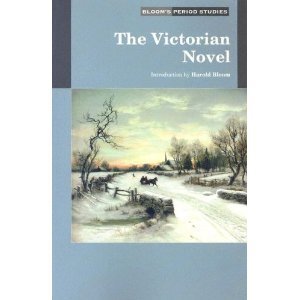
This scholarly volume focuses on the most studied British writers from 1837 to 1901. As a fairly new medium, the Victorian novel was read as entertainment by the literate of all classes. After a lengthy introduction on major novelists and their works, 14 authoritative essays cover such topics as Victorian identity, feminist heroines, sexuality, class, money, and morality, as well as criticisms and comparisons of Victorian fiction.
Harold Bloom was an American literary critic and the Sterling Professor of Humanities at Yale University. In 2017, Bloom was called "probably the most famous literary critic in the English-speaking world." After publishing his first book in 1959, Bloom wrote more than 50 books, including over 40 books of literary criticism, several books discussing religion, and one novel. He edited hundreds of anthologies concerning numerous literary and philosophical figures for the Chelsea House publishing firm. Bloom's books have been translated into more than 40 languages. He was elected to the American Philosophical Society in 1995. Bloom was a defender of the traditional Western canon at a time when literature departments were focusing on what he derided as the "school of resentment" (multiculturalists, feminists, Marxists, and others). He was educated at Yale University, the University of Cambridge, and Cornell University.
The glory that is Harold Bloom: he's a scholar, a professor and, to my enjoyment, is an over-writer. He goes into more detail than any other critic I've ever read. His omnibus is enormous: from studies of novels to studies of genre, through to a book like this, which is to mark off a period of time. In this case, he drops VicLit names as if they were street signs, some I've never heard, some I used to study, some I still do! If you desire a trip down 19th century British memory lane, my finger is crooked to you: come into his his world!!