Sticklebacks and Snow Globes, by debut novelist B.A. Goodjohn, is set in a 1970s council-house estate just outside London, and captures a year in the life of Tot Thompson and the neighborhood kids. For an eight-year-old, Tot has a lot on her mind. She has epilepsy, which she personalizes by calling it "Kit-the-Fit". She never knows when "Kit-the-Fit" is going to strike; as such, she's constantly on guard. She doesn't know what to do about her fourteen-year-old sister Dorothy who has been acting strangely ever since she found herself a boyfriend. Her friend Keesal, an Indian boy, is being bullied. Another friend Stacey wants to be called David. There's a lot going on. But her biggest concern is her father, Donald, who wants to go to America to play the trumpet in his band. She wants to stop him going, so she decides to make a deal with God. She vows to catch seven sticklebacks (small scaleless fish) for seven Saturdays before sacrificing them - with a house brick - if God will stop her dad leaving. She's not your average kid. Oh, and she loves snow globes.
There are a lot of broken dreams in this novel. Tot's mother Elaine hates the fact that she lives in a council estate. She thinks she is better than that, and everyone else in the estate knows it. And then there's Gerald Damson who was a successful businessman - before he was bankrupted. Now, he too is in a place he never thought he'd be. Not to forget the neighborhood kids. Lilly O'Flannery thinks she knows all about the adult world, how it works, and how to work with it. She is in love with Nigel, and fails to see that she is being used. He promises her fish and chips, and dinners at restaurants, but his intentions are always doubtful. Lilly's trusting naivety is heartbreaking. Dorothy has joined the Girl Guides so she can get close to handsome venture scout Chris. When she does, she hasn't counted on the consequences, and Chris quickly loses interest when times get tough.
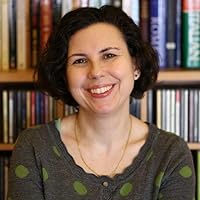
Bunny Goodjohn, English professor and Director of the Writing Program at Randolph College in Lynchburg, is published in both poetry and prose. Born in London, Goodjohn took USA citizenship after graduating from the University of Southern Maine’s Stonecoast MFA program. Her work has appeared in a number of literary journals including Connecticut Review, Zone 3, The Texas Review, and The Cortland Review and has won several poetry prizes including The Edwin Markham Prize for Poetry in 2011 and The Liam Rector First Book Prize for Poetry in 2014. Her poetry collection Bone Song was published by Briery Creek Press in 2015. She is also the author of two novels: Sticklebacks and Snow Globes (Permanent Press 2007) and The Beginning Things (Underground Voices 2015). She blogs at www.bagoodjohn.com
This was loaned to me by a friend. The author teaches English at Randolph College here in Lynchburg. It was a sweet book, and the author writes beautiful descriptions. It was almost like a set of linked short stories, and at times the plot was hard to follow. The main characters live in a housing project in England. The link through all the stories is Tot, a precocious and precious eight-year-old girl who has epilepsy. Although written in the third person, at the beginning of each chapter are musings from Tot. We follow the residents of the project through a year of their lives and we see happiness, pain, and in the case of Tot and the other girls, a lot of growing up. The author obviously remembers the pains and joys of going from girl to woman and she takes her characters through these with humor and pathos.
Although I'm not usually a fan of child-centric fiction, I enjoyed these stories (chapters?) about young Tot and her family living under difficult conditions in England. Tot's challenges--she has "fits" (epilepsy); she's younger (and brighter) than everyone else in the neighborhood; her father's ambitions of jazz stardom have taken him off to New Orleans. The book is filled with very believable characters and situations.
While the chapters read like stand-alone stories, the overall effect is of a novel. Recommended!
I wouldn't call this a novel. Personally, I would say this is yet another example of (loosely connected) interconnected short stories. Whatever you call it, it's a pretty good book.
More than anything else, the characters are what sets this book apart. The children--and Goodjohn stays largely with her juvenile characters--are portrayed in a manner which is entertaining and accurate. The author does a fabulous job taking us into the minds of these children, a talent sorely missed in many novels with young characters. In characterization, I'd say "Sticklebacks and Snow Globes" is right up there with "To Kill a Mockingbird."
Apart from its characters, the rest of this book is good, but nothing extremely memorable. For being a virtually unknown book, I was thoroughly impressed. I would read B.A. Goodjohn again; I just hope that her next book tackles a more engaging plot.
'Sticklebacks and Snow Globes' enchants from the beginning. This novel freshly presents how a particular 8-year-old, whose name is Tot, experiences a confusing and changing world. The author captures the child's perspective exceptionally well. The sense of Tot's imagination is intertwined with all she encounters and conjectures. Her view gives the reader a unique window into everyday life in a housing estate outside London. The book reminded me of fiction by Carson McCullers, who also brilliantly gifted readers with the keen, unsentimental richness of a child's point of view in a particular place and family.
I read this when Sara Taylor cited it as an influence on her novel The Shore when she camt to our Suffolk Book League meeting. I think it is wonderful. Told from the perspective of young girls, especially the 8 year old Tot, it is a fantastic evocation of growing up in the "70s on a council estate. The girls listen to adult conversations and do their best to make sense of the world and what it has in store for them, sometimes with the help of Jackie.
I liked this book for its truthfulness and simplicity. I spent a nice reminiscent evening reading it. A great insight into the life of teenage girls in the 70ties, their trial-and-error way of maturing and realizing their sexuality.