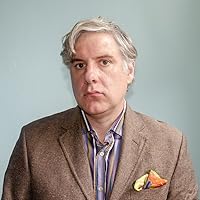
This exhibition will include 10 new paintings, in which Tuymans puts forth the image of a fragile America and the crumbling state of current affairs. There is a sense of delayed trauma, depicted in flat, muted hues, that shuns the obvious and circumvents easy interpretation. With a similar intensity to the exhibitions Mwana Kitoko, 2000, in which he examined the colonial history of Belgium, and Fortune, 2003, which centered on the effects of images from 9/11, Tuymans offers a critique of America that is intended to be subconsciously constructed. While there is nothing overt or merely symbolic about these paintings, they lay claim to real events, suppressed memories, and, in this case, the reality of our current political dilemma. Incited by war-time musical films from the 1940s, the central concept of the exhibition is a state of confusion derived from inconclusive memories and the dissolution of the familiar. In musicals, the subsequent chaos that is created by dancing (even when carefully choreographed) creates constant, yet dislocated, visual confrontation. For Tuymans, each painting in the exhibition presents a fragmented glimpse of a disjointed whole; his aim is to make the audience consider each image, the opposite of each image, and the uncertainty that follows. The exhibition s title, Proper, is in itself an aberration. While it refers to a seemingly requisite order determined by society at large, it simultaneously suggests the opposite improper and therefore subverts the notion of correctness as it relates to social and societal expectations. In these paintings, things as they should be are indefinite, memories are questionable, and perception is clouded by a juxtaposition of narrative and ambiguity. In a key painting, we are confronted by the cropped, larger-than-life-sized face of Condoleeza Rice. Prompted by a remark made by a Belgian official, in which Rice was described as strong; not unpretty, Tuymans portrait of Rice forces us to reevalua
Fantastic art writing on a style of painting that I've long been attracted to. The magnetic forces of this art are constructed out of something abrasive that, in a visual sense, feels deceptively padded and alluring. (The edges of a Tuymans painting appear to be smeared, and safely unsharp. But sinkholes are also unsharp.) The essay is dutifully confusing, as it should be: thinking about this kind of art is filled with contradictions, loopholes, switchbacks, mistakable violence, vertigo, thought-layers upon thought-layers, and other ways of seeing that are sometimes overcomplicated but do build up perceptive strength.
As Vermeiren explains: "The jetlag of the event...is an important aspect of the development of meaning in Proper. The jetlag of the image itself is a more direct, and, in the oeuvre of Tuymans, a more common occurrence. While he deliberatly interjects pertinent thematic consequences, he combines images from manifestly different contexts. He alters their meaning by filtering them, infecting them - as a painting - with medial noise and the strategies of an illustration, of film, of television; or, - as a media image - reconstructing them within traditional painterly conditions. This translation technique, through which Tuymans succeeds in imbuing communicative, "easy" mainstream images with a threatening quality, becomes extremely interesting when he uses images that in fact have the opposite purpose, ones that have been exorcised of threat for smooth mainstream consumption."
Or: "The aseptic nature of an encoded reality - on a virtual level - is under the constant threat of mental instability."