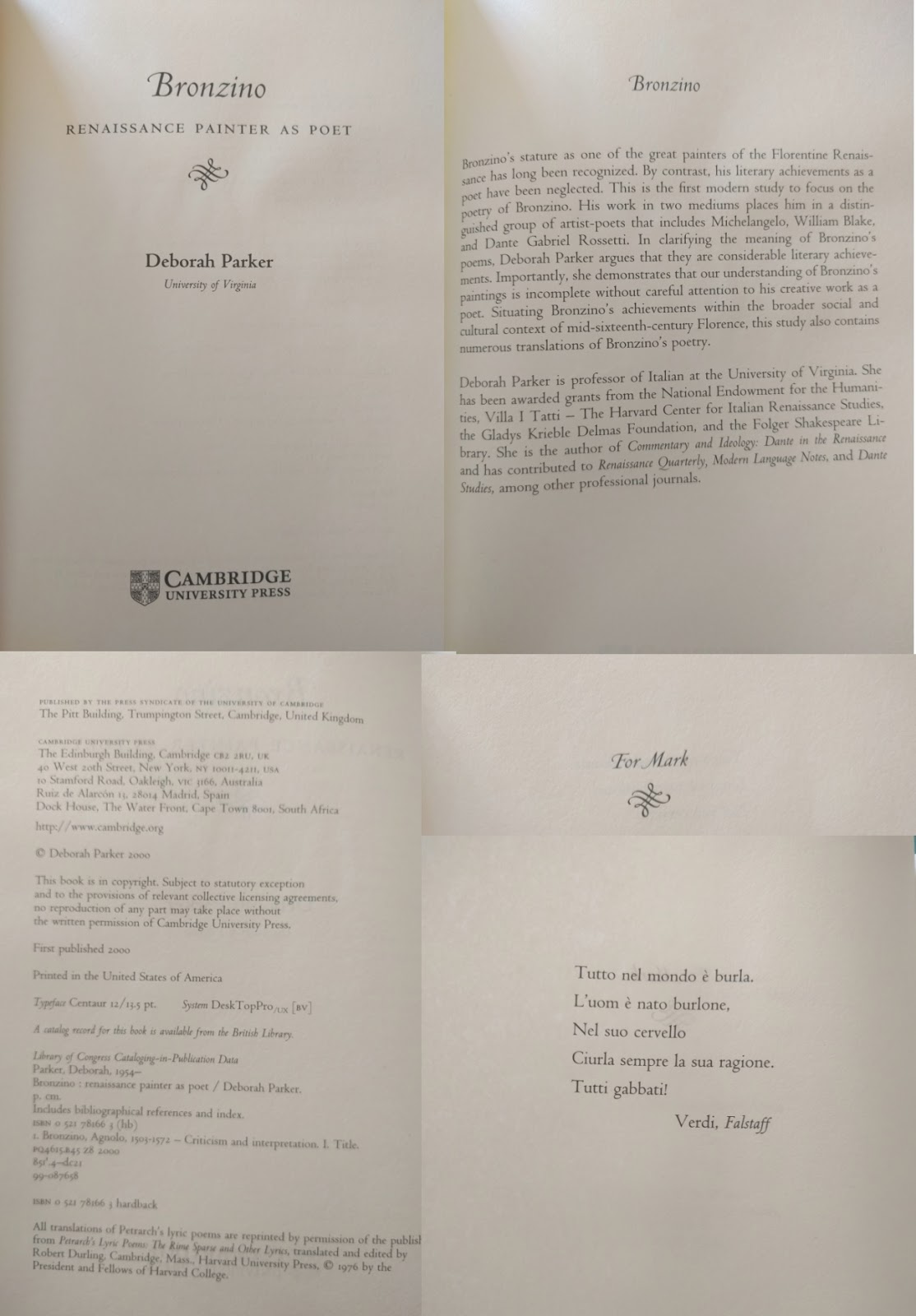
Bronzino's stature as one of the great painters of the Florentine Renaissance has long been recognized. By contrast, his literary achievements as a poet have been neglected. This is the first modern study to focus on the poetry of Bronzino. Seeking to clarify the meaning of Bronzino's poems, Deborah Parker argues that they are considerable literary achievements. Importantly, she demonstrates that our understanding of Bronzino's paintings is incomplete without careful attention to his poetry.
Deborah Parker is Professor of Italian at the University of Virginia. She is the General Editor of The World of Dante (www.worldofdante.org) and editor of the blog, A Hymn to Intellectual Beauty: Creative Minds and Fashion (http://creativemindsandfashion.com/). She and Mark Parker have a blog on Sucking Up: Sycophancy in life and workplace on Psychology Today (https://www.psychologytoday.com/blog/...)
This is probably the only book on Bronzino's poetry that can be found written in English. This is the cover, and editorial information of the book I read:
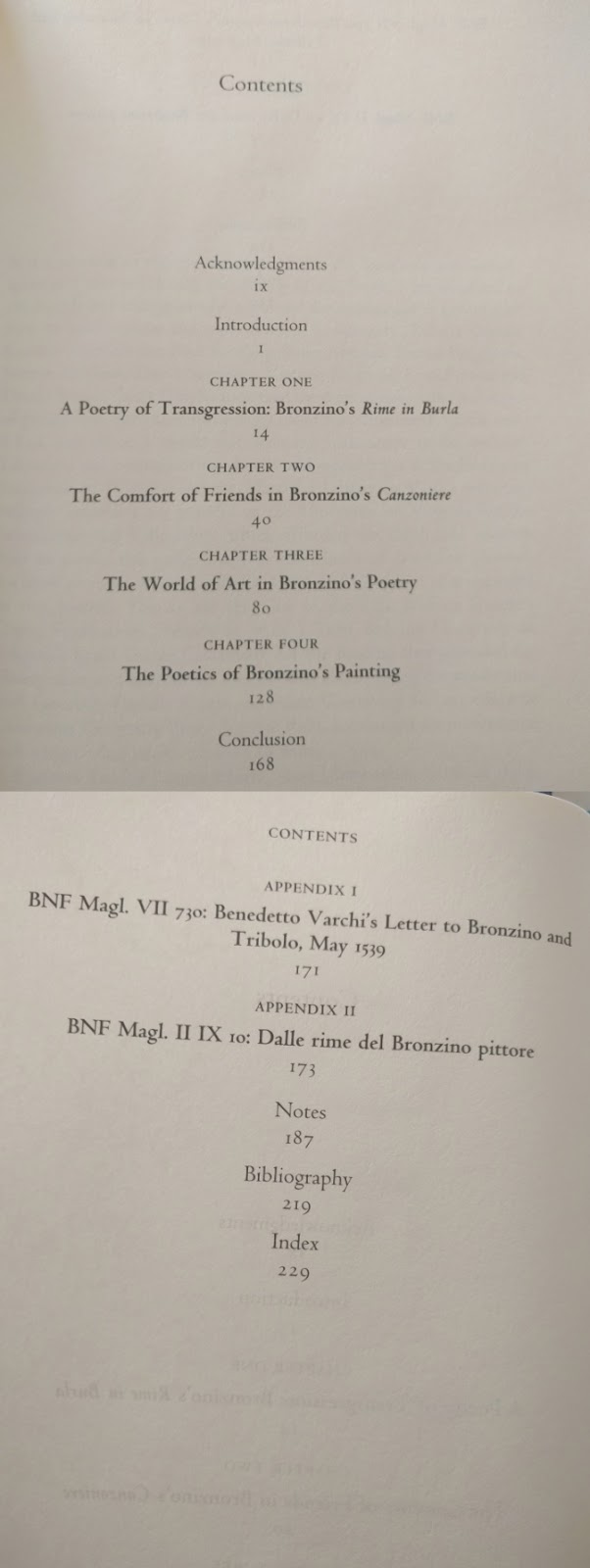
These are the contents of the study. The author decided to classify his work showing first his most satirical side: there are plenty of multiple-meaning and double-sense works. Sometime burlesque and mischievous. After that, she analyzes how his painting and his poems are connected.
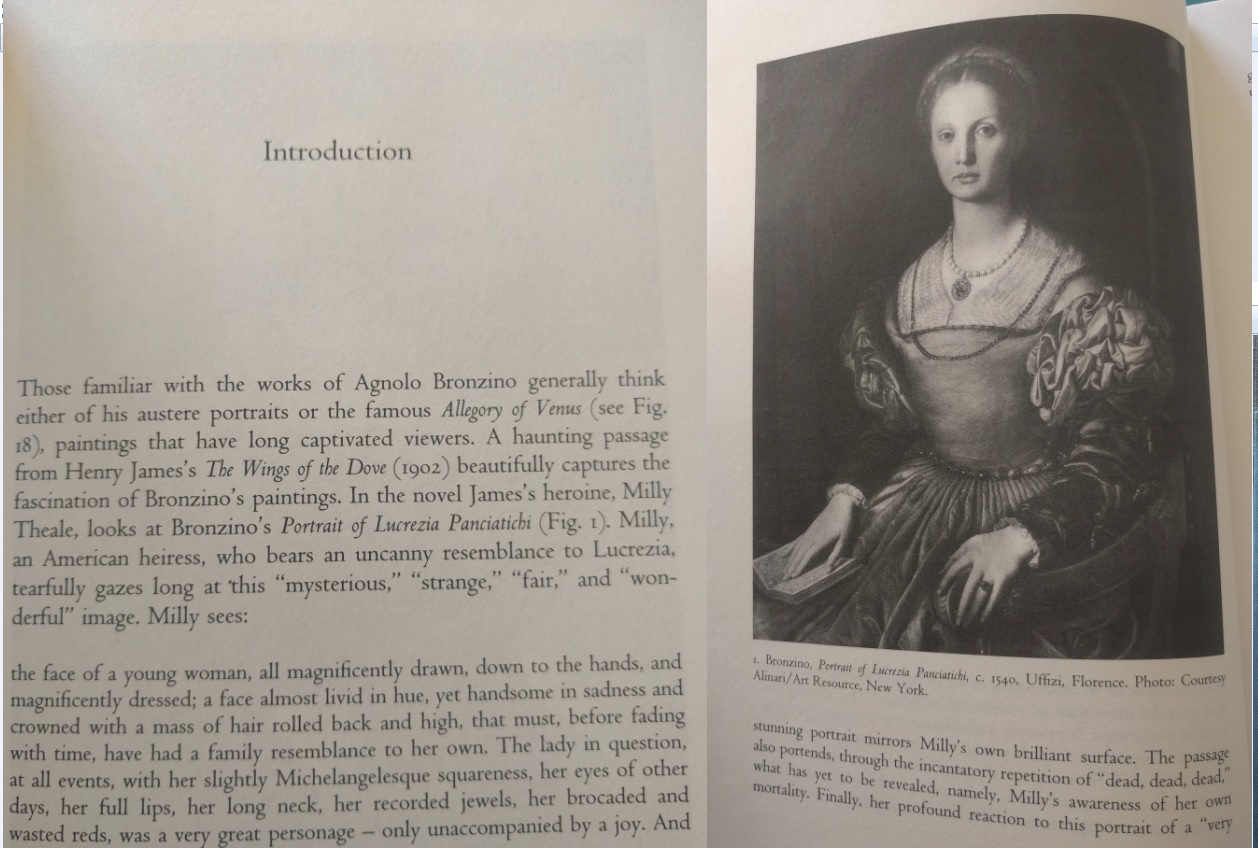
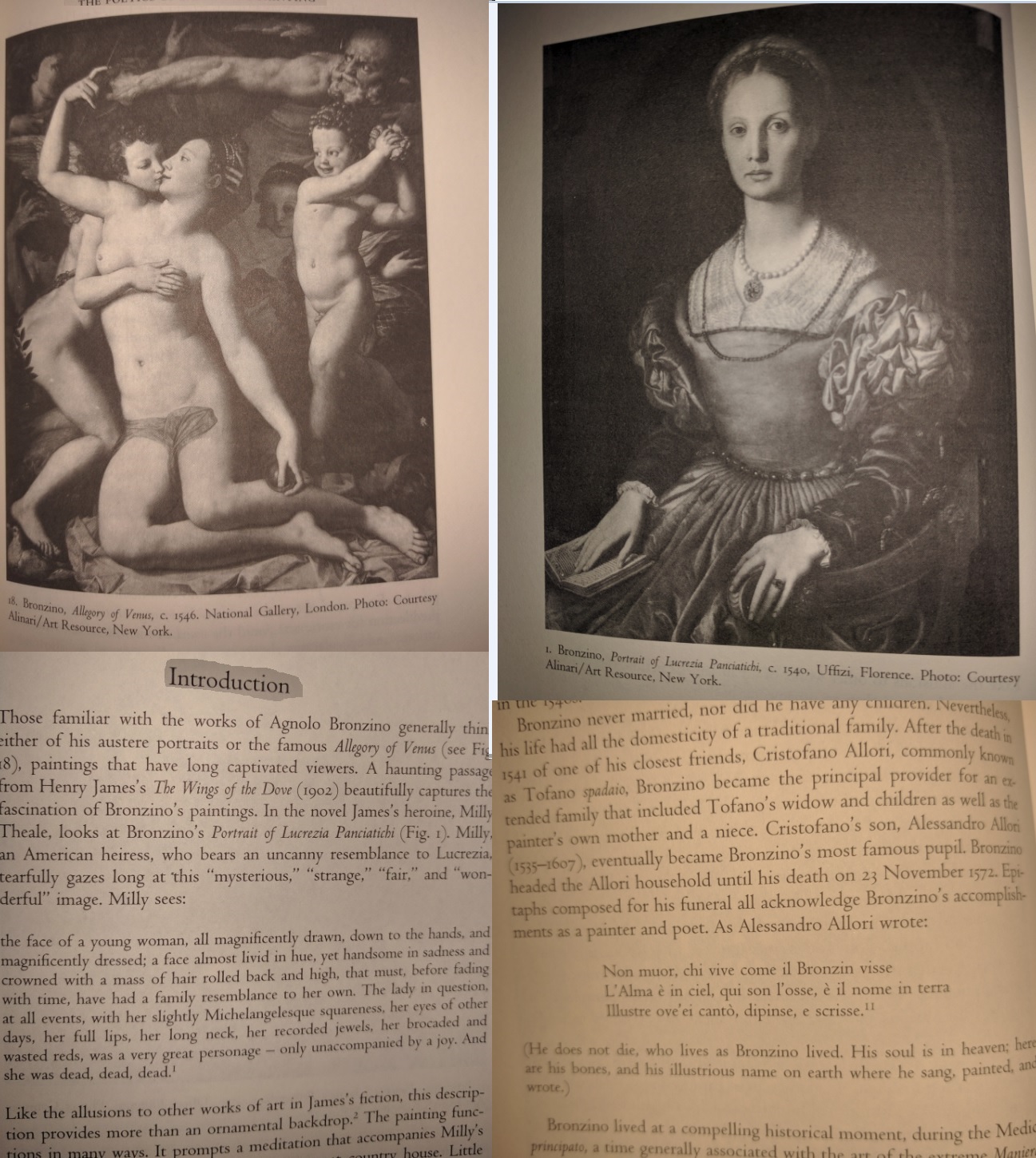
Parker meditates on Bronzino's art, and can't seem find enough adjectives to describe it. In the introduction, she uses terms such as cold hearted, marmoreal surfaces, melancholic, chilling, frozen, statuesque poses. She finds him ellusive as an artist, probably because there are too few facts in his biography. Almost everything is speculation. He probably began writing in the 1530's. He was never married, he did not have any children. He was a painter by day and a poet by night. Parker's argument is that Bronzino's poems are a considerable literary achievement.
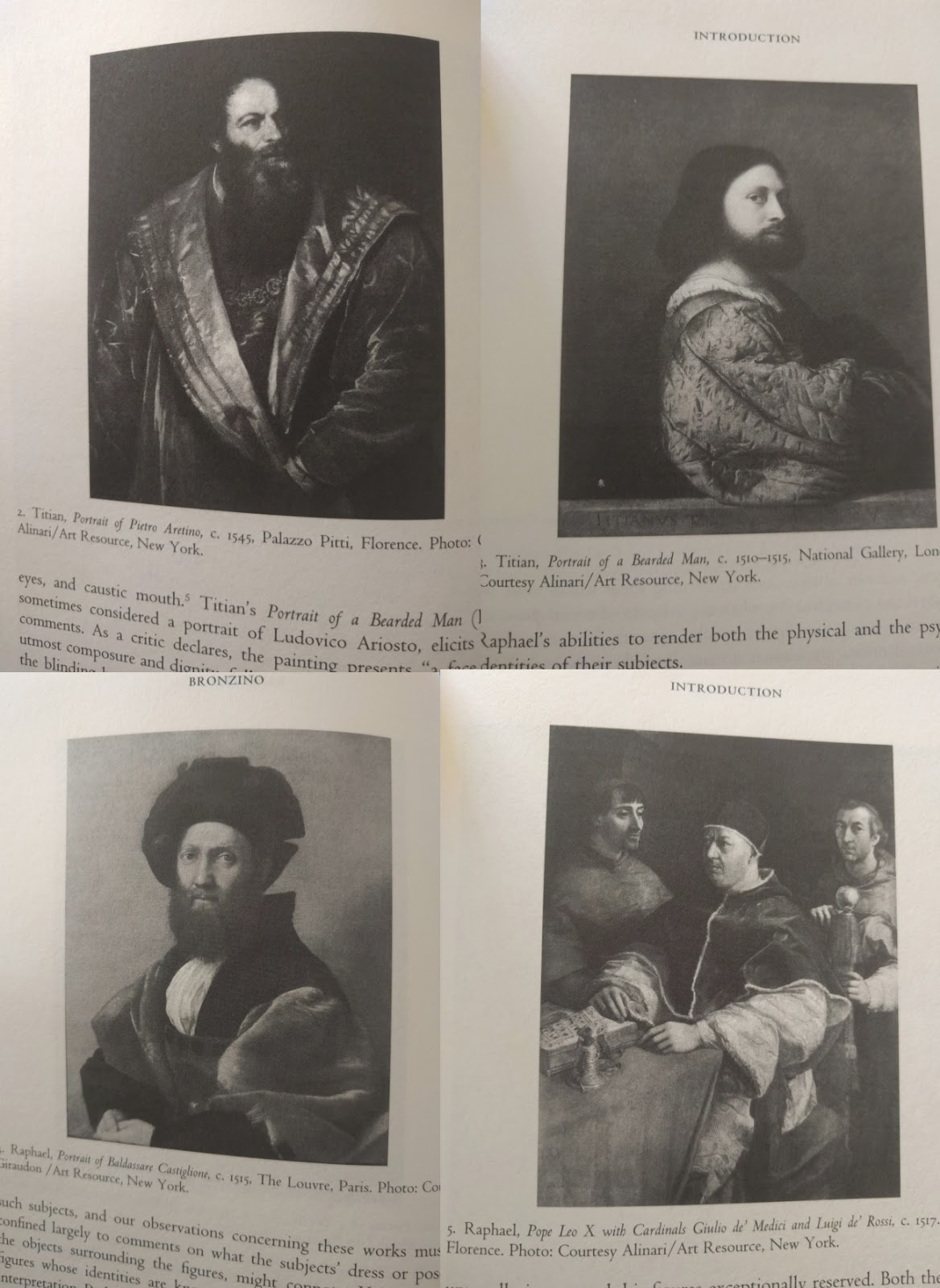
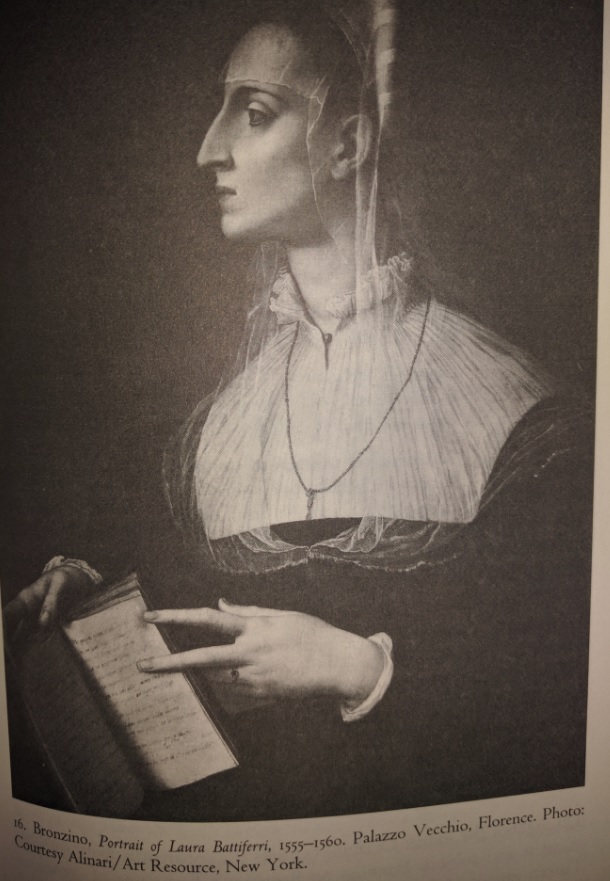
Here are some of those marmolean, frozen, statuesque poses that Parker refers to:
Parker also remarks how many important friends and relations Bronzino had. Here is a page with a list of some of those important friends of Bronzino's:
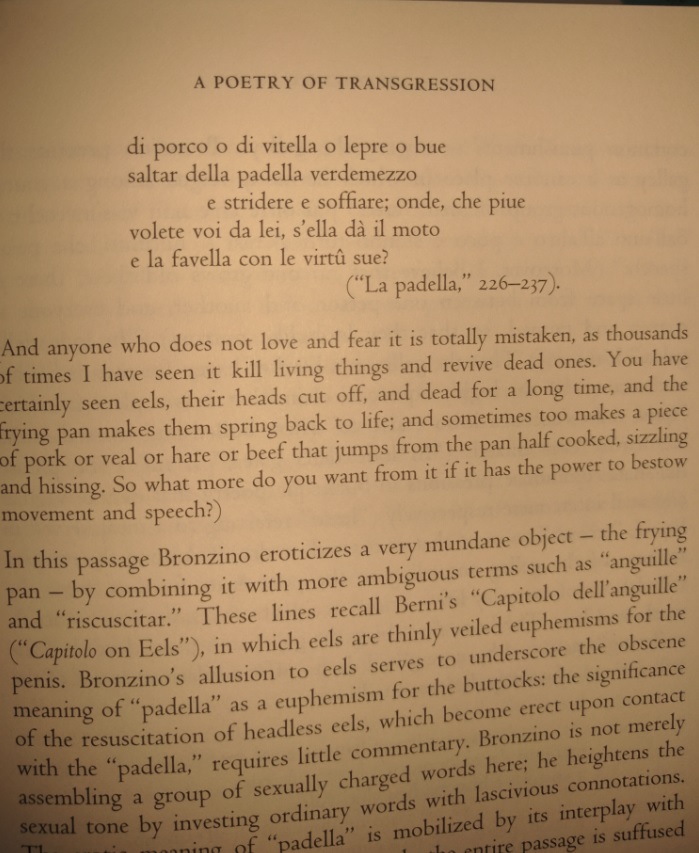
Here are two examples of the satirical and double-sensed poems Bronzino wrote: "De Penello" and "La Padella" two apparently innocuous objects (a brush, a frying pan), that he transforms into male and female reproductive organs by ways of using the correct words:
Bronzino also had great sensibility for major milestones. For example, here is a wonderful poem he wrote when one of his patrons died. It is a masterpiece of grief:
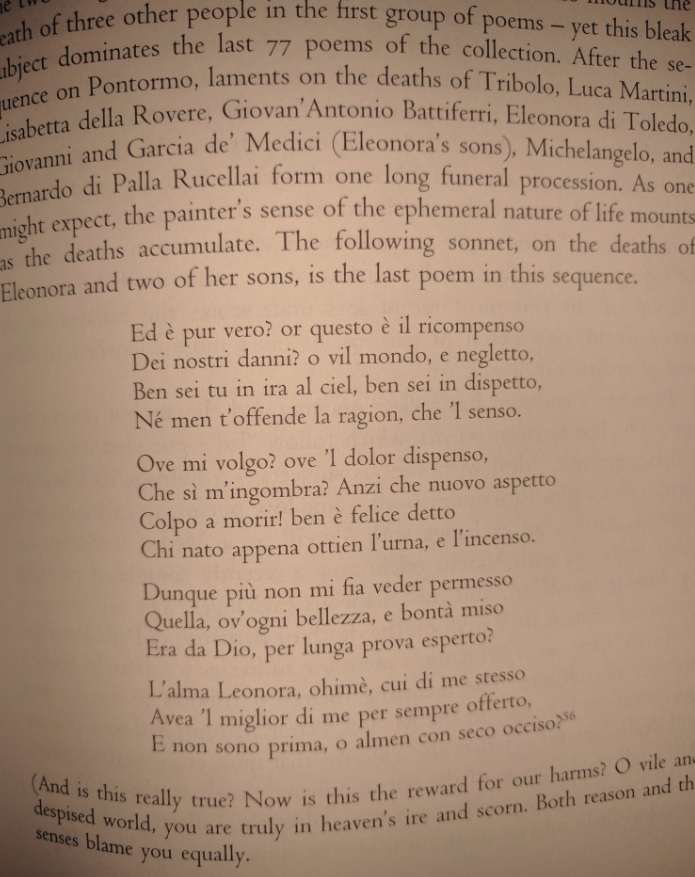
Anyway, death seemed to be a recurring topic for Bronzino. He wrote some 77 poems on it. Here is another example:
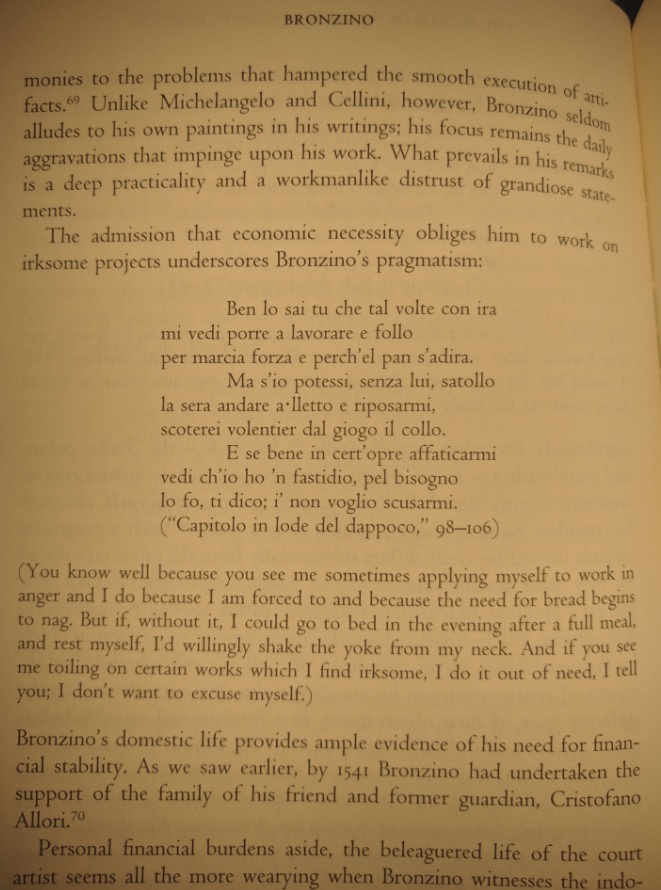
And here we find an example where he complains that sometimes you need to eat, so you need to work even if you don't want to do what you are doing. It is deliciously written and almost anyone could relate to his words, even when they are translated to English, a much less florid language than Italian:
Here are some paintings that Bronzino created: Justice liberating an innocent man:
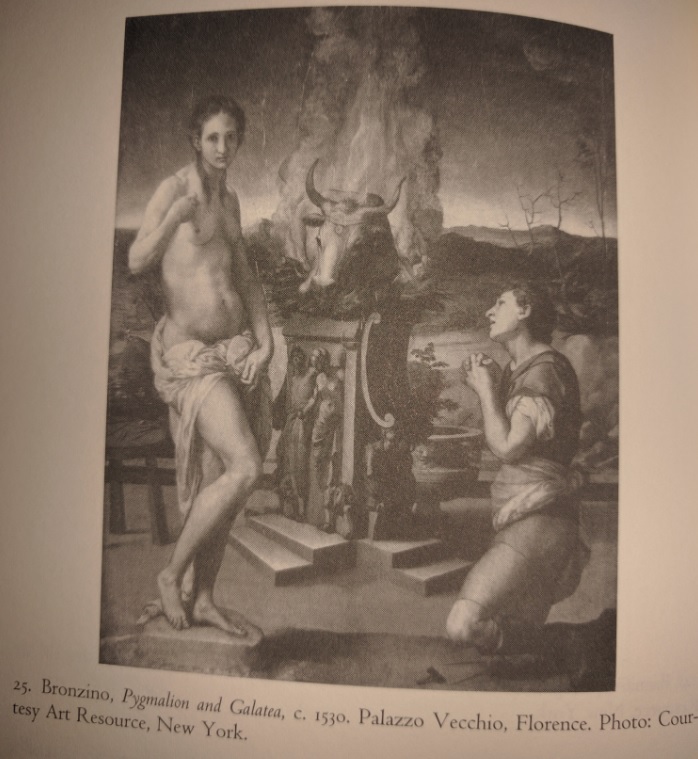
Pygmalion and his Galatea. It is remarkable how much love and passion he could imprint in Pygmalion's gaze:
Here is a painting of another of his patrons: mr. Giovanny di Medici. Note how full of life and hope this boy is. Bronzino wanted to transmit health and promise into the painting and he succeeded.
The following is a very interesting painting that shows how contradictory Bronzino could be: here is a man beating his wife, but at the same time, behind them and surounding the couple you can are a lot of love scenes. It is almost like showing that the world don't give a damn on domestic violence.
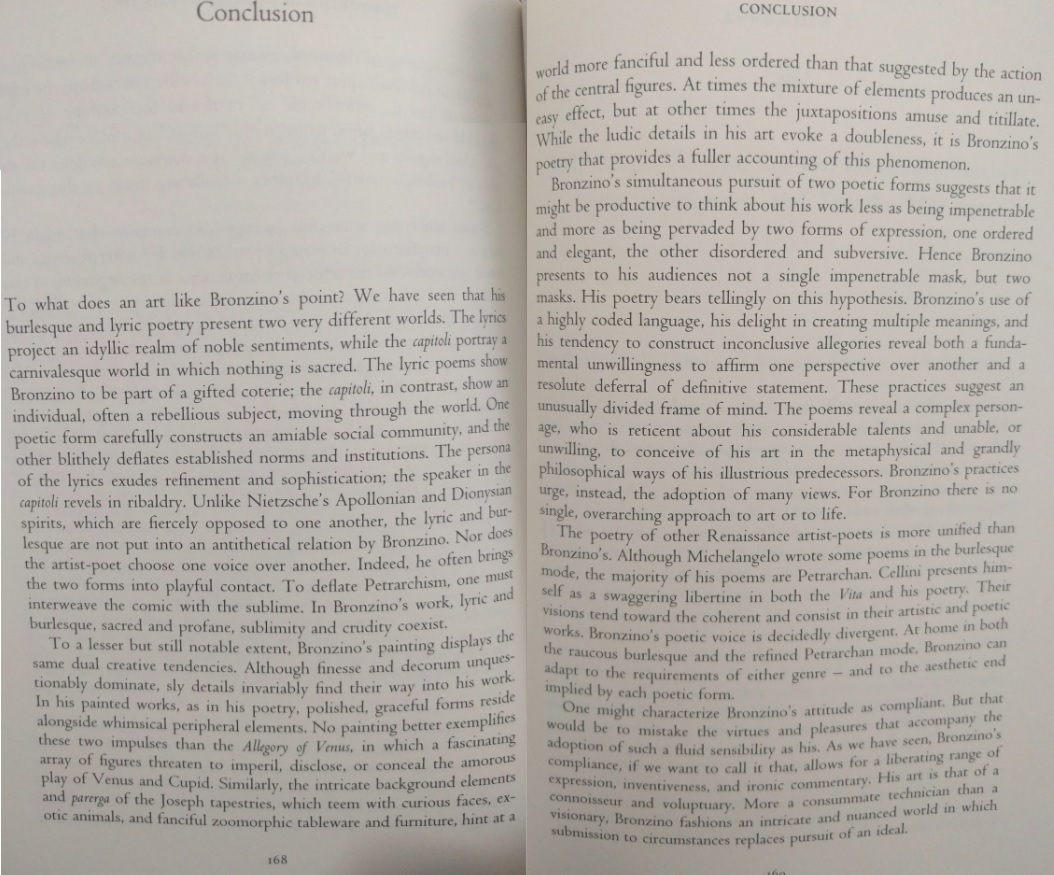
Finally, a photo of the conclusion of the book. The author finds that Bronzion liked to live in two words: one dramatic, the other burlesque; one where you had to work a job you hate, the other one where you are free to liberate your artistic impulses. His poetry reflected a lot of this duality, and Parker seems to be satisfied with her line of argumentation: