I first became aware of both this play and Sholem Asch through a local theater company. They put on a presentation of Indecent, a play by Paula Vogel, that recounts the controversy of the play, The God of Vengeance. I loved the play Indecent and so was thus motivated to immediately get a copy of the play upon which it was based.
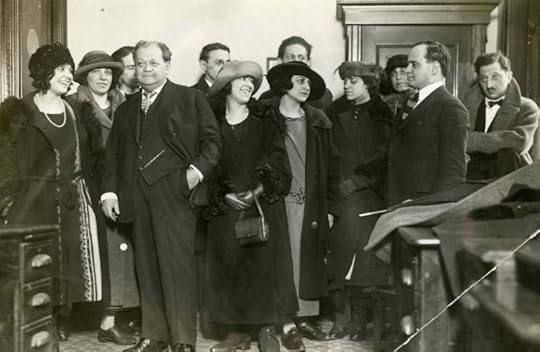
Sholem Asch's play “God of Vengeance” was first performed in 1907 to critical acclaim throughout Europe. However, when it came to Broadway in 1923 it was shutdown as being “obscene” and the director and actors arrested. The primary focus of Vogel’s play, Indecent, are the events that take place when God of Vengeance is performed in America.
Until recently, I would have said that by today’s standards The God of Vengeance would hardly raise an eyebrow. However, with the current rise of antisemitism and the anti LGBTQ backlash, perhaps this play is not so out of date as I had initially thought. The “frank depictions of sexuality and prostitution” noted in the 1923 arrest are small scenes in the play that are limited to dialog. The lesbian relationship is limited to words and an affectionate hug.
The play deals with a Jewish man who is married to a former prostitute. Living in a Polish shtetl, he runs his business in the basement of their home. Upstairs, literally above the brothel, he is raising his only child, a daughter, to be above reproach. As a father who wished for his children to be more successful than himself, the theme of a father’s love and dreams for his children naturally resonated with me.
While the lesbian relationship and prostitution got the major focus, there were several other things about this play that made it “ahead of its time.” For one, it was originally performed in Yiddish, a language that “cultured” Jews felt was beneath them and the “legitament” theater. It also pushed boundaries by a Jewish playwright giving a negative portrayal of Jews, at a time when they were being persecuted throughout Europe.
While Christianity focuses on taking god and religious dictates “on faith”, the old testament has many examples of Jews questioning god’s dictates. As my Rabbi once said, “Jews argue with god.” In God of Vengeance, Yekel rails at god for punishing his daughter for his and his wife’s sins.
This short play is quite powerful. Asch pulls no punches in presenting what are undoubtably his own questions about god and his Jewish religion. The play reads quickly and the action moves right along. While, as I have already mentioned, the issues seem mild to me in today’s world, I can only imagine the controversy this play raised in the early twentieth century.